

Is there something inherent in English that makes it the linguistic equivalent of the Borg, dominating and consuming other languages in its path? No, not at all. The answer lies with politics and conquest rather than language itself. Plus: a new baby may be lovingly placed in a giraffe and spend time in the Panda room, but where is that? And: it’s not easy to learn how to roll your Rs. In fact, even some native Spanish speakers have trouble with it. Yes, there’s a word for that, too! All that, plus a crossword-puzzle puzzle, a bug in your ear, the origin of slob, long johns vs. maple bars, mentor, stentorian, You can put your boots in the oven, but that don’t make ’em biscuits, and lots more.
This episode first aired December 7, 2019. It was rebroadcast the weekend of May 25,2024.
Transcript of “Bug in Your Ear (episode #1537)”
You’re listening to A Way with Words, the show about language and how we use it. I’m Grant Barrett.
And I’m Martha Barnette. A while back we had a conversation about names that also double as verbs, like your name, for example, Grant. You can grant somebody three wishes.
Yeah, or other names like Bob and Sue, which are also verbs. That prompted a letter from Nathan Steele. He is a freshman at the University of Wyoming in Laramie, and he writes that his dad’s first name is Robert and his last name, like Nathan’s, is Steele, S-T-E-E-L-E. He says, when my dad was still a baby, my grandmother took him to the supermarket and as she was there, a woman asked my grandmother what her son’s name was. My grandmother told the woman his name was Rob Steele, to which the woman sarcastically replied, well, what’s his middle name, Plunder?
I love that.
Nathan says, I don’t think that before then my grandma had ever considered that both my dad’s names were verbs or even that they were synonyms. My grandma has a good sense of humor, but by the way she told me the story, I think she might have been pretty offended.
Yeah, definitely.
I wonder if we can come up with another name that also means to steal.
What’s that word?
Grab?
nick Nick?
Nick.
Nick, yeah.
And that’s another verb.
Whoa.
Whoa.
Rob Nick Steele.
This is how Grant and I have fun.
Nathan, thank you for that email. We really appreciate it. We love your stories about your names. Keep them coming, 877-929-9673. Email words@waywordradio.org or tell us on Twitter @wayword.
Hello, you have A Way with Words.
Hi there.
This is Jamie Morby from Calais, Vermont.
Hello, Jamie. Welcome to the show.
Hi there. I had an interesting and rather unpleasant experience a few weeks back that brought up a question about an expression I use. I was going to bed one evening, and I felt slash heard a bug of some kind fly and crawl into my ear. And it buzzed around in my ear for probably 20 minutes or half an hour and then stopped buzzing. And so I thought it had flown out, but in the morning I could still feel it. So I went into a doctor and I had it removed. And sure enough, it was a little tiny black fly of some sort.
After I had it removed, it got me thinking of an expression that I use fairly regularly that I’m going to put a bug in your ear about something. I might say it if I’m working on a community project and I want somebody’s help with it. I say, I’m just going to put a little bug in your ear about a project I’m working on, if you’re interested.
It got me to wondering if the bug in that expression is an insect or a bug like a listening device.
Oh, okay.
That’s where that expression comes from.
Oh, Jamie, well, we’ve sort of run the gamut of emotions here from cringing to just…
I know, right?
No, the bug is a literal bug. It goes back to at least the mid-19th century, this expression of putting a bug in someone’s ear or leaving a bug in someone’s ear. And usually back then it meant to give somebody a suggestion or an idea, particularly one that was sort of irresistible, you know, something as persistent as that bug in your ear.
There’s an older expression, to have a flea in one’s ear, that goes back to a French phrase. And that goes back much farther, at least to the 16th century, maybe 14th.
Interesting.
Yeah, and in the original French phrase about putting a flea in someone’s ear, it had to do, again, with insistence, but particularly erotic desire.
Wow.
Yeah, yeah, something that, in fact, here’s a little ditty from the 17th century. A longing girl with thoughts of sweetheart in her head. In bed all night will sleepless twirl. A flea is in her ear, Tiz said.
I love it, though.
I’m not sure I slept super well that night.
Oh, I guess not.
Oh, man.
Well, I think that’s the first time we’ve had a story like that on the show.
Jamie, you’re a rare one. We appreciate the call. Never a dull moment up here in the woods of Vermont. Thank you for calling us. We appreciate it. Take care now.
Absolutely. Thank you so much. Have a great day.
All right. Bye-bye.
Bye-bye.
Call us with your language question, 877-929-9673.
My light bulb moment for this week was learning that the Irish Gaelic word slob, S-L-A-B, means mud. It was adopted into English as slob, S-L-O-B, and in the 18th and 19th century, slob meant mud, especially soft mud on the seashore. And the name for this oozy, muddy land was later applied to people who were untidy or dull or lazy. Slob.
So the original Irish Gaelic word is what?
Slob, S-L-A-B.
And it meant?
It meant ooze or mud.
Interesting. Nice.
I didn’t know that.
How about that?
That’s my light bulb moment for the week.
Light bulb moment. That’s a great one.
Talk to us on Twitter, W-A-Y-W-O-R-D.
Hello, you have A Way with Words.
Hey, how are you doing?
This is Bill Underwood from Fishers, Indiana.
Welcome, Bill. What can we do for you?
Well, I was listening to your show and I came up with a word. I was in South Africa a few years ago working for equipment manufacturers, helping them open up new markets across Africa and the Middle East and Latin America. Now, my first trip to South Africa, my contact there at the end of the day after I demonstrated the television transmitters we were talking about, said he would like to have dinner with me so that he could discuss a scheme that he thought would benefit him and me mutually. And, of course, I was taken aback because the first thing I thought was he wanted to involve me in some sort of nefarious plan of his that involved something illegal because that’s what I thought of when I heard scheme.
And, of course, it wasn’t until after we had dinner and I found out what he really wanted to talk about. I sort of used context clues, if you will, and found out that for him, scheme just meant a plan, not something nefarious. So he didn’t save it with an evil laugh or anything like that.
Rubbing his hands together.
No, but he didn’t have a big smile on his face. He was a Zulu fellow, so he had sort of a thick accent anyway.
Yeah, yeah.
He said, Bill, I would like to discuss with you a scheme that I think would be beneficial to you and me. And I said, well, that doesn’t sound too good to me.
Oh, wow.
That’s a great cross-cultural collision there.
But you figured it out.
Right, absolutely.
And so your question is, why the difference?
Yeah, why the difference?
So why do we see the word, or I guess I assume that most people in this country would think that you were talking about some sort of nefarious plot?
Yeah.
Whereas over there in South Africa, maybe even in the UK, I’m not sure if it’s in there. Why is it so much different?
That’s right, yeah.
In the United Kingdom and all of the Commonwealth countries, as far as I know, that is pretty much everywhere except Canada and the United States, scheme the noun. Let’s be careful. It’s just the noun. Tends to be kind of neutral. It tends to just mean plan or program just something that we’re going to do or some list of things or something that is about to happen or that we’re going to put on the schedule or on the calendar, that sort of thing.
Now, you can put value on it. You can come up with a negative scheme. So this is a scheme to take over the world. Certainly you can have that in the United Kingdom or South Africa as well. But generally, without any kind of qualifier, scheme alone on its own is generally neutral, whereas in the United States and Canada, a scheme is assumed to be negative. When it’s on its own. Now, the verb is different. Scheming, pretty much anywhere in the English speaking world is assumed to be negative, whether or not you’re in North America or the UK or Australia, Antipodes of South Africa. So that’s really interesting, right? That we have this divergence. But it all boils down to the fact that the Englishes have kind of been split for so long and they’ve kind of gone their own way. They’re all children of the same parents and they’re
Related and they send letters back and forth, emails, if you will, and there’s some communication.
But they take their own path. And so scheme is one of those words that for some reason along the way just decided to take its own path for those of us in the United States. Partly it’s affected by things like pyramid scheme or Ponzi scheme, which are very common terms in the United States. We often associate scheme with those kind of shenanigans. Yeah. And then on the other hand, and you’ve got the term color scheme.
You know, what’s the color scheme for that event? So scheme isn’t always negative here. But again, on its own, we don’t assume it’s neutral. We assume it’s negative.
Maybe because my mother used to call me a little schemer when I was young. She did. When I was sort of going against the grain. You little schemer, you. But the scheme turned out to be very beneficial.
In fact, all he wanted to talk about was using the technology that I had introduced to create a distance learning system for students out in the far farther reaches of South Africa so they could learn from teachers in Johannesburg. So it did work out well.
Sounds like you’re doing good work out there. Absolutely. Actually, today I am surrounded by a group of very well-behaved first graders. I’m a substitute teacher now in Fishers, Indiana.
Oh, my goodness. Can we say hi to your class? Say hi to the class, yeah. Hi, class. Hello. There you go. I told them to be extra quiet when Colin said, I thought I heard some noise there. I said, they promised to be quiet, and they have been. So thank you, children.
Well, Bill, we’ll let you get back to the kids. We appreciate you taking time out of your busy day. All right. Thanks so much. Take care now. Bye-bye. All right. Bye-bye. Bye-bye.
Well, call us to talk about language, 877-929-9673. There was a really cool discussion on English Stack Exchange about the question, what’s the word for things that work even when they’re not working, like an escalator or a moving sidewalk or a moped or maybe an electric screwdriver? You know, they don’t work exactly the way they’re supposed to, but you can still use an escalator. What’s the term for that?
Right. The joke is that escalators become stairs, right? Yes. Yes. And it was just an interesting discussion that was full of jargon and phrases that I loved, like fault-tolerant design. That’s right. Yeah. Then web design, they often talk about safety failback or fallback and things like that. Yeah.
I was surprised to learn from this discussion that fail-safe is not necessarily a term that means without failing. No. It failed, but it didn’t hurt you. Right. I didn’t realize that that was another sense of fail-safe. I thought it meant that it would never fail. And the other term that I really liked was graceful degradation.
Oh, yeah. And that’s the ability of a computer, machine, or electronic system or network to maintain limited functionality, even when a large portion has been destroyed or rendered inoperative. Graceful degradation. And some of those don’t really cover the point. The point is that it can still do the job, but it doesn’t do it as efficiently or as effectively.
A lot of times these hunt for the word. I need one word. I need a really brief. What they’re really looking for is elegance. They want something that sticks. They don’t want jargon. They don’t want, because there might be a perfectly serviceable word, but it’s boring. Or it just sounds like something that you would get out of a business journal and not something you’d use every day like in the kitchen.
Yeah, elegance is a good word. I always think of it as poetry. Yeah, something poetic, right? Yeah, and I think graceful degradation. I don’t know. That should be in a poem someplace. Maybe, but degradation’s got that Latin feeling to it, and sometimes there’s a strike against a word. I think graceful degradation.
Well, if you’ve got a word for that, what is a word from your reading or something that you’ve found that can apply to a tool or a device that still works for its purpose, even though it’s broken? 877-929-9673. You’re listening to A Way with Words, the show about language and how we use it. I’m Martha Barnette. And I’m Grant Barrett.
And here he is, our quiz guy, John Chaneski. Hi, John. Hi, Grant. Hi, Martha. Here I am. And here is a quiz I have for you guys. Now, if you’re the kind of person who has a favorite crossword constructor, chances are you also have a favorite crossword clue. A clue you’ve come across that you find to be particularly clever.
Now, for example, my favorite go-to clue has always been first place, four letters, a four-letter answer. Do you know what that one is? First place? First place, four letters. First place, four letters, yeah. As a preacher’s kid, I think I can guess. Yeah, what do you got? How about Eden? Eden, correct, right, the first place was Eden’s, so to speak. Yeah, that’s one of my favorites. It’s a standard clue that I always use as an example when I give you these, some favorite crossword clues.
Now, if you need a couple of letters to get the answers, that’s perfectly fine. I’ll tell you what I have filled in already. Here we go. Here’s the first one. Leaves home. Four letters. So is it a home for leaves, like the leaves that come off of trees? That’s what I’m guessing. Tree is the answer. Yes, very good. I’ll fill that one in. Very nice.
Here’s a three-letter answer. John Turingo. John Turingo. John Turingo. So it is the Beatles? Something’s with the Beatles? Well, the Ringo is, yeah. Oh, so it’s the bathroom. It’s not the musician, right? Three letters? So it’s Lou, L-O-O. Lou, yes. Perfect. Very nice. That’s a classic Merle Regal. We loved Merle. Oh, Rip Merle. Yeah.
Here’s another one from Merle Regal, by the way. Four letters. The reason crows are noisy. Because. Cause, yes, that’s right. Very good. Here’s one from Amy Lucido of the American Values Club Crossword. It’s less rich than the 1%. Four letters. Skim. Yeah. Skim milk. Skim is correct. Good.
Here’s one from Stan Newman. It brings out the child in you. Five letters. Obstetrician? You’re getting close. It’s not doctor? No. How about doula? Doctor is six. What’d you get? Doula, great. Doula is good, but this is an it. It’s not a person. It’s a concept. It brings up labor. Labor is correct. Oh, nice. Nicely done. Nice.
Good. Finally, here’s the last one. I’m not sure who this is from. I’m sorry to say. The answer is six letters and then seven letters, and it’s play with your food. Play with your food. Yeah. I have a guess. All right. Let’s hear it, Martha. How about dinner theater? Dinner theater is correct. Nicely done. That’s great. That was fantastic.
And thank you for giving all the shout outs to all these incredible, these people, these intelligent people who make these crazy, wonderful puzzles every week. John, thanks so much. Thank you. See you next time. Bye-bye. Bye, John.
Well, we’d love to talk with you about any aspect of language whatsoever, so give us a call, 877-929-9673, or send an email to words@waywordradio.org. Hello, you have A Way with Words. Hello, this is John Vaughn from Williamsburg, Virginia. Hi, welcome to the show. What can we do for you?
Hey, I had a question. I had some friends of mine, we were in Chicago, and they put out this idea that the English language is like what they called the Borg. It comes in and destroys, it consumes all languages, it takes their words and ideas, and it may cause other languages to collapse. I had never thought of it that way, and I just didn’t know if there was any real research on that concept. I just kind of wanted your opinion. Is English kind of the all-consuming amoeba of languages in the world right now?
Oh, that’s an interesting question. What was the conversation like leading up to the statement? What got you there? We were talking about how different writers like Kerouac have unique styles and then how English is a language that they didn’t really, some people didn’t really like writing in because they didn’t feel it was a real language and they wanted to write in other languages. And for me, I was just looking at this going, it made me worry because I know some ideas like, you know, in French, they don’t quite translate.
And I thought, well, if we are kind of taking over other languages, are we misusing their words?
And then does that idea around that word kind of disappear from history?
You know what I mean?
John, the short answer to this is we need to be sure who the agent is here.
Who is doing the action?
And English isn’t doing the action here.
English isn’t the verb in this story.
It’s not the protagonist here or the antagonist.
What we’re talking about here is by happenstance of history,
English has been used by two powerful nations in a row.
First, the British Empire and then the United States,
one right after the other with some overlap.
And the British controlled large portions of the world,
huge amounts of territory, lots of natural resources.
Many millions of people, and then the Americans did it and are still doing it.
Lots of financial resources, lots of political power, lots of financial power.
And this is the reason that English has permeated so many corners of the world.
That’s the main reason that English is like it is today.
And why it just seems to be infiltrating French and Danish and a lot of languages that you didn’t mention.
Now, the reason that English has so much vocabulary is another whole different set of responsibilities.
English itself is an agglomeration of different conquering forces that happened over many thousands of years from the proto-Indo-European, whatever culture it was that created that language,
and the proto-Germanic, and the Norse when they came into the British Isles, and the Normans, and the different forces that came together.
Each of them brought their language and put their stamp on what we speak now, the English that we have now.
And so each of these had their own different version of a language that changed what we speak.
So the problem that I’m having with what you’re saying is who is the we?
What is the we here?
Who’s doing the work?
You’re absolutely right because I was personifying it as it’s the language’s actual problem.
It’s the structure of English that makes it dominate and terrorize the other language.
So let’s just talk for a second before the British became a world power.
English was already kind of a mutt language,
had already had a lot of different features from French
and the different Germanic varieties and some Celtic features in there.
And it was already this really interesting hybrid
that had kind of simplified and lost some of the features
that the other Germanic languages had that made it easier to learn,
but still didn’t mean that anybody was more likely to pick it up than any other languages.
The reason it was widely learned after a while is because the British and their sea power
started taking over large portions of the world and started taking on a lot of natural resources
and started becoming very wealthy.
And that’s the reason that English spread.
It could have just remained this tiny little language spoken in just these few isles
if it wasn’t for the power of the British Navy.
That’s it.
That’s really good at where it could have just stayed.
So it’s politics rather than anything inherent in the language itself.
Yeah. There’s nothing special about English that meant that it was going to be spoken by this many people and then start to have its words pop up in all these languages around the world.
Okay. Well, thank you for your perspective. I guess that makes sense. So I won’t feel so guilty when I speak it.
Appreciate the call.
John, thanks so much for calling.
Take care.
The word stentorian describes somebody with a loud or powerful voice, but it’s got a great etymology.
It goes back to the Iliad.
There’s a Greek herald in the Iliad who is described as brazen-voiced Stentor.
It’s a proper name.
The guy’s name was Stentor, brazen-voiced Stentor, whose cry was as loud as that of 50 men together.
Oh, wow.
And brazen itself has an etymology, right?
I think it does.
It has to do with bronze or something like that.
I believe so.
Right.
So it’s the sound of trumpets.
Right?
There you go.
Interesting.
Stentorian.
Stentorian.
Named after somebody.
Yeah.
And in the Odyssey, of course, you have Mentor, who is another character in the Odyssey.
Athena takes the form of Mentor, and he’s a counselor to the son of Odysseus.
Perfect.
This is where we get our words from the classic literature of the Western cultures.
We get a bunch of them.
877-929-9673 or talk to us on Twitter @wayword.
Hi there. You have A Way with Words.
Hi, Martha. This is Marcy, and I’m calling from Fort Worth, Texas.
You’re welcome. What can we do for you?
Thank you. So I grew up in South America, in Chile, and we got there when I was a little baby, and so I’m a native Spanish speaker.
And in Spanish, you roll your R’s with quite a lot of words.
And I was talking to my daughter, who is frustrated that she can’t roll her R’s.
And I started thinking, why is it that some people can and some people can’t,
and how that works just phonetically, because both my parents got there as adults as well,
and they have a harder time, but some people can do it and some people can’t.
I was just curious about why some people can roll their R’s and why some people can’t.
How old is your daughter?
She’s 10.
Okay.
And I have sadly not taught her how to speak Spanish, so I’m sort of beating myself up for that, too.
We’ll get there.
So she’s not learning Spanish at all?
No, no.
My theory is I’ll send her to Chile for a year,
and she can do, you know, exchange program,
and it’ll just all fall into place.
Well, that sounds like a gift.
No, there’s a lot of children that have problems with that,
even in Spanish-speaking countries,
and it’s one of the top things that children in Spanish-speaking countries
go to speech therapy for to learn how to trill their R’s.
Oh.
Yeah, it’s very common, as a matter of fact.
And there are adults that can’t do it either,
and they’re often seen as sounding foolish,
and they just can’t help it because it’s just something that their tongues won’t do.
Just like there are other things that in any other country that mouths may not be able to perform.
We’re not all capable of the same things with our mouths.
Rotacism is the word that you’re looking for, R-H-O-T-A-C-I-S-M.
You can look that up and see all the different ways that it can manifest
and all the different solutions that people have for it.
But there are some dialects of Spanish where they don’t roll the R’s
even though they do in other dialects in Spanish.
So carro with a double R might sound like carro in some other dialects.
Or even in some Caribbean varieties of Spanish,
it might sound more aspirated like carro, like something like that.
Oh, interesting.
It’s very interesting.
More like a French R rather than a traditional Spanish trilled R.
So interesting stuff.
But yeah, it’s incredibly common for people not to trill their R.
And you can go to speech therapy for that.
It can be solved for a lot of people.
Did you grow up learning that song with the carro and the, what is it,
Ere con Ere, cigarro?
Yes, and ferrocarril, and yeah, you have to say all the little words, yeah.
Yeah, yeah, I would think that that would be really helpful.
Yeah, yeah, maybe I’ll try and find it for her so we can start singing it.
Yeah.
Yeah, that seems to be the one that teaches lots of little kids.
Yeah, well, good luck with that, and I hope she does get her year in Chile.
That sounds fantastic.
Yeah, I hope so too.
Who wouldn’t want to urine, Chile?
All right.
Thank you so much.
Bye-bye.
All right.
Bye-bye.
Thanks, Marcy.
Welcome to A Way with Words.
Hi.
This is Max Olderstorf calling from Sacramento, California.
Hello, Max.
Welcome to the show.
What can we do for you, Max?
Well, I have a question about a long type of donut that I’ve heard called a couple different things.
Some people refer to it as a long john.
Other people refer to it as a maple bar or a chocolate bar.
And the specific type of donut I’m describing is made of donut dough.
It’s long and it’s frosted on top, but there’s nothing in the middle.
I grew up in San Diego, and down there we called them exclusively long johns.
But then when I looked online, it said that the American West Coast actually generally refers to them as bar donuts.
And then some places also refer to eclairs as long johns as well.
So I just wanted to call up and see if you guys could shed some light on the origin of the term, on kind of the geographic locations of who uses what, and basically why things are the way they are with regard to this particular delicious dessert.
Okay, a warning for our listeners.
We’re about to talk about food words, and people get really testy and opinionated when it comes to food words, because one word in one part of the country means something very different in another part of the country.
That’s true.
Warning over.
Long Johns, Martha. What were they in Louisville?
This is totally a new one on me.
I see in the Dictionary of American Regional English that the term Long John or Longy is distributed in the upper Mississippi Valley, the upper Midwest, the Plains States, and Michigan.
And apparently here in San Diego. I haven’t heard that.
But Max, bar donut? How boring is that?
Yeah, I agree.
And, you know, I honestly, I’d never heard of people calling it bar donuts before I went to the East Coast, which is basically the opposite of what the books say.
So I was very confused when I read that.
I can also tell you that maple bar and maple stick are pretty much limited to the West for this same kind of pastry.
But they’d have to have maple on them to be a maple bar.
Yes, yes.
And do we know the origin of why it’s called a long john?
Well, I think that it’s sort of like other terms like long johns for underwear.
I mean, it’s just something that happens to be long.
And so john is just kind of a generic placeholder for a noun.
Yeah. Did you have some other hypothesis about that?
No, I looked it up.
And obviously, most of the stuff on long johns online really referred to the underwear.
And so I’ve got a bunch of background on that, but couldn’t figure out why the donut would be called that as well.
It’s something that happens to be long, notably long.
So the point of contention here that I’ve heard the most is whether or not long johns are filled.
Some people argue about that they should not be filled.
Some people say they’re filled, but only with custard or cream.
If you put jelly in them, they’re not long johns anymore.
Some people say if they’re filled, then they’re eclairs.
Some people say eclairs are something different.
There’s only the Frenchie fried things with the little crispy edges, and it’s very complicated.
So, Max, what’s your position on that?
Well, so I actually don’t know what it would be called if it’s filled, but then still made out of donut dough, because I’ve just never come across that before.
To me, an eclair is a filled, long donut, but it’s made out of a different type of pastry.
And then any sort of long bar-style donut would be called a long john.
Okay.
Okay.
Okay. And does it have icing?
Definitely has icing.
Okay. Well, you know what? We’re going to hear from a lot of people with a lot of opinions.
I’m sure.
Donut words, though.
Yeah. Can we leave our postal address and people can just, you know, deliver?
So just schedule these out. Donut deliveries, one a day for the next 52 weeks.
All right. Well, I assume we’ll get to the bottom of it then.
We appreciate the call, Max. Take care.
Great talking to you guys. Love the show. And thanks so much.
Bye-bye.
Bye.
So Long John’s, they’re yeast dough, right?
I think so.
Icing on top.
We gather.
And filling maybe.
Yeah.
Yeah, that’s probably, you know, a point of contention.
I was searching our email.
We got an email a while back from another listener, Tom in Oshkosh, Wisconsin.
He said he grew up there in the 40s and 50s.
And he said he knew of a place that called them Chicago Donuts.
And he remembers it from one bakery in town, but he’s not sure he’s ever heard it outside of Oshkosh.
And he wondered if Chicago donuts as a term for Long John’s was more widespread.
So I thought I would throw that in there, too, and see if anyone else has ever heard of Long John’s being called, quote, Chicago donuts.
So anyway, we’re interested.
What’s a Long John to you?
How would you define it?
And do you have other names for them?
Email words@waywordradio.org and start the fire.
Start the debate on Twitter @wayword.
I came across an intriguing use of the word stranger.
I did not know that stranger could apply to a tea leaf floating in your cup of tea.
I had heard that, but it has been a really long time.
No, a really long.
I think I learned that from like, was it a Dorothy L. Sayers novel or something?
I think there was somebody getting a reading in some mystery novel when I was much younger.
Oh, that’s so wonderful.
I don’t know.
That’s great.
I don’t know.
Of course, then I went and read a whole lot about tea and superstitions involving tea.
And the phrase, shall I be mother?
Do you know this one?
This is a saying that apparently the British say when they’re offering to pour tea.
Shall I be mother?
So is this from when you played house as kids?
Yes, apparently so.
Without the child’s tea set and shall I be mother?
Yes.
I mean, there are different superstitions involving that.
Nice.
But I ended up on YouTube looking at a clip from The Iron Lady with Meryl Streep.
And she’s sort of dressing down an American diplomat.
And then she stands up and says, shall I be mother?
And the diplomat is looking at her like, what?
Why are you saying?
She says, tea.
Not a youth American.
They understand nothing.
Shall I be mother?
You’re listening to A Way with Words, the show about language and how we use it.
I’m Grant Barrett.
And I’m Martha Barnette.
We asked you to send us your workplace jargon, and boy, did we get a boatload from Katie Driscoll.
She’s from East Thetford, Vermont, and she works in a NICU, that is a neonatal intensive care unit.
And I’m just going to read it because it’s practically poetry.
Term primip in BP19, that might be a doorbell.
The strip was concerning, so the room’s set up.
We have a team in the panda room ready for the 26-weeker.
She wasn’t pre-treated, so expecting to surf, then extubate to nip V.
The giraffe is warmed up and ready.
Jones is a grower feeder now, so she got moved to the carpet.
She’s still having A’s and B’s.
And the Smiths did well in the koala, so should head home today.
Did you get any of that, Grant?
We’ve talked about Primip on the show before, but the rest of it, I could make some guesses.
But why don’t you explain the whole thing to me?
Okay.
Well, a Primip is a woman who’s experiencing her first delivery, as we discussed.
BP19 is a room on the birthing pavilion.
Okay.
They have different numbers.
The doorbell is the alarm that the birthing unit sounds if they need a whole team to tend to the infant all at once.
And the STRIP is the recording monitor of the infant during the mother’s labor.
So term primate in BP-19, it might be a doorbell.
The STRIP was concerning, so the room’s set up.
Gotcha.
The PANDA room, I love that.
Yeah, that’s nice.
The PANDA room is the preterm and newborn diagnostic area.
It’s an acronym.
Right.
And it’s the place where you assess and stabilize an infant that more than likely will need to be admitted to the NICU.
Katie says, we used to call it the resuscitation room until a parent pointed out how scary it sounded.
And the giraffe is a bed that maintains a specific heat and humidity for the infant, and that is a brand name, giraffe.
And that shift report also included the expression surfing and extubating to NIPV.
That means placing a breathing tube, instilling a surfactant into the lungs.
That’s a substance that helps the lungs work better.
And then removing the breathing tube.
NIPV is non-invasive positive pressure ventilation.
And then later on, she’s talking about Jones is a grower feeder now, so she got moved to the carpet.
That means that it’s a baby that still needs close monitoring, but is considered stable.
And they may still have A’s and B’s, which is apnea and bradycardia.
We know apnea, difficulty breathing, and bradycardia is a slow heartbeat.
And I thought this part about the carpet was really interesting, moving to the carpet.
Because the more unstable infants are cared for in a room with a tile floor.
And when they become more stable and need less equipment, they’re moved to another area that has carpeting.
And Katie writes, it was parents who first referred to being moved to the carpet as a big positive change or graduation.
The move is physically less than 50 feet away, but it’s such an important move for the parents.
I love that, moving to the carpet.
Oh, this is so fascinating.
All of this.
I think part of the appeal is that they’re trying to use language that’s not going to alarm parents.
But they’re still doing their jobs, and they’re doing the job of shortening these long ideas.
Yes.
They can’t express these ideas fully, so they have to shorten things.
Right, which one does with jargon.
And finally, the Smiths did well in the koala and should head home today.
Another sweet, fuzzy word, the koala.
It’s a slang term that’s specific to that hospital because it’s a room next to the unit that was set up with funds from the Queechee Lakes Landowners Association, or QLLA, which sounds like koala if you say it fast.
I love giraffes and pandas and koalas.
I know, right there.
Oh, that’s nice.
You’ve got to feel a little bit better.
So they’ve done what they can to soften it and to reduce the overall impact of the scariness and the sterility of the jargon.
And yet you still get a feeling of the, I guess, the expertise behind the jargon, right?
The learnedness that’s back there.
Right.
These competent people all coming together for this common effort of helping these kids turn into fat-bouncing babies.
Right.
And the utility of it.
It just lets you communicate really quickly.
Right.
Bam, bam, bam.
Lots of stuff is moving really fast.
Wonderful thing.
And I know that there are lots of jobs out there that have a language just like that.
We’d love to hear your story.
What’s a few minutes like in your job?
What’s the jargon like?
We’d like to tell your story, 877-929-9673.
Send that email to words@waywordradio.org.
Hi there. You have A Way with Words.
Hi. This is Rhonda from San Diego.
Hi, Rhonda.
Welcome to the show. What can we do for you?
We have flies come in our house every so often.
Flies?
And flies, you know, they sneak in from outside when the kids go in and out.
So like a house fly.
But there was a really large one that came in our house one day,
But it was a specific type of fly because I looked it up.
But my husband said, oh, there’s a horsefly.
I said, that is not a horsefly.
It’s a fleshfly because I looked it up.
He says, no, it’s a horsefly.
I can call it a horsefly, and because I choose to
And my family calls it a horsefly, it can be a horsefly.
I said, no, if we know the name, we need to call it by its regular name.
So we decided we needed to call you.
And let us know if our discussion was appropriate or not.
Okay.
This is a good question.
So a fly came to the house.
He called it a horsefly.
Did he know that it was actually a fleshfly?
He knew that it was a larger fly than, like, some of the smaller housefly types.
Right.
What’s a fleshfly?
I don’t know if everybody’s seen them, depending on where you are in the world, but they’re larger than, like, the normal little green-bodied houseflies we have here in Southern California.
And they have like gray striped bodies and red eyes.
They’re much larger and louder.
Okay.
And Rhonda, do you relate to horse flies and flesh flies differently?
I do.
So I come from like a biology and animal husbandry background.
And so I very much like in college working with farm animals know what a horse fly is because they are giant and they bite.
So for him to call this still kind of a housefly a horsefly, I was like, no way, Jose.
That is not a horsefly.
So you’ve got this level of expertise that he wasn’t respecting.
Yes.
Okay, and it makes a difference because if it were a horsefly, you would want to avoid it because it might bite you?
Oh, definitely, definitely, and they hurt.
But the flesh flies, they only go after dead animals or open wounds, right?
Right.
Right.
They eat dead things.
Dead things.
Yeah.
Okay.
So, but did he want to stick to his guns just because he didn’t like being told what to do and what to say?
It may have been partially that.
I don’t know.
He even brought it up, like, again when we were discussing this.
So that’s why we were like, we need to call Grant and Martha.
Here’s where we are.
Oh, it’s a little complicated.
The simple fact is if you know the name of it, you call the name of it.
But I’m going to give him a little tiny out.
Martha, what do you think?
You know what?
I think I call any large fly a horsefly, sort of like I call any large pill a horse pill.
Just like I call any dog a pup or a pupper.
Yeah.
I get that.
So I don’t know that I would feel that strongly about it.
I mean, I’m learning about flesh flies as we speak.
Okay.
Okay.
I didn’t know.
Now, I grew up part of my childhood in the country and knew something about horse flies coming into this conversation.
Flesh flies I only know from reading, I think, maybe the James Harriot books about the veterinarians in Yorkshire and the U.K., but they call them different things there.
But I’m thinking about this, and I’m thinking, if you know a term that’s specific, and somebody else has kind of nudged you in the right direction, why not go for it?
And another thing I’m thinking is, why die on this hill?
Yeah, I was wondering about that one.
Save it for the big issue.
And the third thing I’m thinking, though, is linguistic, or actually lexical.
These common names for creatures really tend to be very broad.
There are a lot of different critters that get the name housefly.
Most of them are under one family, but there are a lot of different kinds of horsefly,
Just like there are a lot of different kinds of fleshfly, most of them under one family,
But they refer to a lot of different kinds of animals.
So I’m just thinking about how broad a term horsefly can be to refer to a lot of different critters
Of a lot of different sizes and colors and descriptions.
Yeah.
Have you all thought about using the scientific names for these insects?
Right.
That’s what he brought up.
He’s like, but you don’t use the Latin for it, Rhonda.
Yeah, right.
How dare you?
But you’re saying we know what it is, so why not call it what it is?
Right.
And just especially since we have young children, I want them to know the right thing.
Like I come from animal care.
I want them to understand what the different creatures are.
So if we know what it is, let’s call it what it is.
Flesh fly is kind of gross to say.
It is.
Yeah.
But it’s kind of fun, too.
I think overall here, I’m thinking once you let him know that there was a better term for it and you reminded him there was a better term for it, he should have just gone with the easy answers.
Oh, yeah, flesh fly.
And then you all kind of moved on and had your day.
Yeah, and taught your kids that.
That’s right.
You should listen and learn and move on, right?
But save the energy, save the fighting energy for something else bigger later.
Something more important.
That family fighting energy has to be conserved for real issues.
I don’t know.
Maybe they should die on that particular hill and forget the other.
Well, it’s true.
Sometimes we have these small proxies, like who gets the newspaper first on Sundays, right?
We fight over that instead of the real big thing, like who’s going to be responsible for taking the car in for repair.
So, Rhonda, have we satisfied you?
I think so.
I think I’ve heard that he should have listened to me.
We hear what we want.
No, but it’s true.
I think he should have.
I think he should have used the specific term anyway if he knew it.
And then when you reminded him of the better term, he probably should have latched onto it.
Yes.
But anyway, thank you for chatting it out with me.
Yeah, sure.
Thanks for calling.
Take care now.
Bye.
Bye, Ronda.
Email words@waywordradio.org.
Hello.
You have A Way with Words.
Hello.
How are you guys doing?
I am calling from Houston.
My name is Syed.
What can we help you with, Syed?
I have recently moved to the States.
It’s about two years.
But since I’ve been here, what I do when I talk to somebody, if I’m, for example, talking about my father, I would mix up the genders.
I would say she instead of he.
Or if I’m talking about a lady, I would call him instead of her or something like this.
I don’t know why that’s happening.
I’m really confused. My mother tongue is Urdu. I’m from Pakistan. And I also speak Punjabi.
But this is something that’s very weird. I think I understand good English. I can speak.
Right. But this is the gender mix up is something that I am really confused about. I don’t know why that’s happening to me.
Syed, your English sounds great to me for somebody who’s been in the United States for just a couple of years.
I assume that you studied English and Pakistan as well?
Yes, I have.
But my English is at this stage just because of the movies I’ve watched all the time.
Hollywood has impacted me and I’ve read books.
That helped a lot.
But getting those pronouns wrong, getting the gendered pronouns wrong, must be embarrassing sometimes.
Oh, yes, it is.
Yeah.
I think there’s a good explanation here.
I don’t speak Urdu, and I don’t know very much about it, but I believe that there’s no actual gendered pronouns, right?
Oh, yes.
In English, we say he and she, like he went to the store and she went to work, that sort of thing.
But in Urdu and Hindi and related languages, you don’t.
There’s no, it’s the same pronoun regardless of whether you’re speaking about a man or a woman, right?
Oh, yes, yes. Now I get it. Yes, that’s true.
Because we have a word that’s pronounced wo, or unhe, or usko.
So these are the words that, you know, they don’t have gender thing going on with it.
Right. You might have grammatical gender, but it’s not actual gender.
It’s not actually referring to a man or actually referring to a woman.
And so it’s hard to make that move where you now have to think about this information in a new language and be conscious of that.
I know that when English speakers then go to other countries where we have to do things like think about, I’m thinking about different cases, for example, attached to verbs where we have to think about location.
When we’re conjugating verbs, like wherever a thing is in order to come up with the proper conjugation verb, our minds are blown because ordinarily in English, we don’t have to think about location when we conjugate a verb. It’s just very difficult for us.
Yeah, or just matching the gender of an adjective to a noun.
Yeah, the grammatical gender, not the actual human gender, not the male-female gender.
Yeah. So that’s a very understanding. Actually, it’s an incredibly common mistake for people who speak Urdu or Hindi.
Okay. I didn’t know that.
Yeah, it’s very common.
And the only way out of it is practice, I’m afraid.
Yeah, well, I’ve been practicing for two years now.
You sound really, you sound very good to me.
Yeah, you sound great.
Yeah, well, the other thing was that, you know, when I’m listening to somebody, I have to translate it into Urdu and then understand it and then speak it out in English and translate it again.
But I’ve gotten over that a lot.
But the gender thing was very confusing now, and that’s a good explanation.
Yeah.
Well, it sounds like you’re well on your way.
Seriously, if you’re in a retail position where you’re having conversations with English speakers all day long, you are in a perfect position to be very fluent in no time at all.
This is just the optimal situation for getting your English in order.
A lot of practice.
Yes, exactly.
Sayed, call us again in a couple years and let us know how it’s going, all right?
Oh, yeah. Thank you very much for your time, guys.
Our pleasure. Take care.
Bye-bye.
Bye-bye.
Well, we loved hearing Syed’s story about language, and we’d love to hear your experiences with language.
So give us a call, 877-929-9673, or send your questions and stories to words@waywordradio.org.
Hello, you have A Way with Words.
Hello, this is Don Thompson from Mundy, Texas.
All right. Well, Don from Mundy, what can we do for you?
I’ve heard this saying a few times, and I always thought it was a great saying, and it said a lot.
And the phrase was, you can put your boots in the oven, but that don’t make them biscuits.
And I just always thought that was a great saying, and evidently not a lot of people have heard it.
And I think I might have heard that a politician or some celebrity said it, but I was just wondering about the phrase and where it came from and who else might have said it.
And, Don, what do you take that phrase to mean?
To me, I think it means just, you know, you can call something whatever you want, but it is what it is regardless of what you say.
It’s kind of like a rose by any other name.
Yeah, that’s good.
Something like that.
Yeah, this phrase has been floating around.
The more common phrase that I’ve seen is a version of a saying that goes, just because a cat has kittens in the oven, that don’t make them biscuits.
I have not heard that one.
It’s just like you said.
It’s the ex post facto fallacy, right?
Just because something seems to have a causal relationship doesn’t mean there is one.
Yeah.
So the more common version that I’ve heard, Grant, is the one involving cats and kittens in the oven, which is kind of plausible.
You know, cats look for someplace to have their kittens.
Although I did see a much earlier version of this back in 1895.
Somebody was writing in a magazine and was talking about an editor of the Louisville Journal, the town where I’m from.
And they wrote, does the editor of the Louisville Journal suppose that he is a true Yankee because he was born in New England?
If a dog is born in an oven, is he bred?
We can tell the editor that there are very few dogs, whether born in an oven or out of it, but are better bred than he is.
Aha.
What kinds of bread?
Oh, yeah.
Yeah.
Kind of a double-edged sword there, he was really.
Yeah, exactly.
But what was your version again with the boots?
You can put your boots in the oven, but that don’t make them biscuits.
Truer words were never spoken on National Public Radio.
I believe that’s right.
Thank you for calling, Don. We really appreciate it.
Thank you.
Thanks to senior producer Stefanie Levine, director Colin Tedeschi, editor Tim Felten, and production assistant Caitlin O’Connell.
You can send us a message, subscribe to the podcast, get the newsletter, or catch up on hundreds of past episodes at waywordradio.org.
Our toll-free line is always open in the U.S. and Canada, 877-929-9673.
Or send us your thoughts to words@waywordradio.org.
A Way with Words is an independent production of Wayword, Inc., a nonprofit supported by listeners and organizations who are changing the way the world talks about language.
We’re coming to you from the Recording Arts Center at Studio West in San Diego, California.
Thanks for listening. I’m Grant Barrett.
And I’m Martha Barnette.
Until next time, goodbye.
Bye.
Thank you.
Rob: Verb and Name
 After our conversation about first names that are also verbs, such as Grant, Bob, and Sue, a university freshman in Laramie, Wyoming, wrote to share a funny story about his dad’s name, Rob.
Put a Bug in One’s Ear
Jamie from Calais, Vermont, says an unfortunate experience with an insect made her wonder about the expression to put a bug in your ear or put a bug in one’s ear, meaning “to make a strong, insistent suggestion to someone.” An older expression, to put a flea in one’s ear, is a translation of a French phrase that also means “to insert an irresistible notion,” particularly an erotic one.
Slob’s Irish Origin
The English word slob, denoting “an untidy, sloppy, or lazy person,” derives from the Irish Gaelic word slab, which means “mud.”
Is Scheming Negative or Neutral?
Bill, a substitute teacher in Fishers, Indiana, says that while visiting South Africa, he was surprised to hear an acquaintance use scheme to mean simply “a plan,” without no negative connotation whatsoever. In the UK and Commonwealth countries, scheme as a noun is simply neutral, although scheming implies something nefarious.
Fail-Safe vs. Fail-Proof
A discussion on the English Language & Usage Stack Exchange about things that can still be useful even if they longer function properly, such as escalators and moving sidewalks, included several intriguing expressions involving partial failure. Graceful degradation refers to the ability of a computer or network to maintain limited functionality even if part of the system fails to work properly. Similarly, fail-safe is not the same as failproof; the latter describes something “incapable of failure,” while the former describes something that won’t cause damage even if it does fail.
A Crossword Puzzle Puzzle
Quiz Guy John Chaneski’s puzzle is cruciverbalist’s delight: a collection of his favorite crossword clues! For example, what’s the four-letter answer to the clue “First Place”?
Is English Widespread Because It’s a Better Language?
John in Williamsburg, Virginia, ponders whether English is the linguistic equivalent of the Borg, dominating and consuming all languages its path. There’s nothing inherent in English that makes it superior to or more likely to win out over other languages. It’s economic, military, social, and political power of the countries that use a language that makes a language successful, regardless of the merits of the language. English is itself the result of several conquering events that quashed or absorbed other languages in the British Isles, and then the worldwide success of the British Empire and the United States of America made the resulting language widespread.
Trouble Rolling or Trilling Rs in Spanish
Marcie from Fort Worth, Texas, grew up in Chile speaking Spanish, but her 10-year-old daughter has trouble rolling her Rs. This difficulty or inability to trill one’s Rs is called rhotacism, and it’s not uncommon in Spanish-speaking countries.
Stentorian Origin
The adjective stentorian, meaning “extremely loud,” comes from the name of brazen-voiced Stentor, a Greek herald in The Iliad, whose voice was said to be as powerful as that of 50 men. The noun and verb mentor come from The Odyssey. In that Greek poem, Athena assumes the guise of a man named Mentor, who advises the son of Odysseus.
Long John Donuts
Max from Sacramento, California, is curious about why the long, frosted doughnut with no filling that he grew up calling a long john goes by so many other names, including longie, bar doughnut, chocolate bar, maple bar, and maple stick. Food names like these often vary widely from region to region. In some parts of the United States, those filled pastries called eclairs are also called long johns.
Stranger: Shall I Play Mother?
One old sense of the word stranger means “a lone tea leaf floating in a cup of tea.” A longtime superstition holds that such a lone leaf means a stranger will soon show up at the door. In Britain, a host may offer to pour a cup of tea with the question Shall I be mother?, recalling the way children having a tea party may offer to serve. Meryl Streep delivers this line while playing Prime Minister Margaret Thatcher in The Iron Lady.
Neonatal Unit Jargon
Katie in East Thetford, Vermont, shares medical slang and jargon from her work in the neonatal intensive care room at a hospital, including doorbell for “an alarm”; giraffe, “a special bed with controls for heat and humidity”; and PANDA Room, an acronym for “Preterm and Newborn Diagnostic Area,” formerly known as the Resuscitation Room, until a parent pointed out how ominous that name sounds.
Flesh Fly vs. Horsefly
Rhonda in San Diego, California, and her husband have a dispute over the proper nomenclature for flies that occasionally wing their way into their home. He wants to call a large fly a horsefly, but she has a biology and animal-husbandry background and knows that this particular red-eyed insect is actually called a flesh fly rather than a horsefly. Is it worth insisting that her spouse call it by the correct name?
Mixing Up He and She in English as a Non-Native Speaker
Sayed lives in Houston, Texas, but grew up in Pakistan speaking Urdu and Punjabi. As someone who began learning English two years ago, he finds that he often mixes up gendered pronouns. It’s not surprising that he would confuse he with she and him with her, however, since his native language doesn’t designate gendered pronouns at all.
That Don’t Make ’Em Biscuits
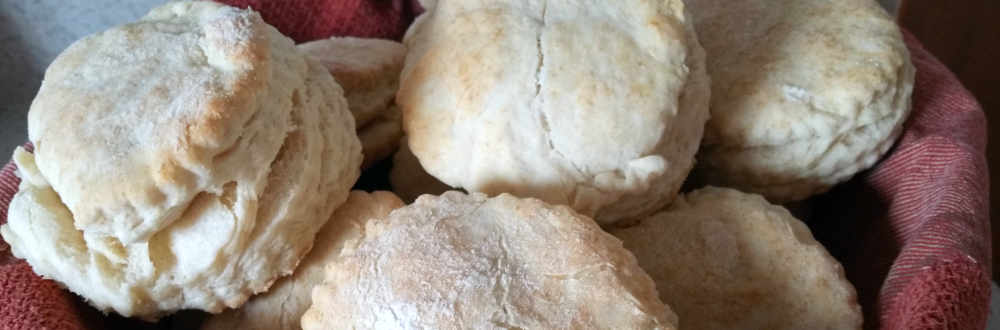
Don from Munday, Texas, is fond of the phrase You can put your boots in the oven, but that don’t make ’em biscuits, which is a way of saying that even if you call something by a different name, that doesn’t change its essential nature. A more common version: Just because a cat has kittens in the oven, that don’t make ’em biscuits.
This episode is hosted by Martha Barnette and Grant Barrett, and produced by Stefanie Levine.
Books Mentioned in the Episode
Music Used in the Episode
| Title | Artist | Album | Label |
|---|---|---|---|
| Here Comes The Meter Man | The Meters | The Meters | Josie |
| Cissy Strut | The Meters | The Meters | Josie |
| Make The Road By Walking | Menahan Street Band | Make The Road By Walking | Dunham |
| Thankful ‘Bout Yourself | The Blackbyrds | City Life | Fantasy |
| You Can’t Beat Two People In Love | Lynn Collins | We Want to Parrty, Parrty, Parrty | People Records |
| Tired Of Fighting | Menahan Street Band | Make The Road By Walking | Dunham |
| Volcano Vapes | Sure Fire Soul Ensemble | Out On The Coast | Colemine Records |

