

How colors got their names, and a strange way to write. The terms blue and orange arrived in English via French, so why didn’t we also adapt the French for black and white? • Not every example of writing goes in one direction across the page. In antiquity, people sometimes wrote right to left, then left to right, then back again — the same pattern you use when mowing a lawn. There’s a word for it! • A whiff of those fragrant duplicated worksheets that used to be passed out in elementary schools. Do you call them mimeographed pages or ditto sheets? • Also: three-way chili, hangry, frogmarch, the cat may look at the queen, hen turd tea, and the rhetorical backoff I’m just saying.
This episode first aired June 23, 2018. It was rebroadcast the weekends of April 27, 2020, and May 13, 2023.
Transcript of “Mimeographs and Dittos (episode #1502)”
You’re listening to A Way with Words, the show about language and how we use it.
I’m Grant Barrett.
And I’m Martha Barnette.
One of the delights of traveling around the country and talking about language is going to a town and asking people what is the one word or phrase that marks you as being from this area.
Yes, absolutely.
Well, because you and I have this fascination with this kind of thing, I’ve been getting a kick out of a hashtag on Twitter called Words Where You Are.
And this is one that was started by the editors of the Oxford English Dictionary.
They want people to send them words for them to investigate as being particularly local.
And I’ve had a great time going through and looking at some of the things that people are suggesting that they look into.
And one of them that rang a bell for me was the word three-way.
But it’s not the three-way you think.
Not the three-way you’re thinking.
No, this is a Cincinnati term.
Do you know it?
Is this a kind of intersection?
No.
No.
What is it?
Oh, that’s a good guess.
I don’t know what it is.
But no, it’s a kind of food.
Cincinnati chili, which itself is a really specific kind of chili, it’s started in the Macedonian community there, and it’s chili that’s seasoned with Mediterranean spices.
But Cincinnati chili is made lots of different ways, including two-way, which is spaghetti topped with chili, and three-way, which is spaghetti, chili, and cheese, and there’s a four-way and a five-way.
And if you’re from that area, you absolutely know what three-way means.
I should have guessed food.
I should have guessed food.
Of course, right?
Yes, absolutely.
And the hashtag again is?
Words where you are.
Well, I can imagine that you’re going to share some more of this later in the show.
I just might.
And, you know, this show is also about words where you are.
We take calls from all over, including yours, 877-929-9673.
And we are happy to receive as much email as you want to send.
Words@waywordradio.org, and let’s chat on Twitter @wayword.
Hello, welcome to A Way with Words.
Hi, this is Margaret from Montgomery County, Indiana.
What can we help you with, Margaret?
I was wondering about the correlation between the mimeograph machine and the word ditto, because when I was in elementary school in the early 80s, we would have to take these papers down to the secretary’s office and make dittos, as the teacher called them on the mimeograph machine.
We never made mimeographs, and we would get these little bluish-purple-y ink copies to take back to the teacher, and I never understood how they were called dittos because we had always considered dittos something like an agreement, like, I ditto your sentiment.
And I never knew why I wasn’t carrying back a stack of mimeographs.
Oh, there’s so much to unpack here.
Oh, my gosh.
First of all, we can talk about the coolness of those purple printouts as they came off the machine, right?
They were cool to the touch.
Oh, yes.
Yeah.
And what was your experience of the teacher passing them out to the students?
Oh, it was kind of a big deal.
Generally, it was a math test or a phonics lesson at that age.
But if you were lucky, you got to crank the handle.
It was a big deal.
Oh, you’re all about producing them.
Now, I’m all about when they pass them out to us and sniffing them.
Oh, yeah.
I remember the first time that happened in first grade, and I was thinking, first grade is going to be all right.
You were sniffing alcohol, you know, right?
I know.
Yes, methanol, right?
It’s just, oh, my gosh, that sensation.
I’m sure if I smelled it now, I would be immediately back in Mrs. Berry’s class at Field Elementary.
I guess I just gave away two of my security questions there.
And your cat’s name?
Yeah.
But that methanol, not only is it a thing that you smelled, it’s what made the pages cool as it evaporates and you get that cooling sensation.
You’re using mimeograph and ditto kind of interchangeably.
Is that what I’m hearing, Margaret?
Well, I never understood why the mimeograph machine didn’t make mimeographs.
Like, that’s what the papers were called.
As a little kid, how did they come up with calling the papers or the copies dittos?
Yeah.
I wonder if there was just some interchangeable looseness of language there.
Because ditto machines and mimeograph machines were very, very different.
The mimeograph machines used a kind of stencil system.
And the Ditto machines used kind of a waxed paper that was imprinted.
Yeah, two-ply waxed paper imbued with ink that would come through, right?
Yeah.
And then the cool solvent.
I mean, the kids were actually sniffing the leftover solvent that made the wax print on the page, if I’m understanding the process correctly.
Let the ink come through, right?
Right.
Where you had pressed with either your pen or your typewriter.
Yeah.
Yeah.
So it saves you from the problem of typesetting.
That was what made it so popular in terms of printing.
But these two machines started separately.
The Mimeograph is much older.
Dates back well into the mid-1800s or so.
Yeah.
But it was a brand name.
The machine itself was patented by Thomas Edison, but it was one of his licensees that came up with the name Mimeograph.
And it was one of many names for these machines and really made that name stick.
And it became generic.
And then by the 1919 or so, the Ditto machine came along with this different process.
It produced fewer pages, but it was easier to do, and the machines were cheaper.
And it was also a brand name, and it also became generic.
And I can totally see how, by the time the 1980s rolled around, Margaret, and you were in school, mimeograph and ditto kind of seemed like the same because they both produced pages for your class and weren’t really familiar necessarily with what was happening inside the machine.
Right.
And then they got replaced by Xerox and Xerography, which come from the Greek word for dry.
Like xeriscaping is when you plant your yard so that it doesn’t require water.
So the name Xerox, then that’s a selling point.
You don’t have to deal with filling the reservoir of your ditto machine with alcohol, right?
Right, you’re photocopying.
Yeah, you’re photocopying.
Yeah, that’s amazing.
So how’s that, Margaret?
That’s a pretty short story for a longer history of two different kinds of reproduction technology.
I love it.
I really appreciate it.
I didn’t realize ditto was a separate machine altogether.
So I’ve learned a lot.
So thank you.
Yeah, that’s where the confusion lies.
Yeah, and the word ditto, by the way, from Italian goes back hundreds of years, what, 1500s in English.
So it’s been used in, and there’s a double apostrophe that you can use as a proofreader’s mark, which means duplicate this or this has been duplicated.
Yes, I’ve seen that.
I didn’t, I just called them double apostrophes.
Yeah, but that’s also the name for that double apostrophe is a ditto.
What do you know?
There you go.
Thanks, Margaret.
We really appreciate it.
Yeah.
Thank you very much.
All right.
Bye-bye.
The obvious etymology, of course, of mimeograph is to write the same.
Right?
Mimeo means like to mime.
You’re mimicking something.
Mimic and mime.
And then graph to write.
But I wanted to talk about or just mention these other names for these similar machines that have kind of just been lost to history.
The formograph, the mimeoscope, spirit duplicators.
A ditto machine is a kind of spirit duplicator, but nobody calls it that except if you’re in the business.
Yeah, you’d think that would be something else, a spirit duplicator.
Yeah, yeah.
It’s like ghosts and Ouija boards or something.
Hectographs, roneographs, papyrographs.
All kinds of names for them.
Yeah, but you can find them in patent applications and old sales guides and old catalogs, but they’re just not as common as mimeographs and ditto were.
I’m interested, too, that Margaret was focused more on the machines themselves.
I can remember that thudding kind of sound that they made, you know, when they were running those things off.
But that kind of solvent that was in those gave people headaches.
The people who worked with them a lot, like it caused nausea and headaches among the office workers who were running them a whole lot.
And it’s not just the alcohol.
The aniline, which gave it the purple color, is poisonous.
Oh, really?
Oh.
But we are taking your calls, 877-929-9673.
And we’re accepting your emails, words@waywordradio.org.
And we’re talking to you on Twitter @wayword.
We’ve talked before about words that kids make up to make themselves understood when they just can’t reach for the right word.
We got a couple of examples of those recently.
Sharon Bulger wrote to say that her two-year-old used to use the word lasterday.
Oh, yeah.
That’s a fairly common one.
Yeah.
For anything that’s happened in the past, like not necessarily just yesterday, but something that happened two hours ago.
It happened lasterday because it’s in the past.
And then Angela De Los Santos talked about how when she was working as a nanny, she had a charge, a young child, who used to use the word spicy to mean hot as in temperature.
So the kid would, you know, stick a toe in the bathtub and say, oh, it’s too spicy.
I love that.
That reminds me.
It’s a little different.
But my son used to have a problem with words beginning with S and P.
Actually, many children do.
So things weren’t spicy.
They were piscy.
Piscy.
And they weren’t spiders.
They were piders.
And did you eat paschetti?
No, we didn’t eat paschetti.
Oh, you didn’t?
But it was cute, and it’s something I remember.
Now that he’s 11, he’s embarrassed by it, but I still tell the stories.
To hundreds of thousands of people, right?
To hundreds of thousands of people.
I love you, son.
Hi, you have A Way with Words.
Hi, this is Colleen Herning in Fairbanks, Alaska.
Hey, Colleen, welcome.
Welcome to the show.
What’s up?
Oh, I just wanted to know what the source of the word hangry is.
A while back, I was talking about how I was feeling really hungry and how irritable I get, and one of my friends said, oh, well, you’re hangry.
And I hadn’t heard that word before.
-huh.
Can you guess where it comes from?
I can guess that it’s a combination of hungry and angry.
Yeah, of course, yeah.
Yeah, you don’t sound hangry right now.
No, I just had a really good bowl full of bananas, yogurt, and cottage cheese.
So I’m very patient right now.
That’ll keep you going.
There should be another word like that after you’ve had something like that and you’re really happy.
Exactly.
Well, Colleen, hangry dates back to at least the 1950s, which surprises a lot of people because it really had a resurgence in the 1990s.
You kind of see it coming around in the late 90s as a meme or a word that kept getting submitted and resubmitted to dictionaries and would show up in new word votes and that sort of thing.
In the last few years, Snickers started, the candy bar people started a television commercial campaign where they used the idea and the word of hangry to suggest that if you’re irritable because you’re hungry, then the Snickers is the answer.
And that’s it for you to decide.
Your breakfast sounds better to me.
And so now we have this word that is in many dictionaries.
And in January of 2018, recently, the Oxford English Dictionary finally included an entry for hangry.
Oh, that’s so cool.
That’s like the crowning of a word.
That’s like the ensconcement of a word.
Yeah, when you make it into that dictionary, you know you’ve made it.
Yeah, yeah.
So there you go.
Cool.
Okay, well, thank you very much.
Yeah, you too.
Thanks for calling.
Really appreciate it.
Okie doke.
Bye.
Bye now.
Yeah, you don’t want to have an argument with someone when you’re hangry.
No.
You don’t want to do something really important when you’re hangry.
No, no.
You want to be, what’s the word for if you’re happy because you’re full?
Happ, full, flappy?
I don’t know.
Why don’t we have a word for that?
Well, I know the feeling that when I have what’s called a burrito baby.
You eat a giant burrito and it’s like you’re pregnant.
You’re just like a big round belly from a Fulbright.
Yeah.
I guess you’re sufficiently Sifonsified.
Yeah, there we go.
Look that one up on our website. You’ll come up with some cool calls that we’ve taken about it. And call us with your language question, 877-929-9673, or send it to us in email. The address is words@waywordradio.org.
You’re listening to A Way with Words, the show about language and how we use it. I’m Martha Barnette. And I’m Grant Barrett. And here he is, our quiz guy, John Chaneski.
Hi, John. Hi, Grant. Hi, Martha. I have a great quiz for you today. Now, author Tom Wolfe passed not long ago, and it was a great loss to both fiction and nonfiction and to the English language in general, as Tom Wolfe really wrote in a very idiosyncratic way.
He came up with phrases or popularized phrases which have a place in the OED and that were only known in certain circles before he popularized them. So we’re going to do a little quiz about Tom Wolf-isms, if that’s okay. Great. Okay. Great. Good. For example, one of the most famous phrases he popularized, he uses the title of a 1979 book. Now it had been around for years, meaning just what is needed.
Wolf’s application of it gave it a stronger sense, like having the qualities to perform a difficult task. Now that phrase, do you know what it is? The right stuff. Yes, the right stuff. I was going to say applied to astronauts, but then once you say astronauts, that’s the giveaway.
Yeah, so the right stuff. Let’s look at some more. Now, listeners of the show who were born in the 1980s, 90s, or the aughts might need to have it explained to them why Tom Wolfe coined what descriptor for the 1970s? The me decade? The me decade. Yeah. Do you know why that was?
Well, the 60s were still, they still remembered World War II. People were still concerned about what they could do for each other and for the country and rebuilding. Once they got into the 70s, people were more inwardly directed. So that’s why Tom Wolfe came up with the me decade.
Though I thought the 80s were more the me decade. People seemed a lot more self-interested in the 80s. Wolfe took a military term for anti-aircraft fire and made it into a metaphor for criticism or bad publicity, leading to a term for someone whose job it was to field such criticism in much the same way Austin Hedges, Travis Darnot, Gary Sanchez, or Kurt Suzuki would for their baseball teams?
Flak? F-L-A-K. Right, F-L-A-K, flak. And what is a person who takes care of such flak for people? They’re a flak catcher. Flak catchers. A PR person.
Yes, exactly.
He called them flak catchers, right.
Speaking of that sport, Wolf used a term for someone who exhibits tough or ruthless behavior, reminiscent of someone who does not play a game with a soft projectile?
Hardball?
Hardballer.
Call them a hardballer, yes, yeah.
Wolf introduced a word meaning a high level of celebrity. It’s a takeoff on an earth sciences word for the layer about 30 miles above the surface of the earth.
Stratosphere?
Atmospheres.
Right, but what do people who are celebrities, what are they more concerned with than stratus?
Stratosphere?
The statusphere, yes.
I think you’ll know this one. This term means to approach or even extend the limits of what is possible. It was a term used by pilots and astronauts, and the office supply mentioned in it means the combinations of speed and altitude, range and speed, or speed and stress that can constitute the limits of a plane’s capabilities.
Pushing the envelope.
Pushing the envelope, yes.
Wolf took a three-word phrase, famous as something a New Yorker might say, and squeezed it into a one-word interjection in Bonfire of the Vanities. You can even see it on a sign welcoming you to Brooklyn.
Forget about it.
Yeah, forget about it.
You’re in Brooklyn.
That’s all I have for today about Tom Wolfe. Rest in peace, Mr. Wolfe. We love all these phrases you gave us. Thank you so much.
Thanks, John.
We’ll talk to you next week.
All right, talk to you then.
More about language coming up with your calls, 877-929-9673.
Hi, you have A Way with Words.
Hi, my name is Stephen Schein, and I’m calling from San Diego, California.
Hi, Stephen. Welcome to the show. What’s up?
Hi, thank you. Well, today I have a question about colors. A while back in college, I’d studied French, and then we learned about the colors. And it’s got me thinking recently, why in English do we take some colors from French but not others?
For example, there’s blue and orange, which is blue and orange.
But there’s also noir and blanc, but in English we use black and white.
And then there’s also some other ones like marron, which sounds like maroon, but it’s more chestnut color.
And then brun, which sounds like brown, and it is brown, but it’s not brown.
So I normally wouldn’t know where to start with researching this question.
But since I’m a longtime listener, I figured maybe you two might be able to help answer this and get to the bottom.
And boy howdy. Yes, we can.
So your question is, why do some of our colors come from French and some of them from somewhere else?
Yeah, I guess why is it cherry-picked?
I mean, I guess in cuisine we might be taking a lot of French words or maybe not.
So I guess in colors, which is so, like, elementary, I guess, why is it so like this but not that?
Dude, that’s your clue, Stephen.
The elementary nature of the colors is the clue.
There’s this crazy thing that happens in languages, is that as languages mature, they add words for colors in approximately the same order almost always.
That is, they first start with black and white, and then they add red, and then they move on from there and they start adding colors.
So the newer, that’s in quotes because new is a problem word, but the newer a language is, the less likely it is to have names for all the colors and the more likely it is just to have black and white and red.
So all of the colors that don’t come from French tend to be from languages from which English is descended before French ever had a role in English being English.
So from Old Norse and Old Saxon, for example, and before that from Proto-Germanic.
And before that the you know the proto-indo-european so black white red green yellow those first five.
They come from old norse or old saxon and then we get to the newer colors that come from old french.
That’s blue brown old germanic purple from latin orange from old french but via arabic and persian.
From Sanskrit. And then pink, which just blows people’s minds, is modern English, maybe middle.
English, depending on how you want to count. And it’s only from the 1600s. Pink is a relatively new color added.
And pink doesn’t exist in that many languages as a perfectly synonymous word that you can say pink in English is the same as pink in another language. So it’s really, really complicated.
But the longer a word has been in English, the more likely it is to come from the older languages that English sprang from.
Well, that is just fascinating.
Especially that pink is, you know, again, if we’re using invisible air quotes, new.
Yeah, new.
New?
Huh.
That is so interesting.
There’s a great book that I want to recommend to you.
You can get it at bookstores just about anywhere.
Order it online.
It’s called The Secret Lives of Color.
It’s by Cassia St. Clair.
And she’s written this amazing book that really gets into the etymologies, but the histories of the colors, the ones that come from bugs or other kind of living life, the ones that were directly associated with, say, certain empires or certain royalty.
And the thing I love about it is that every entry for a color, the color itself is on the page.
So often when I have these books or even articles that talk about colors, they’ll talk about a color like vermilion and compare it to, say, crimson, but they won’t show me how those colors differ from each other.
And this book does that.
So it’s called The Secret Lives of Color by Cassius St. Clair.
That sounds fantastic.
Awesome.
Thank you so much for throwing water on this curiosity vine that’s, I guess, been burning for a bit.
Well, maybe it’s water so the seeds grow, not water to put out a fire.
Exactly.
Exactly.
Thank you very much for your call.
We really appreciate it.
Thank you.
My pleasure.
Absolutely.
Bye-bye.
Well, what’s been on your mind in terms of language?
We’d love to hear about it, so call us 877-929-9673 or send your thoughts to us in email.
That address is words@waywordradio.org.
We were talking earlier about the Twitter hashtag wordswhereyouare, which is part of the Oxford English Dictionary’s effort to try to find local words.
Right. It’s a big capture technique that put the world to work to come up with this language that might not be in the dictionary yet.
Yeah, and a great example of that is time machines, T-Y-M-E.
Oh, yes.
Right?
Yeah, we have listeners right now going, I know that one.
Everybody in Wisconsin, right?
Time machine is what their brand name for ATM is in that part of the country.
Right, and people from Wisconsin move to a different part of the world, and they say, well, that’s what somebody said on Twitter.
I went to college out of state and was very confused when I said I have to stop at the time machine before we go to the bar, and people laughed like I was making a joke.
I just needed cash.
I love it, though.
Wouldn’t it be cool if we actually had time machines on the corner, like next to every bank?
Right.
I’d pay cash for that.
Hello.
You have A Way with Words.
Hey, Grant.
This is Nancy Dennis calling from Panama City Beach, Florida.
Hi, Nancy.
Welcome to the show.
It’s so nice to talk to you.
Hey, Nancy.
Thanks.
I have an old saying that my mother always said to me.
She would be looking at me, and of course I would get antsy thinking, what have I done wrong?
And I’d say, Mama, why are you looking at me?
And she’d say, well, can’t the cat look at the queen?
And I wondered, does that have some history, or is that something she might have made up?
Oh, my goodness.
Does it have some history?
So let me recap here.
So your mama’s looking at you, and you ask her why, and she says, can’t the cat look at the queen?
Yeah.
Okay.
But Nancy, would you believe this goes back at least to the mid-16th century?
Whoa.
Yeah, long history.
Yeah, it’s really, really old.
And the sense of it is the same idea that you’re talking about, that somebody can look at royalty regardless of their own status or position.
Oh, my goodness.
Yeah.
It appears in a book of Proverbs from 1562 in the form, what? A cat may look on a king, you know? There are different versions of it throughout the time after that.
Like a cat is free to contemplate a monarch. Did you see the movie Victoria and Abdul a year or two ago? It was about Queen Victoria. And this man is brought to her from India to work for her. And he’s given all these instructions about how you’re supposed to treat the queen.
You’re supposed to not look at her in the eyes. And when you leave the room where the queen is, you’re supposed to back out of it so that you’re being very, very deferential. And the idea with this saying is that cats don’t have to do that. They’re so out of the class system that the rules don’t apply to them.
Oh, no rules apply to cats.
No rules apply to cats.
It sounds like you have firsthand experience of that.
No, but I just don’t like to be around them.
And then there’s some transference there, the idea that some of us are so outside of somebody else’s system of respect that we are just observers and not really participants.
Well, thank you for enlightening me.
Well, thank you for sharing this family story.
We really appreciate it.
It was really nice to talk to you.
Take care now.
You too.
Enjoy it, and I love the show.
Thanks so much.
Call us again sometime, okay, Nancy?
Okay, thanks.
All right, bye-bye.
I was stopped in my tracks the other day when I used the term frog march, and I was talking to a really smart person, and she had no idea what I was talking about.
You know this term.
Yeah, absolutely.
Frog march meaning to hustle somebody out of a bar or something like that?
Usually by not just hustle them, but you’re holding them in a certain way.
Yeah, yeah.
You’re either grabbing them by the collar or pinning their arms back.
Right.
And I was so surprised.
I asked a couple other people I know who are also really smart, and they didn’t know this term.
Frog march being a transitive verb.
You frog march somebody out of their office or something because they’ve misbehaved.
What I didn’t realize was that it goes back to an even older use of Frog’s March that originated with London police in the 19th century.
And it referred to carrying a drunk or a disorderly person out of someplace by carrying him face down between four people, each of them holding a limb.
That’s right. And then tossing them back in the back of the police.
Yeah. Then later it referred to marching somebody out on their feet, but with their arms pinned back.
Yeah, it’s a little different, but they’re both unwilling.
They both didn’t want to go.
Exactly. Frog March him out of there.
You can talk to us on Twitter. Share the words you found in your reading at WeWord, W-A-Y-W-O-R-D.
Hello, you have A Way with Words.
Hi, this is Steve Austin from Dennis, Massachusetts.
Hi, Steve.
Well, something that I’ve noticed over the years, I guess,
Something that I remember as a cartoon years ago
Was a little cartoon of a little boy in a donkey cart
With a long stick and a carrot hanging from the string on the end of the stick,
Holding it in front of his donkey,
Which obviously every time the donkey went for the carrot, it moved the cart.
And more recently, it seems that that has morphed into something along the lines of when they talk about a carrot and a stick,
Especially in diplomacy, they’re talking about either here’s a carrot or there’s a reward or here’s a stick, we’re going to beat you with it.
And it just, to me, has a totally different feeling and meaning.
So you’re picturing that carrot being a motivator hanging out in front of the…
Yeah, and almost just a little persuader that you never actually get,
But it just kind of keeps you moving along in the direction
Whoever’s holding the carrot wants you to go.
Yeah, that’s often the modern interpretation,
But the other interpretation is actually the earlier one
And what was originally intended,
The idea that you use carrots that sometimes are given to the animal as a motivator.
You can’t just hold a carrot out of sight or out of reach
And expect the animal to keep going after it.
At some point, they just give up.
And then you have the stick as the threat.
Some people kind of misunderstand.
I think the carrot and the stick are about the stick from which the carrot is dangling.
But that’s not right either.
It’s about the threat of the stick to wallop the animal, which you shouldn’t do,
Or the promise of the carrot, which eventually you will deliver.
And one of the ways that we can know that that was the original interpretation
Is varieties of this expression exist in other languages
Where they don’t use carrot or they might use sweetbread in German
And gingerbread in Russian and a few other things.
In some cultures, they also use whip instead of stick and a variety of other things.
So the original really was about occasionally delivering on the promise of the carrot
And occasionally delivering on the threat of the stick.
So you actually have to do them sometimes for them to continue to work.
Right.
That’s random reinforcement when you’re working with dogs.
Yeah, anybody who’s trained their animal knows about random reinforcement.
You don’t always give them the treat when they do the thing you want them to do.
Yeah, they’re more motivated if they get it only sometimes.
Okay.
Well, I had Googled it at one point,
And one of the things that came up on Google was a quote from Winston Churchill
During the Second World War,
Talking about the German war machine slowly grinding its way
After the carrot up the hill.
And mentioning a donkey, so sounding like, again, they were holding a carrot in front of the donkey for the German war machine to keep moving.
That’s right. Yeah, that’s the modern interpretation.
And the older version goes back at least to the 1800s, predating Churchill.
But the cartoon, it’s almost kind of iconic, the idea of using the carrot in front of the animal to motivate it
So that it keeps going blindly and not really thinking about that it’s not actually reaching the reward.
Right.
So that cartoon has been used zillions of times in a lot of different ways,
And it’s kind of part of our Anglo culture, just to think about it that way.
But it’s not this source of it.
Okay.
Steve, thank you so much for your call.
We really appreciate it.
Okay.
Thanks very much.
Take care now.
Bye-bye.
Bye now.
Thanks, Steve.
The great writer William Gass published a book in 2006 called A Temple of Texts.
And in it, he annotated a list of the 50 books that have most influenced his thinking and work.
And he writes about his first reaction to reading each.
He wrote about Ben Johnson’s book, The Alchemist.
And I loved one of the lines in there.
He said, the true alchemists do not change lead into gold.
They change the world into words.
Oh, that’s nice.
That is a magical thing.
I saw that when my son learned to read and write.
For him, just writing his own name on a piece of paper was practically a magical spell.
Right.
I’ve heard it described as giving someone wings, right?
Yeah, the power.
Of course, he also learned to write words like poo, but that’s a different kind of power.
This show is about language examined through family, history, and culture.
Stay tuned for more.
Thank you.
You’re listening to A Way with Words, the show about language and how we use it.
I’m Grant Barrett.
And I’m Martha Barnette.
Leonardo da Vinci was a creative genius, of course,
But he also had a really ingenious way of writing.
You know about this, right, Grant?
Yeah. Well, he wrote Mirror Image, right?
Right. He started at the right-hand side of the page and wrote toward the left.
And he slanted his letters in that direction, and each character was inked backward, right?
Yeah. If you put a mirror up to it, it would make perfect sense to the rest of us.
And nobody knows why he did that for sure.
Some people think it was that he was trying to conceal what he was writing,
But I think more likely is the fact that he was left-handed.
And if you’re writing with ink across a page, you’re not going to smear the letters if you’re doing that.
That’s right.
Yeah, that’s the smudge, the telltale smudge on the left-hander’s arm, right?
Yes.
Yes.
It was probably also a good exercise for his brain.
But that reminds me of another of my favorite words, which is booster feeding.
Oh, yes.
Yes.
Am I remembering this correctly?
So you start on the upper left, as usual, and you write to the right.
But when you get to the end of the line, instead of going back to the start of the next line, you simply start at the end of the next line and move left.
So it’s a zigzag all the way down the page.
Left to right, right to left, left to right, and so forth.
Yeah, it’s like you’re mowing a lawn or like an ox plowing in the field.
Oh, are we hearing that in the word?
We are hearing the etymology of booster feedin.
And it comes from Greek words that mean ox turning, because that kind of writing mimics the action of an ox pulling a plow.
How about that?
And what’s super cool is that there are examples of this kind of writing in antiquity from Crete and Italy and India and Northern Europe and even Easter Island.
And you see the Greek word for ox, bus, in a lot of other words.
You see it in bulimia, which literally means ox hunger.
You see it in bucolic, which describes the kind of place that you might see.
A pastoral scene with cows in the pasture.
Yeah.
And the strophedon has to do with turning.
And you see that in catastrophe, which is literally a turning down, a turn of events that’s very bad.
So, boosterfedon and boosterfedonic.
And I wanted to share also that back when I used to write a word of the day newsletter years and years and years ago,
One of my subscribers sent me a ditty based on the word boostrophedonic.
Her name is Ilana Stern, and her ditty was,
You have planted a seed most demonic.
Now I yearn to be boostrophedonic.
But to turn like an ox is quite unorthodox and damn hard in this mode electronic.
How nice is that?
How many times do you see boostrophedonic in a ditty?
I bet we have listeners who would send us more.
Maybe.
And they might also tell us how they write, because I know there are exceptional people out there who just don’t do it the normal way on purpose.
Oh, I’d love to hear about that, too.
Tell us how you write, 877-929-9673, or send your stories of strange handwriting to words at waywordradio.org.
Hello.
You have A Way with Words.
Hi, Martha.
This is Mark.
I’m calling from Los Angeles.
Well, hello, Mark.
What can we do for you?
Well, I encountered kind of a word that I thought was everywhere, and I’ve recently found out it’s not.
And the word is gank.
I used it, you know, it means to steal, I believe, or how I use it, and I used it around some work friends, and nobody knew what I was talking about.
And, in fact, one person thought I was talking about something having to do with video games.
So I wanted to know what’s the deal with that word, and why don’t these people know what’s going on?
What were you doing when you ganked something?
I don’t remember exactly at that time, but I’ve certainly been known to gank fries at a diner.
You know, that’s something that I would do.
So you snagged somebody else’s fries without asking?
Yeah, I didn’t want to order them myself, but I still wanted to eat them, so I just kind of took them.
Okay.
Oh, I have to confess, I didn’t know the word either.
Well, I have it in one of my dictionaries that I made.
Oh, I must not have gotten to that page.
You didn’t make it to G?
I started from Z.
Come now.
Yeah, I have an entry for that in the official dictionary of unofficial English.
The other question I have for you, I guess, besides what were you doing, is where do you think you learned it?
It’s hard to say.
I mean, I grew up in the Northeast, in New Jersey, outside of Philadelphia.
And then it just sonically sounds like some of the other Philadelphia words like John and things.
So I wondered at that point that maybe if it was a Philly regional.
Then I started asking Philly friends, and they didn’t know what I was talking about either.
Do you listen to a lot of hip-hop?
I do know some, but I’m certainly, it’s passing knowledge.
I’m certainly not in the community.
Okay.
Because the word is strongly associated with African-American Black English, vernacular English, Black English.
It shows up in hip-hop as early as 1987 in an NWA song.
So gink as a verb meaning to steal has got at least 30 years of history, probably more.
The entries I did for it took it back to the 90s.
There’s another gank that I think is related.
It’s where you have fake drugs that you pass off as real drugs, and the drugs themselves that are fake are called gank.
So it’s all about the idea of being deceived here.
It pops up again and again.
You can find it in a ton of black fiction as well.
But again, hip-hop lyrics are a real strong source of this.
I would suspect that this is where most people learn the word if they weren’t one of the people who used the word in the first place.
So, I mean, if that was NWA, was that probably Los Angeles area?
Maybe.
Probably was the Los Angeles area.
Yeah.
You never know, though, because it’s been widespread throughout its history.
One note to make here is the slang lexicographer Jonathan Green, in his vast and highly recommendable Green’s Dictionary of Slang, suggests that gank with a G, G-A-N-K, is related to jank, J-A-N-K.
Right.
Think I buy that, but it is hard with slang to really know what’s connected.
And the other thing I’m hearing is, for some reason in my mind, ganking someone’s fries is kind of associated with this interjection that I’ve heard people use with the yoink when they take something that isn’t theirs, right?
Sometimes they do it as a playful act to kind of keep away, but sometimes they do it because they want it.
In any case, that’s the most that I know.
But again, a 30-year history is a long history for a slang word to stick around and keep being used.
Mark, call us again sometime.
Absolutely.
Thank you, guys.
Take care.
Have a great day.
Take care.
Bye-bye.
What’s the slang that you’ve been hearing that you just can’t figure out?
I bet we can help.
Or you can send your questions to words@waywordradio.org.
And hit us up on Twitter at WayWord.
We are still getting email about our conversation about what I have come to call lane squatters.
That is people that are in front of you in line at the green light left turn lane.
We’re going to be in the retirement home going through the emails and phone calls and letters from people with the new name for the person who won’t turn left when the light turns green.
Right.
And it prompted a response from a truck driver in San Antonio, Texas named Monty D. Young.
And he said that among truckers, when you’re talking about someone who holds up traffic at lights and in general just has no common sense when it comes to driving, truckers call that a steering wheel holder.
I love that.
Yeah.
That reminds me of the office term for somebody who, the chair warmer.
Chair warmer, yeah.
Just someone who’s occupying a place but not doing the work.
Yeah, same thing.
It’s not just Monty’s term.
A lot of truckers use that, a steering wheel holder.
Steering wheel holder.
I’m afraid I might have been one of those.
929-9673, or email us. We love the email. words@waywordradio.org.
Hello. Welcome to A Way With Words.
Hi, this is Eric Johns. I’m calling from Fairbanks, Alaska.
Hi, Eric. Welcome to the show.
Hello, Eric. How can we help you?
Well, I have a question about an expression I feel like I’m hearing more and more or it’s kind of finding its way into everyday use.
It’s the expression, I’m just saying.
It kind of feels like I’m hearing it when maybe someone is having kind of a gentle debate or a friendly sparring match,
And it seems to be a way that somebody kind of holds up their hands to say,
Well, I just want to express myself, but don’t judge or critique my comment.
Where are you hearing this?
Well, I would say I hear it in my own family quite a lot.
And just, I think, being more attentive to it in my family, I hear it more outside of that as well.
So it seems to be becoming pretty prevalent.
Again, I think just in the friendly kind of sparring and banter between friends when you debate an issue,
You know, maybe the sentiment would be something like, I’m just saying don’t drive so fast.
But in fact, I find it to be kind of an unfinished thought, and rather it’s become sort of a way to soften or maybe blunt one’s comments.
Yeah, Eric, I was going to ask if it felt disingenuous at all.
A little bit, because on the one hand, they’re making a statement, and then on the other hand, they’re saying,
But you don’t really have the right to critique it or weigh it or whatever.
So I want to say what I want to say, but don’t interact with it too harshly.
You know what I mean?
Right, right.
They’re kind of beating a hasty retreat.
Yeah.
They’re lobbing something and then running back behind something else.
It’s a bit of a dodge or a bit of a weaselly axe.
Yeah, it’s like a verbal emoji or something, you know, just a little tag onto the end of it.
Yeah, what would that look like?
I wonder what that would look like.
There’s a word for this in linguistics.
It’s not that common, but rhetorical back-off is what you’ve just described,
Where you literally back off of what you’ve just said.
Yes, that’s it.
Okay.
And you’re disavowing it.
Often it is about trying to avoid the consequences of having an unpopular opinion,
Where you pretend that you’re just presenting unbiased fact.
But what’s really happening, your presentation of the fact is in itself a statement of opinion.
Right.
It has meaning.
Yeah.
It does. You’re asserting something and you’re going to the point of saying it so others can hear it.
But again, if they’re unwilling to accept it sort of carte blanche, then it is a back-off.
What did you call that again?
It was a rhetorical back-off.
Yeah.
And you can find some, if you Google that phrase, you’ll find some academic papers on it.
And if you Google even deeper, you’ll find that linguists have been discussing, I’m just saying, in similar expressions since at least the early 2000s.
And the expression is kind of a almost contagious catchphrase has been around longer than that.
A kind of thing where once somebody around you says it enough, you kind of pick up the habit yourself.
That’s why I want to be careful to say it’s not always about dodging the consequences of your words.
Sometimes it’s just a tag that you throw onto a sentence without any real meaning.
I’ve noticed, you know, with my son or with some of his friends, and he’s a teenager, he’s 16.
I’ve even heard it doubled up here recently where somebody said, I’m not saying, I’m just saying.
Yes. I actually have recorded citations for that.
And there’s a parallel to sorry, not sorry.
There’s a few of these going around where you’re saying one thing and immediately denying the thing that you just said.
And kind of expressing your ambivalence, but at the same time trying to get away with something.
Yes.
I find it frustrating.
There are others, present company excluded.
Not to be critical, but…
Or no offense.
Like you say something offensive and you say no offense.
Yeah.
So sometimes we’ll make the qualifier on the front end of our comment.
This is one that seems to be more often made on the back end to sort of, again, potentially get away from, again, the consequences of what we might have said.
Well, Eric, now you have me wondering what the emoji would look like for that.
Maybe somebody with their hands out in front of them or something.
I’m not sure.
I think it’s somebody running away from their words, a running emoji.
I envision that posture of somebody when they make that statement.
They kind of hold their hands up, palms up, almost in apologetic fashion.
It’s an insincere apology or whatever.
Yeah, that could be a whole other show right there.
What’s the emoji for this expression?
Yeah, exactly.
Let’s talk to the people at Unicode or make our own submission to the Unicode for an emoji.
What?
Away with emojis now.
Eric, thank you for your call.
We really appreciate it.
It was great chatting with you.
You too. Take care.
Thanks, Eric. Bye-bye.
You bet. Bye-bye.
877-929-9673 or find your emojis and hammer at that keyboard and send them to us on Twitter @wayword.
Hello, you have A Way with Words.
Hi, this is Julie in Nantucket.
Hi, Julie. Welcome to the show.
How can we help you today?
When I was a teenager and living in New Hampshire with a very large family, I was going past one of the bedrooms one day.
And my father said, Julianne, get in here and help us move this bed.
So I went in and I picked up the end of the bed that was open.
My brother and father were on the opposite end.
Didn’t think about that at the time.
And I only could get it, you know, a few inches off the floor.
And their end was pretty high up.
And my dad says, Julianne, what’s the matter with you?
Are you as weak as hen-turd tea?
At which point I just started laughing and dropped the end of the bed completely.
And then my brother started laughing and my father was like, oh, God, we can’t get anything done around here.
As weak as hen-turd tea.
As weak as hen-turd tea.
Yeah, well, I’d never heard him say it before and I just, I lost it. It was too funny.
Was he someone who kept chickens or did gardening?
Well, he liked to have a garden, and he might have grown up with one, I’m not sure.
And he did get us chickens for a couple of years.
But I think he gets so fed up with none of the kids wanting to actually take care of them.
And then, oh, I know, we had weasels or something coming in and helping themselves to the chickens.
Well, the only thing I can think of is that there’s something called chicken poop tea.
More often than hen turd tea.
And it’s a way of sort of composting chicken poop.
By using about one-third poop and two-thirds water.
And you soak it in there in a pillowcase or burlap sack.
You don’t drink it.
No, no, no, no.
No, you don’t drink it.
No, you do not drink it.
That had crossed my mind for a second.
No, no, I’m sorry.
I should explain that some people think.
That this is something helpful to put on your garden.
There’s some controversy about that.
Got it.
But some people think it’s good for plants, and it’s known around the world as either chicken poop tea or chook poo tea in Australia and New Zealand, where a chook is a chicken.
Yeah, or rabbit poop.
Oh, so this is actually a practice of some sort.
Yeah, it’s a kind of fertilizer, basically, a liquid fertilizer.
Yeah.
Oh.
It would look, I assume, I haven’t spent any time with it really, but I assume that it looks just sort of like weak coffee.
You mean you didn’t do the whole reason?
It’s on my list.
When you have YouTube, why do it yourself?
I couldn’t resist.
Just look at somebody else and make the mess.
But as far as I know, that’s unique to your father, that particular use of it.
But it’s pretty clever, as weak as hen-turned-team.
It is pretty clever.
That’s outstanding.
And he got your attention.
I made you laugh, which is always a dad’s job.
And I’ve thought of it over the years, you know.
And then I listened to your show a lot, which I loved, by the way.
And just, you know, all these idioms.
You just wonder who came up with these things.
You know, you just wish you could find that one person that came out with it way back when.
Well, you know the guy who came up with that one, it looks like.
Oh, good.
Chalk one up for Dad.
Yeah.
Julie, thank you so much for a really nice call.
All right.
We really appreciate it.
It’s been a pleasure.
Okay.
Okay, Julie.
Bye-bye.
Bye-bye.
Sometimes stuff just belongs to a family.
We’ve had calls where something someone said lasted for generations.
And never really left the family but really, really belonged to that family.
And characterized their humor or their outlook.
Yeah, yeah.
It sounds like one of those things.
And you hear something like that and it just takes you back, right?
There are people who are great at language who don’t write books.
And don’t give speeches.
They just do something out with their lives.
And their only audience is their family.
It sounds like one of those guys.
We’d love to hear the stories about language that have come down to you through your family.
Call us, 877-929-9673 or send us an email.
The address is words@waywordradio.org.
Want more A Way with Words?
Listen to years of past episodes at waywordradio.org or find the show in any podcast app or on iTunes.
Our toll-free line is always open, so leave us a message at 877-929-9673 and we’ll take a listen.
We’d love to get your messages at words@waywordradio.org or hit us up on Twitter @wayword and look for us on Facebook.
This program would not be possible without you.
Grant and I are out to change the way we listen and think about language, and you’re making it happen.
Thanks also to senior producer Stefanie Levine, director and editor Tim Felten.
Director Colin Tedeschi, and production assistant Emma Kelman in San Diego.
In New York, we thank quiz guide John Chaneski and that master of keeping it real.
Paul Ruist at Argo Studios.
A Way with Words is an independent production of Wayword, Inc.
From the Recording Arts Center at Studio West in San Diego, I’m Martha Barnette.
And I’m Grant Barrett.
So long.
Bye-bye. you
Words Where You Are
 Is there a word or phrase that’s particular to your hometown? The editors of the Oxford English Dictionary would like to hear about it. In Cincinnati, for example, three-way refers to a kind of style of serving chili. You can contribute your examples on the OED’s site, or talk about it on Twitter using the hashtag #wordswhereyouare.
The Origins of Ditto and Mimeograph
You may remember ditto machines (especially their smell), or even further back, mimeograph sheets. Both the words ditto and mimeograph were originally brand names. The word ditto goes back to an Italian word that means said, while mimeograph comes from Greek words that mean “to write the same.” Later came Xerox machines, whose name derives from the Greek word xeros, or dry, a reference to the printing process. From the same Greek root comes xeriscaping, which is landscaping that requries little or no water. Other terms for similar types of printing devices are formograph, mimeoscope, spirit duplicator, hectograph, roneograph, and pyrograph.
Kids Say it Wrong but Funnily
When trying to make themselves understood, kids can be wonderfully creative with language. A couple of examples sent in by listeners: lasterday, referring to any time in the past, and spicy, describing bath water that’s too hot.
Hangry Meaning and Origin
Colleen from Fairbanks, Alaska, is pondering the word hangry, a portmanteau of hungry and angry, and applied to someone who’s irritable as the result of hunger. Although hangry has been around sincet at least the 1950s, it enjoyed a boost in popularity in the 1990s. In 2018, the Oxford English Dictionary added an entry for this useful adjective.
Tom Wolfe Brain Teaser
Quiz Guy John Chaneski’s brain teaser involves words and phrases that the late writer Tom Wolfe helped popularize. For example, what phrase is associated with Wolfe’s 1979 book with a title that might be paraphrased as “Just What Is Needed?”
Where Do Color Names Come From?
Why does English derive words for some colors, such as blue and orange, from French, but not words for other colors, such as black and white? A fantastic resource about the history of colors is Kassia St. Clair’s The Secret Lives of Color.
Tyme Travel
On Twitter, @mollybackes notes that in Wisconsin, a Tyme machine dispenses cash, not time travel.
The Cat Can Look at the Queen
Nancy in Panama City Beach, Florida, remembers that as a girl, whenever she asked why her mother was looking at her, her mother would respond, “Well, can’t the cat look at the queen?” This phrase goes all the way back to the mid-16th century. A 1652 book of proverbs includes the version “What, a cat may look on a king, you know.” Another version goes, “a cat is free to contemplate a monarch.”
Frogmarch
To frogmarch someone means to hustle them out of a place, usually by grabbing their collar and pinning their arms behind. Originally, this verb referred to police carrying an unruly person out of a building face down with a different person grasping each limb.
Carrot and Stick Origin
Steve in Dennis, Massachusetts, remembers a cartoon that showed a boy trying to persuade a donkey to pull a cart by holding out a carrot suspended from a stick. Is that the origin of the expression carrot and stick? The original metaphor involved the idea of motivating an animal with intermittent rewards and punishment — that is, proffering a carrot or threatening with a stick. It didn’t mean always holding the carrot out of reach.
The True Alchemists
In his collection of essays, A Temple of Texts, writer William Gass observed: “The true alchemists do not change lead into gold; they change the world into words.”
Boustrophedon
Boustrophedonic writing goes from right to left, then left to right, then right to left again. This term derives from Greek word bous, meaning “ox,” also found in bucolic and bulimia (literally, ox hunger) and strophe, meaning turn, like the downward turn that is a catastrophe.
Gank, To Steal
Mark from Los Angeles, California, is curious about the slang term gank, meaning to steal.
Steering-Wheel Holders
Monte from San Antonio, Texas, responded to our query about what to call people who hold up traffic in turn lanes: steering-wheel holders.
Rhetorical Backoffs
Eric in Fairbanks, Alaska, notes the use of the phrase “I’m just saying” as a way to soften one’s comment or avoid responsibility for an observation. Some linguists call such a statement a rhetorical backoff. Other examples are “present company excluded,” “no offense,” “not to be critical,” or the even more elaborate “I’m not saying, I’m just saying.”
Hen Turd Tea
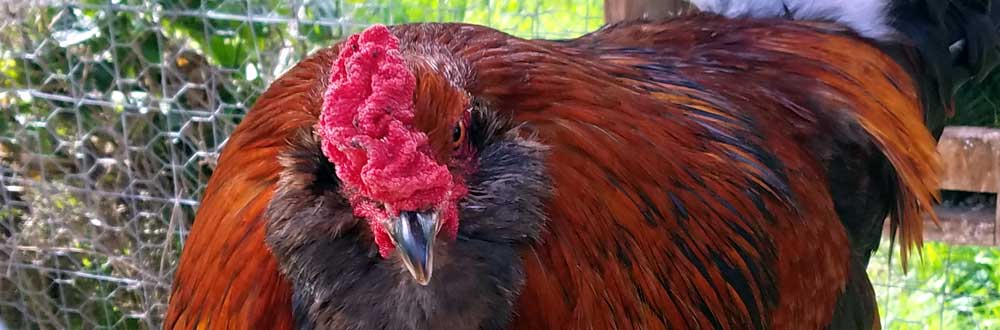
Julie in Nantucket, Massachussetts, was tickled when her father used the expression weak as hen turd tea. More commonly called chicken poop tea, or chicken poo tea, or in Australia chook poo tea, hen turd tea is a mixture of poultry manure steeped in water that some believe is helpful to spread over garden soil.
This episode is hosted by Martha Barnette and Grant Barrett, and produced by Stefanie Levine.
Books Mentioned in the Episode
Music Used in the Episode
| Title | Artist | Album | Label |
|---|---|---|---|
| Melting Pot | Booker T and The MG’s | Melting Pot | Stax |
| Back On The Track | Jimmy McGriff | Electric Funk | Blue Note |
| Green Onions | Booker T and The MG’s | Green Onions | Stax |
| Golden Slumbers | Booker T and The MG’s | McLemore Ave | Stax |
| Time Is Tight | Booker T and The MG’s | Up Tight OST | Stax |
| Soul Limbo | Booker T and The MG’s | Soul Limbo | Stax |
| Chris Cross | Jimmy McGriff | Electric Funk | Blue Note |
| Groovin’ | Booker T and The MG’s | The Best of Booker T and The MGs | Atlantic |
| Volcano Vapes | Sure Fire Soul Ensemble | Out On The Coast | Colemine Records |

