

What kind of book do people ask for most often in prison? Romance novels? No. The Bible? No. The most requested books by far are … dictionaries! A number of volunteer organizations gather and distribute used dictionaries to help inmates with reading, writing, and schoolwork. Plus: For some low-tech family fun, how about egg-tapping? Traditionally played after on Easter, the game involves smacking a hard-boiled egg against an opponent’s. The person who ends up with an uncracked egg wins. And: Just how common is it to give a goofy name to a household appliance? Even your garbage disposal might get a moniker! Also, chelidon, knock the stink off, pony keg, pineapple posture, sprunny, wash-ashores, trailblazer, a punny puzzle about song titles, a Norwegian idiom that means “empty-headed,” a bagpipe serenade, and more. Dinna fash!
Transcript of “What the Blazes? (episode #1562)”
You’re listening to A Way with Words, the show about language and how we use it.
I’m Grant Barrett.
And I’m Martha Barnette.
We heard from Amanda Fair in Evansville, Indiana, and she writes,
I saw my parents over the weekend, and my dad used a phrase that I hadn’t heard in a while.
And when he said it, I actually had to take a step back and think about what he was talking about.
My entire childhood, they called our garbage disposal George.
I also refer to our garbage disposal as such for most of my life,
But when I moved out, I fell away from it.
As far as I know, they didn’t have a disposal with a brand that was similarly named,
But they used it as a proper noun and a verb, like,
Just put it down George, or I’m done, you can George it, or we need to run George, it has a smell.
Make sure you run cold water when you turn on George.
Amanda says she still chuckles when she thinks about it,
But she’s curious whether this might be, say, a small German family inside joke,
And if there are any other strange names that people call their household objects.
So they named their garbage disposal George.
Like it was the monster under the sink eating their refuse.
Right.
Wow.
That’s fun.
Because it’s like a cookie monster-like thing.
It doesn’t eat only cookies.
Right.
And George has his thing that he does.
I think we can at least rule out the German inside joke because garbage disposals just aren’t a thing in Germany.
I think in lots of municipalities, they’re outlawed.
You just don’t find that in a lot of Europe, actually.
Yeah, much of the world, they’re often really pleased to find them in the United States, in Canada, where they’re often called secret readers.
Yeah, there’s some question as to how environmental they are.
But the other question is, are there people who give names to their household appliances?
And I was trying to think of that.
My mother was a schoolteacher, and I remember that they had a radiator in the classroom that they all called Herman because she used to tell them that the clanking in the radiator was some guy named Herman.
That’s good.
Did you ever name anything?
I don’t have anything like that.
I’d love to hear from the listeners, though.
I bet people do.
You just, humans name things, right?
Yeah, definitely cars.
We’ll name the clouds, we’ll name the bugs, we’ll name our cars.
But what’s the odd, weird thing that you name around the house that everybody now calls that name?
877-929-9673 or email us words@waywordradio.org.
Hi, welcome to A Way with Words.
Hi, thank you.
Hi, who’s this?
This is Emily.
I’m calling from San Diego, California.
How you doing?
What can we do for you?
Well, I’m calling because I grew up with this pretty silly word, which is nick it, meaning the opposite side of a joint, like the soft part inside your elbow.
Like if your elbow’s the point, the inside is the elbow nick it.
And it’s one of those words that my family always used and no one else had ever heard of.
And I wondered if it was an actual term that anyone has used or if it’s just a weird family, strange thing that somebody made up once.
So, Nickit, if I were to look that up in the dictionary, how would I spell it?
Well, that’s a good question.
Sometimes we spell it with an N, but sometimes it’s K-N.
So, I’m not really sure.
I’ve never seen it written.
So, in my mind, it’s K-N-I-C-K-E-T.
But I think sometimes other family members would spell it just with the N with no K in front.
I don’t know that one, Martha.
I know a bunch of terms for the inside of a joint, but not that one.
Well, I have a question for you, Emily.
Is there any German heritage in your family?
Aha.
Not that I’m aware of.
This side of the family that uses this term is Ukrainian.
So I don’t know if there’s like maybe when they immigrated over here, they were in the same town with some Germans.
But there’s no German heritage that I know of.
Okay.
The reason that I ask is that one of my favorite terms for the back of your knee is the German term Kniekehle.
That starts with a K and Kniekehle.
And it means literally knee throat, which I think is so picturesque because it kind of looks like a throat there behind your knee.
So, Knee Kayla sort of sounds like Nickit, but who knows?
It literally means knee throat.
Is that what you said?
Mm—
Yeah.
The Kayla can mean throat or pit, which I think is really cool.
Yeah.
That’s exactly what it is.
It’s your knee pit is your knee Nickit.
Yeah.
Or your elbow pit is your elbow Nickit.
Your arm pit is your shoulder Nickit, I guess.
Yeah.
Your shoulder Nickit.
Although it already has its own words.
That’s great.
I like that.
It’s possible.
Related to that.
That’s a good guess, Martha.
Well, thanks.
Well, thanks for that.
I’m going to pass that on to the family.
For the elbow, the opposite side of the elbow, I know a bunch.
Some people call it the obvious things like the crook of the elbow or the crook of the arm, inner elbow,
Crease of the elbow or elbow crease.
But there are medical terms for that one.
The cubital fossa or the antecubital fossa,
Meaning in front of the fossa, fossa being a word for pit or depression.
Ditch, yeah.
And then there’s another word.
The shape of the inner arm kind of looks like the tail of a swallow.
There’s like a forked, if you look at it, there’s kind of a forked pattern to it.
And so they call it the chelidon, C-H-E-L-I-D-O-N.
And that is the genus name for swallows.
And it’s the Greek word for swallows.
Yeah, so your elbow pit, as you might call it, could be called the chelidon.
I like the term shoulder nicket for armpit.
I mean, there’s axilla from Latin meaning armpit.
What’s the oxter term, Martha?
Oh, yeah, oxter.
Yeah, somebody might be carried out of a bar.
If they get combative, they might be carried out by their oxters, which is their armpits.
I heard that word in my favorite book series.
That’s where I learned the word oxtern.
What’s your favorite book series?
Is that the Diana Galbadan books?
It sure is.
Outlander.
Good call.
I read the first six of those, so that’s what I thought it probably was.
Oh, wow.
Emily, I think we’ve thrown a ton of terms at you, so take your pick.
Yeah.
I love Nick it because it also sounds ancient.
Even if it’s just a family word, it sounds like it could have been in the language for 900 years.
It does.
I agree.
I agree.
Yeah.
Or maybe it’s like a little nick out of the back of your leg.
Oh, yeah, that’s true.
I don’t know.
But, you know, Emily, the super cool thing about this show is that if somebody else calls it a nicket, we will hear about it.
Well, I’ll take this to the family Zoom and tell everyone what you guys had to say about it.
The family Zoom.
All right.
Take care, Emily, and be well.
Thanks so much.
Thanks, you guys, too.
Okay.
Take care.
What do you call the back of your knee or the inside of your elbow?
Do you call it a nicket or something else?
Let us know, 877-929-9673, or send any question about language to words@waywordradio.org.
Hello, welcome to A Way with Words.
Hi, how’s it going?
This is James Dorsey.
I’m calling from Waco, Texas.
Hi, James.
Welcome to the show.
Hi, James.
Last summer, I was walking the trail, Appalachian Trail, and I had started from Maine.
Normally you walk the trail from Georgia to Maine, but I started from Maine going south to Georgia.
And within my first two or three days on the trail, you know, quickly realized, you know,
They do pretty good with marking the trail with blazes, the first long distance trail I’d ever hiked before.
And so I thought it was really cool how well the trail was marked.
You could probably do it without a map, just need a compass.
And so these white blazes, they were on the trail, marked on the trees on the trail you’d follow.
They’re like every two or three trees.
It’ll keep you going.
It’s pretty good.
But one time I got wrapped around and couldn’t tell where I was at, didn’t have good self-service, couldn’t figure out where I was at.
And instantly, intuitively, the phrase came out of my mouth, where in the blazes am I?
And immediately, I was like, wait a minute.
Is that where this comes from?
Is that where that phrase came from?
You know, I’m picturing, you know, early, you know, frontier days.
You know, this is how trails are marked with blazes.
And, you know, when the guy gets lost, you know, where in the blazes are we?
And so that was my question, if you guys had info on where that came from.
Well, we’re glad you found your way out.
How long did that take?
No, it was a quick turnaround. It wasn’t too bad.
It might have happened one or two more times while I was out there, but I always got it worked out.
Okay. Yeah. Well, you’re talking about two entirely different blazes here.
The blaze that is on the tree is where somebody cuts into the dark colored bark to expose the lighter part of the tree.
And that’s the way that you mark the trail.
And that goes back to a very, very, very old root that means shining or white.
And it’s a distant relative of the kind of blaze that is a fire.
But when you say where the blazes am I, that kind of blazes is specifically a euphemism for the fires of hell.
You know, where in the hell am I? That’s what you’re saying.
So I guess the right way to say it is that those two kinds of blaze evolved different senses over the centuries.
So any place you might say, what the blaze is, you could say, what the hell.
Right.
So there were older forms, Martha, right?
Like you might say to someone, go to blazes, and you meant go to hell.
Sure.
Yeah.
Or the blue blazes.
He ran like the blazes.
Yeah.
Yeah.
Like blazes I will.
Like hell I will.
Yeah.
Yeah.
Okay.
Okay.
I might actually start using it that way a little bit more now.
Bring it back to life.
Yeah.
And you’ll think of us when you do, right?
That’s right.
That’s right.
So you hiked the green tunnel, huh?
Yes, I did.
I attempted a through hike and it turned into a partial.
I got about 350 miles before I got off trail.
Well, no shame in that, right?
That’s really impressive.
I think so.
Yeah.
Thank you.
Well, Martha Grant, thank you so much. You guys have a wonderful day.
Take care. Bye-bye.
Bye-bye.
Bye-bye.
We can’t always help you if you’re lost, but we can help you if you’re lost for words, 877-929-9673.
Not long ago, we had a conversation with Melinda, who had moved to the Chesapeake Bay area of Virginia, and she noted that people referred to her as a come here.
That’s a transplant to the area.
You remember that conversation?
Yeah.
So a come here is from away.
They’re an outsider, a newbie.
They’re not born here.
Right, right.
And it turns out that there are lots of terms for that in different parts of the country.
We heard from Sarah Wilcox, who said, here on Cape Cod, we have a similar term, wash ashore.
A wash ashore is any person who lives on Cape Cod but was not born there.
So even if you’ve lived on the Cape for 50 years, you’re still a wash ashore.
And she signs it Sarah Wilcox, native Cape Codder.
Not a wash ashore.
Not a wash ashore.
That imagery that a wash ashore might just be somebody who fell off a passing boat.
And they’re like, oh, this looks nice.
I’ll stay here.
These are friendly people.
Right.
They’re still dripping.
Call us to talk about language in your part of the world.
877-929-9673 or send it to us in email.
That address is words@waywordradio.org.
You’re listening to A Way with Words, the show about language and how we use it.
I’m Martha Barnette.
And I’m Grant Barrett.
And who is that shadowy man at a distance?
It’s John Chaneski, our quiz guy in New York City.
Here he comes.
Hi, John.
It’s so dark in here.
It’s so shadowy.
I should turn on this one.
Can we turn on a few lights?
Take off the shades.
It’s good to be with you guys again.
I was going to talk about Facebook because I hope our listeners who use social media are aware of the vibrant conversations that go on in the world A Way with Words group on Facebook.
Oh, yeah.
Yeah, they should think about joining us there because the back and forth is very amusing and enlightening.
I was recently fascinated by a post by listener Melody Shimanich.
It wasn’t the content of the post so much as the fact that Melody listed on her profile an alternate nickname or tag, which is Highway to Mel.
And I thought that’s beautiful.
I think everyone should have a musical tag that combines their name with a song.
So I came up with some of these for famous people, since they are the people that we all know.
So here we go.
Sometimes it’ll be the last word.
It’s not always the last word, and it’s not always an exact rhyme, but you’ll get plenty of clues.
Here’s an example.
You think that people would have had enough of this comedian who accosts people on the street.
And the answer would be Billy Love Songs.
Billy Eichner, Billy on the street.
Oh, yeah.
Billy Love Songs.
That’s his musical tag.
Silly love songs.
Exactly.
Okay, here’s the first one.
You’re never more than six degrees from this star who knows all that glitters is gold.
What would his tag be?
Oh.
Oh.
If this is prog rock, you can count me out.
Wait, wait.
Is this like, oh, Stairway to Kevin?
Stairway to Kevin.
Yes, that’s it.
Now you’ve got it.
All right.
I was trying to recognize your melody.
That was my mistake.
Yeah.
My melody is often my problem.
We’ll keep our fingers crossed.
How about this one?
Now, the first African-American secretary of state could have had it all.
And maybe he did, according to Adele.
Colin Powell.
Rolling in the deep.
So, therefore.
Colin in the deep.
Colin in the deep.
That’s right.
Colin Powell rolling in the deep.
This actor and director’s iconic Madea character is rising up to the challenge of her rivals.
It’s the Eye of the Tyler.
Eye of the Tyler, yes.
Eye of the Tiger by Survivor.
Eye of the Tyler.
Tyler Perry.
Here’s the last one.
Finally, it’s been a while since this Emmy-winning comic actor has been young and sweet, only 17.
But we think he’s still in a good place.
Oh, Dancing Queen.
For Dancing Queen, yes.
Ted Danson Queen.
Those are the little musical handles I’ve come up with for some famous people.
They sure are.
Thank you, Melody, for inspiring that quiz.
She’ll be delighted to hear it, I’m sure.
And we do have a very active Facebook group.
Come down, talk about language, and share the love of words and books and literature, reading and writing, speaking, and join a community of listeners who likes the same things you do.
Find us on Facebook.
Just look for A Way with Words.
You can also call us, 877-929-9673.
Hi there.
You have A Way with Words.
Hello.
This is Colin calling from North Hollywood, California.
Hey, Colin.
Hi, Colin.
How are you doing?
Hi.
Terrific.
How are you two?
All right.
What’s happening?
Okay, so I’ve got a pretty niche question for you.
I’m a bagpiper.
Typically, I actually use the instrument in a slightly different fashion than most people would.
And I actually play those bagpipes or bagpipe on a 10-foot unicycle.
I’m sorry.
You play the bagpipes on a 10-foot unicycle.
You’re not the guy who also dresses up like Darth Vader, are you?
No, believe it or not, that is a different guy.
Okay.
But anyway, after all the years that I’ve been playing, I’ve never known the right way to say the instrument.
For example, it has three pipes coming out the top, but it is also a singular instrument, which then begs the question, is it called a bagpipe or is it called bagpipes?
When referring to myself playing, should I say I play the bagpipe or I play the bagpipes?
Bagpipe, singular bagpipes, plural.
Okay, I’m going to answer your question.
Just get it out of the way, and then I have questions for you.
All right, so pipers, as far as I understand it, I’ve met some pipers before, usually prefer the plural because you have more than one pipe.
You have the three pipes on top, therefore, and you have one bag, but three pipes, therefore it is bagpipes.
You play the bagpipes.
However, both are correct, and you can say whichever you please.
But pipers in the community generally prefer to play the bag pipes with an S.
I see.
How about that?
Interesting.
So my question for you is, can you do an amazing Skirl for us?
S-K-I-R-L.
This is the shrill sound.
Can you just, like, make your pipes shriek and wail for us?
Oh, I mean, that’s what I do pretty much on the regular.
On a unicycle.
Are you, like, holding your pipes now?
Like, I’m imagining, like, Dr. No and the cat.
Yeah, I treat it well.
It treats me well.
Are you going to play for us?
I thought you guys would never ask.
Yes, thank you for sharing that traditional Scottish ballad with us.
Yeah, you’re welcome.
So, Colin, I’m just curious.
Do you ride your 10-foot unicycle around your neighborhood playing the bagpipes?
Or where does this occur?
So I actually perform a one-man circus comedy show,
And I do the bagpipes on the unicycle,
And I also do some acrobatics and juggling and funny dancing,
And I wrap it all up into a nice, neat little package
And present it to the world.
Oh, that’s lovely.
Kilted Colin is the name of this act, I guess, that I perform.
Kilted Colin.
Well, thank you, Kilted Colin.
That was lovely.
Thank you for sharing your music with us,
And thank you for asking your question.
And call us again sometime.
Sounds like you lead a mysterious and interesting life.
Yeah, it is definitely a different path than most leads.
And I’m very fortunate.
All right.
Bye-bye.
Take care of yourself.
Thanks, guys.
Thank you.
Bye-bye.
Bye-bye.
If you’ve got words related to your hobby, your pastime, or what you do for a living,
We’d love to hear about them, 877-929-9673.
Or tell us an email, words@waywordradio.org.
Or tell everybody on Twitter @wayword.
Grant, I’m sure you’ll agree that you can never have too many synonyms for sweetheart or lover.
And here’s one that I just came across that surprised me.
The word that means sweetheart or lover is sprunny.
Sprunny. Surely this is a Scots word.
Well, it’s actually East Anglian, mostly Lincolnshire.
East Anglian.
Yeah.
Sprunny. So S-P-R-U-N-N-Y?
Yes. It turns out that the etymology of sprunny is unknown.
I was thinking that if the etymology made sense, maybe I would like the word better.
But I don’t find it that appealing.
Do you?
You don’t. Maybe.
Am I sprunny?
Obviously, if it’s said, it’s a whisper in my ear, the breathy undertones, I’m going to love it.
Well, yeah, yeah, I guess it’s all in the delivery, right?
It’s all in the delivery, yeah.
Yeah, you can’t have too many sweet names.
I tend to just call the people in my life sweet.
They’re like sweet mama, sweet boy, sweet kitty.
I just attach sweet to everything.
Yeah, sweet.
That’s a good one.
Sprunny, I don’t know.
Maybe I’ll have to practice.
What are the sweet names that you use for the people you love,
Whether they’re your children or your spouse or your lover, your romantic partner?
Hello, you have A Way with Words.
Hello, my name is Marion Weaver.
I’m calling from Screw Lake, New York,
Which is in the east-central Adirondack Mountains of New York State.
Welcome to the show. What is on your mind?
Our family has a little game, I guess you’d call it,
An egg-tapping game that we play mostly at Easter time,
Where after any Easter hunt one might do with children,
We gather together for breakfast,
And the first item on the menu, of course, is an Easter egg.
And we each take one of our eggs and examine it carefully
For the fact that there are no cracks or anything in it,
And then we do what is stutzig.
We find a partner, and each of us holds our egg,
Either the pointed end forward or the rounded end forward,
And one person will fairly forcefully tap the other person’s egg to see if it will crack.
Then you turn them around, and the other person does the same thing to the other end of your egg.
Ideally, your egg has come through that without cracking at all,
In which case you have a bit of a kinger.
And then that person goes on to any others who might have survived in the round until everyone has their breakfast egg.
And we proceed to shallot and eat Easter breakfast.
But I was wondering, where is the origin of Stutz coming in?
And I think it’s German.
My father’s family was all German.
It’s something he did as a child.
And I don’t know the spelling of the word.
I never had a course in German.
But I’m guessing it might be spelled either Stutz, S-T-U-T-Z, or something like Stutz, either S-C-H-T-U-T-Z or S-H-U-T-Z.
I really don’t know.
Do you know anything about this?
A little bit, yeah.
So let’s just recap.
So you say let’s Stutz.
That means you’re going to play the game where you egg tap?
Correct.
Okay, and then the one that wins the egg is the kinger, the one that’s the strong one and breaks the other one.
That’s the kinger? It can be either a whole kinger or a half kinger. What’s the difference?
Half of the one egg broken, one end or the other, but one end of the egg is whole still.
Okay, gotcha. And so egg tapping isn’t something that’s done that much in the United States anymore.
Does the younger generation of your family still do it? Yes, we’ve carried the tradition on.
I’m sort of the matriarch now, but I know my children do it. And some of us,
Even if we have to hard-boil eggs.
We’ll grab a couple of eggs and play the game just by ourselves,
Just for the fun of it.
It is still known in Europe and definitely was
And is practiced in Germany and Austria.
Eierpecken is one of the words for it, meaning egg pecking.
Lots of names for it, egg tapping, egg packing, with an A.
And for a lot of people, they’re thinking,
Oh, this reminds me of the game Conkers,
Which is a very similar game you play with chestnuts,
Also sometimes called Bully in Scotland,
Where you knock two chestnuts together,
Sometimes on a string, to see which one breaks first.
And the reason I brought up the chestnuts game
Is that there may be a connection here
To the language that you’re using in your game.
Because in one book of children’s folklore,
Published in 1969 by Iona and Peter Opie,
Who were great folklorists of children’s folklore,
They report that in Plymouth and Cornwall in the UK, a one-kinker was a chestnut that had beaten one other opponent in Conkers.
How about that?
So it’s a very similar language, a one-kinker.
Now, as far as Stutz, I have about 15 German dictionaries here.
I don’t know of a word Stutz.
I looked under a variety of different spellings.
But what I do know is that there is a verb schützen, S-C-H-U-T-Z-E-N, with the umlaut on the U.
And it means to protect and defend.
And if I understand this correctly, the imperative form where you deliver it as a command is schütze.
So perhaps what was originally was said generations ago was a command to defend or protect as kind of like the order to begin the game, schütze.
And it sounds, I could see how that could be corrupted to Stutz, but I might be wrong.
And it’s possible also that Stutz is an older dialect word that’s simply, I don’t know because it’s, I’m not a native German speaker and I don’t have that, you know, first person knowledge of it.
And, or maybe it’s a dialect German word that just hasn’t crossed my path before.
But in any case, egg pecking of this kind used to be a lot more common in this country.
And there’s a secret to winning, Marion, that I want to equip you with.
Do you want to hear it?
Oh, my.
The secret is, and this comes from a book by Mac Baric, that’s B-A-R-R-I-C-K, called German-American Folklore.
And Mac says the secret traditionally is to get a guinea egg, a guinea hen egg, because they are virtually unbreakable.
They have a much thicker shell, and they’re almost exactly the same size as a chicken egg.
You sneak your guinea egg in.
You have a ringer in there.
And keep track of it.
Yeah, there’s your strategy.
Of course, there’s also the other strategy, which is to lose on purpose.
What you do is you use a raw, unboiled egg, and you make sure that you tap it from above
So that you get raw egg on the other player’s hand.
Well, we would be able to tell if it were a raw egg or not, because all you have to do is get it to spin. And a raw egg won’t spin. A hard-boiled one will, so you can protect yourself against that.
Well, I have something to report to my children now. You do, and I know you’ve pressed the memory button for a lot of listeners, particularly our European listeners, who will probably report back with all their memories and the language that they use of playing egg-tapping or packing or pecking or whatever they like to call it. And by all means, everyone, do let us know your variation or the rules or the customs and the language evolved because we’re newbies on this and we don’t know very much except what we can read in our reference books.
So, Marian, thank you so much for sharing your memories and bringing these two new words, Stutz and Kinger, to us. Oh, thank you. It was my pleasure, believe me. Bye-bye.
Call us, 877-929-9673.
Hello, you have A Way with Words.
Hello, this is Catherine Hannon. I’m here in Battle Creek, Michigan. What can we do for you, Catherine?
I saw a bumper sticker on a car, and it says, Denefash. Do not fash. It’s Denefash. The Scots for don’t worry, evidently. I wonder if you often hear it said Denefash yourself. And I wonder if it’s more than just don’t worry.
Oh, it could be. Yeah. So let’s break this down. So it’s D-I-N-N-A is one word and F-A-S-H is another. And I’m wondering what it’s doing on a bumper sticker in Michigan.
So was I, but I thought it was fascinating.
Yeah. Fascinating. And it is a classic Scots expression. It generally means don’t trouble yourself or don’t worry, don’t bother. Don’t worry, be happy.
I need this expression.
Yeah, it’s kind of the Scots version of that. And dinner, as you say, Catherine, is a way of saying do not. It’s the Scots way of saying it. And fash is the verb. And fasce is pretty interesting. It basically comes from a French verb meaning to make angry, supposedly. That’s what all the dictionaries suggest, although they’re not 100% on that. Fasce, F-A-C-H-E-R.
I wondered if it didn’t have a kind of meaning, don’t beat yourself up.
Well, it can have that. It’s all about context, right? I have seen a variety of different uses because fasce, the verb, doesn’t have to be attached to dine. It can be used in a variety of different ways. For example, I’ve seen no fas your thumb, which means don’t lift a finger basically, but literally translates as don’t trouble your thumb.
What a great reminder for us all.
Dina fas.
Yes. Don’t trouble yourself. Don’t bother. Don’t worry.
Yeah. Well, Catherine, thank you for bringing that message to us and to lots and lots of listeners around the world.
Well, thank you. Appreciate it. Take care of yourself and dinna fas.
Thanks.
Sure.
Bye-bye.
Take care.
Bye-bye.
Bye.
Here’s a Norwegian idiom I quite like, and it sounds something like o veri pling i bollen, which literally means to be a ping in a bowl, and it means to be empty-headed or stupid, and you can just hear that pling in a metal bowl.
What is that saying we talked about? Empty tea kettles make the most noise?
Yeah, we have a couple different expressions like that about nothing in his head but an echo.
Oh, yeah, right. You know, I can just picture this metal bowl and a pling and that’s all you are.
You’re listening to A Way with Words, the show about language and how we use it.
I’m Grant Barrett.
And I’m Martha Barnette.
We heard from K2 in Quilseen, Washington, who wrote us to say that she regularly donates books to people in prison. And do you know the book that prison inmates most often ask for?
It surprised me.
I don’t know, law books or crossword puzzle books or romance fiction or…
We’re on a language show, so I’m guessing something related to what you and I do.
Yes, I was very surprised to learn that the number one request of people who are incarcerated is dictionaries.
Dictionaries.
Dictionaries.
Yeah, and to a lesser extent, thesauruses.
That’s lovely. As a fan of dictionaries myself, I think that’s great.
What are they using them for?
Well, a lot of people are using them when they’re taking college correspondence classes or maybe they’re writing to family and friends and they just want to look up a word, or maybe they’re learning English for the first time as a second language. You know, Malcolm X, in his autobiography, said that he taught himself to read and write in prison by copying page after page from dictionaries.
That’s fantastic.
Yeah, I could see, you know, having the time and the will to improve your knowledge of the language. You have all these very concrete reasons to perfect your language. I need to write to my family to express my love for them. I need to write to my lawyer to express my interest in pursuing this case. I need to write this essay for this correspondence course so I can pass this and get this degree. All these very specific cases in this dictionary as a fundamental instrument of learning is being put to its perfect use.
I love that.
Yes. And I learned a lot of this from a Massachusetts organization called the Prison Book Program. But there are lots of these programs around the country. The American Library Association on its website has a list of them. And it surprised me. That hadn’t occurred to me that that would be the thing that would be most requested. But I know I have some old dictionaries lying around the house.
You have to check out what kinds of books can be donated on these sites. Because, for example, the one in Massachusetts doesn’t take hardcover books, but I know I have some softcover dictionaries.
Yeah, that sounds great.
So we can look on the Prison Book Program’s website for how to donate our books to prisons and prisoners.
That’s fantastic.
I should do that too because, believe me, I have way too many books here.
Why does that surprise me?
And dictionaries, I’m sure.
Whether it’s donating books to prisons, building little libraries, teaching people to read, or anything else related to literacy and learning and books, we’d love to hear about it. Tell us about your works in the world. Tell us about how you’re teaching the world to communicate better.
Email words@waywordradio.org or talk to us on Twitter @wayword, W-A-Y-W-O-R-D.
Hi, you have A Way with Words.
Hi, it’s Suzanne Bernard in Tallahassee, Florida.
Hi, Suzanne. What’s on your mind?
My dad had a phrase that he would use with the family often. And I’ve said it to my husband. He’s never heard it before. He thinks my dad made it up. So maybe you can help me with it. Dad would often say, let’s go knock the stink off.
Let’s go knock the stink off.
What did he mean by that?
He was a Brooklyn man. And so I think some of the street phrases were kind of strange. Knock the stink off meant, let’s go out and do something. We’re inside too long. We’ve got to get out, get some fresh air.
Yeah, I think we can help you a little bit with that. You know, we’ve gotten some correspondence a few times over the years on this. I don’t think we’ve ever tackled it on the show. I see that Linda in Chesapeake, Virginia, said that her mother used to tell the kids in her family to blow the stink off when she wanted them to go out and play. And then Katie in Toka, Alaska, who grew up in Minnesota, reports that her mom used to say, chase the stink off for the same reason.
So you are not alone.
So we know then that it wasn’t just your dad. And digging around, you know, it kind of seems like we might revise that old aphorism and say that kids like fish begin to smell after they hang around the house too long.
Kids, guests, and fish, right?
Kids, guests, and fish.
But I don’t necessarily think that it actually means that they’re emanating odors. And it sounds like that’s not the way your dad meant it either, right?
I think it’s really just about more like the idea of raising a great stink or kicking up a stink, particularly related to kids. Now, in your case, it sounds like it was just about being around the house too long and being kind of stuck in there.
But kids in general, the idea is that when they raise a great stink, they’re causing a ruckus, and so they want to take that ruckus or that stink outside.
But also in your dad’s sense, there’s also the idea of a stink meaning a bad feeling or a bad mood or a bad history.
For example, we might talk about somebody getting the stink off of them after a scandal by doing some good deed or some good act, and that goes back well into the 1800s.
And so all of these together make me think that really you kind of, I think you brought us the sense and good understanding of the term is the way your dad used it.
When he talks about knocking the stink off, he’s really saying, let’s just shake off this kind of the doldrums and this lassitude and this sense of nothing happening and go out into the world and experience something good.
Sure. And I know him growing up in Brooklyn, so I’m sure that came from his childhood and he just continued it with us.
Yep. So definitely not just your dad. He’s got a history.
That’s good. He was a rather colorful man, so I’m glad to hear there’s a history behind this phrase.
Thanks for bringing it to us, Suzanne. It’s a good one.
Maybe it will trigger some memories for some other people who say, oh, yeah, I remember that from my youth.
I think we can all use it these days.
Yes, I’m going to go knock the stink off myself.
Thank you.
All right.
Bye-bye.
Thanks, Suzanne.
Bye-bye.
Bye.
-huh.
Thank you.
Grant, I’ve been reading a lovely little book that I think you might enjoy.
It’s a collection of essays called World of Wonders in Praise of Fireflies, Whale Sharks, and Other Astonishments.
And it’s by Amy Nizuka Matatul.
She’s a poet, and she was born in Chicago to a Filipina mother and a Malayali Indian father.
And she’s known for writing poems at the intersection of those three cultures, Filipino, Indian, and American.
And in this book, it’s a book about science and the natural world, but it’s also a memoir of growing up as a person of color in Kansas and Arizona in the 1970s and 80s.
So it’s a really interesting, rich combination there.
There are lots of really cool terms in this book.
And one of the ones that stopped me in my tracks was the term pineapple posture.
Any idea what a pineapple posture?
Is this using a pineapple for lumbar support?
So you sit up straight?
I don’t know.
What is pineapple posture?
Pineapple posture is a term that applies to a defensive strategy used by the vampire squid.
She has a whole chapter about the vampire squid, which is vampiro toothis infernalis, which means vampire squid from hell.
Whoa, that is the best Latin name for an animal I’ve heard since gorilla gorilla.
Right.
But let me just share this passage with you.
When the vampire squid pulse swims away, each of its arm tips glow and wave in different directions, confusing for any predator.
To make an even more speedy getaway, the squid uses jet propulsion by flapping its fins down toward its mantle and simultaneously blasting a stream of water from its siphon, all of its arms in one direction.
In the next stroke, the squid raises all of its arms over its head in what is called a pineapple posture.
And so, of course, I had to go online and look at pictures and video of pineapple postures, and it is so cool.
I can imagine it.
So it’s the round-bodied shape, and then the tentacles or arms upward, kind of like the leaves on a pineapple.
Yeah, yeah, that would scare me off.
And they are fascinating colors, right?
The vampire squid?
Yeah, they’re really beautiful.
Yeah.
Like pink.
Oh.
So what is the book again?
Yeah, that book again is World of Wonders in Praise of Fireflies, Whale Sharks, and Other Astonishments, and it’s by Amy Nizuka-Metotol.
Thank you, Martha.
If you are reading something exciting that’s got words or a particularly great passage that you want to share, we would love to hear about it.
Or send us the link to the book and the paragraph you like to our email address, words@waywordradio.org.
Hello, you have A Way with Words.
Hi, this is Jackie, and I’m calling from Chesapeake, Virginia.
Hi, Jackie. Welcome to the show.
When I was growing up in Cincinnati, we had a little store on the corner of our street that I would walk to all the time and buy pop and candy or whatever.
And we always called it a pony keg.
And there were other ones like around in the neighborhood and everything.
They aren’t there anymore, but I haven’t heard that term in a long time.
And I’ve kind of figured out that I think that it’s just like a local thing, the term pony keg.
But I’m just kind of curious if that’s true and what it, like, originated from and kind of what you guys know about that term.
Oh, Jackie, this is wonderful.
You know, if Grant and I were having a conversation with you and trying to figure out where you were from, and we had a suspicion that maybe you were from Cincinnati, we would listen for you to say, please, instead of excuse me.
Do you do that as well?
-huh.
Yeah?
I do.
And then I suspect that Grant and I might steer the conversation to what do you call a local convenience store or something, try to get you to just talk about where you would pick up.
What did you say?
You said you would go to the Pony Keg to pick up what again?
I did say pop.
I actually don’t say pop anymore normally because since I’ve moved to Virginia, I’ve been here like eight years now.
And when we moved, I stopped saying pop because I felt like weird saying it when I’d order one.
I do say soda.
But sometimes now when I’m home with my family who still lives in Cincinnati, if I say soda now, I feel weird because they don’t say soda.
So it’s like, which word do I use?
They don’t.
So you certainly don’t say pony keg there in Virginia, right?
Right.
Right.
So pony keg meant or still means in Cincinnati a convenience store.
And Martha, as far as we know, nowhere else.
Yes.
Isn’t that interesting?
If you look at the Dictionary of American Regional English, for example, the first entry in there talks about in 1971, they gathered some information about the Yellow Pages in Cincinnati.
And it says that under beer, between the letters from F to M alone, there were 41 establishments that had the term pony keg in it, like the Glenway pony keg and Kenwood Corner Delicatessen and pony keg.
Yeah, it seems to be very, very specific to Cincinnati.
And the term pony keg, as I’m sure you know, refers to a small keg of beer.
It’s smaller than the normal size, just like a pony is smaller than a normal-sized horse.
But why is it particular to Cincinnati?
I don’t think we know.
There’s a guess we can make.
And if you look in old newspapers, kind of following that yellow page’s path backward, and you look in the classifieds back as far as the 1940s, you will find, for example, lots of land being sold.
And people will say things like perfect for a pony keg stand or perfect for a pony keg station or pony keg dispensary.
And also you’ll find them selling pony keg licenses.
So there was a particular kind of license that you could get that allowed you to sell pony kegs, you know, these smaller kegs of beer of varying sizes.
And I think that was a kind of Cincinnati specific kind of license.
And it became a kind of business that you can run without a lot of investment.
You had a plot of land, you sold pony kegs, and that was your business.
And so it became shortened over time, the stand and the station and the dispensary dropped off, and the short version was pony keg.
And, of course, the beer was there first, and then the things that go with beer, like all the other convenience store stuff like chips and lottery tickets and whatever came later.
All right. That’s interesting. Okay, that makes some sense.
We know it goes back as far as the 1940s. I wouldn’t be surprised if it’s older than that.
So my question for you, do people still use it?
Because there’s some evidence, some people talk about it in the newspapers in Cincinnati as if it’s an older generation’s term and the younger generation doesn’t use it much.
I was talking to a friend about it who still lives in Cincinnati, and she uses the term still.
She has one that’s just down the street from her, and she calls it a phony keg.
And it’s like a drive-through, like, convenience store type one, which I think a lot of them are, but not all of them are drive-through.
It could be used for other types, too.
So, I mean, I think it is still used from time to time, at least.
Cincinnati only, as far as we can tell.
Not even other cities in Ohio call it a pony kick.
Just Cincinnati.
So funny.
Yeah, thank you so much.
Take care. Bye-bye.
Bye-bye.
You too. Bye.
Well, maybe you moved across the country and you were using a word and you realized nobody else is using this word.
What’s going on? Call us about it. 877-929-9673 or send us the story in email.
That address is words@waywordradio.org.
Hello, you have A Way with Words.
Hi, this is Sue Gere from Singers Glen.
Hi, Sue. Singers Glen where?
Virginia.
Oh, excellent. Welcome. What can we do for you?
I’m curious to know about a word that my father always used, and then my sister reminded me also my mother used, and that’s what you call the end piece of the loaf of bread.
We always refer to it as the cobble.
I never really thought much about it.
It wasn’t until I was older and married and somehow that came up and said, oh, well, you don’t eat the cobble?
And he’s like, what are you talking about?
And he’s like, oh, you mean the heel of the bread?
I never heard that word.
Wow, cobble.
I have to confess I’ve never heard that used for the end of a loaf of bread.
There are lots and lots and lots of terms.
Have you heard that one, Grant?
No, so that’s, Sue, that’s C-U-B-B-L-E?
I assume that’s the way it is.
It’s nothing that I had spelled.
We didn’t have that as a spelling word in class or anything.
No, that’s a new one on me, but lots of people have family words for that.
Absolutely.
For the end of the loaf, the last piece.
The heel is the usual word in the United States.
Oh, right, correct.
A lot of them have to do with parts of the body, like Grant mentioned the heel.
Some people call it the bread butt or the nose.
Oh, right.
Elbow.
Yeah, in Spanish the word is codo, which means elbow.
There are a lot of family words, as Grant mentioned, like bunts and tumpy.
And then there are words that come from people’s different heritages, like skulk, which comes from Norwegian for the end of the loaf of bread.
So you have terms like bunts and skirk and crunka and truna and tumpy and canoes.
One of my favorites is from Scotland.
In Scotland, some people call it the outsider or the outsider.
Oh, well, maybe it’s like, you know, everybody has their own name for when they were a kid, what their bottle was or their blankie, you know, your nunny.
Yeah.
Yeah, that may have been what happened in your family.
I guess so.
Yeah.
Yeah, we’re just not coming up with anything that sounds like cobble.
But you can have it, and you can be yours, and you can love it.
Thank you.
And I will eat it.
Thank you for calling.
You’re welcome.
Thank you.
All righty.
Bye-bye.
Bye.
What do you call the end of a loaf of bread, that one piece?
Is it the butt, the heels, something else?
Let us know, 877-929-9673 or words@waywordradio.org.
Thanks to senior producer Stefanie Levine, editor Tim Felten, and production assistant Rachel Elizabeth Weisler.
You can send us messages, subscribe to the podcast and newsletter, and catch up on hundreds of past episodes at waywordradio.org.
Our toll-free line is always open in the U.S. and Canada, 877-929-9673, or email us words@waywordradio.org.
A Way with Words is an independent production of Wayword, Inc., a nonprofit supported by listeners and organizations who are changing the way the world talks about language.
Many thanks to Wayword board member and our friend Bruce Rogow for his help and expertise.
Thanks for listening. I’m Grant Barrett.
And I’m Martha Barnette.
Until next time, goodbye.
Bye-bye.
Thank you.
This episode first aired February 6, 2021. It was rebroadcast the weekends of January 29, 2022, and January 11, 2025.
George the Garbage Disposal and Other Appliance Family Members
 Amanda in Evansville, Indiana, says for some reason her family always referred to their garbage disposal as George, a name that functioned as both noun and verb, as in Just put it in George or You can George it now. Might that be something inherited from her German ancestors? Don’t bet on it — garbage disposals are rare in Germany. Does your family have a name for a household appliance or favorite object?
Nicket, the Back of the Knee
Emily in San Diego, California, reports her father’s side of the family has a word for the back of the knee: nicket. German speakers refer to that part of the body as the Kniekehle, from German words meaning “knee” and “groove” or “throat.” English also has a word for the inner part of the elbow, the chelidon, from a Greek word for “swallow,” a reference to the shape of that bird’s tail. This anatomical feature is also called the crook of the arm or the inner elbow.
Where in the Blazes am I?
When James from Waco, Texas, was lost while hiking, he wondered Where in the blazes am I?, then wondered about the origin of that expression. It doesn’t derive from blaze meaning “to cut into a tree to mark a trail.” That term belongs to a family of words that mean “shining” or “white,” and refers to cutting away tree bark to reveal the lighter surface underneath — hence, blazing a trail and trailblazer. The question Where in the blazes? is simply a euphemism for Where in the hell?, the blazes in this case being “the fires of the Devil’s domain.”
Wash-Ashores
The locals on Cape Cod refer to a newly arrived outsider as a wash-ashore.
Your Name in Song Word Game
When a member of our Facebook Group named Melody jokingly dubbed herself as Highway to Mel — an homage to the AC/DC song “Highway to Hell” — Quiz Guy John Chaneski found a musical hook for this puzzle, which requires blending a person’s name into a song to come up with a clever new song title. For example, what Paul McCartney song might be inspired by this clue: “You’d think that people would have had enough of this comedian who accosts people on the street.”
The Pipes, the Pipes are Calling
Colin lives in Hollywood, California, where he’s a professional bagpipe player. But does he play the bagpipe or play the bagpipes? Either is correct, although most bagpipers use the plural form. Bagpipe music consists of a skirl, the “shrill, wailing sound,” and the bourdon, or “drone,” a term also applied to “the tall, low-pitched stopped pipe on a pipe organ.” Before he hangs up, Colin gives us a taste of his skills and skirls. You can see and hear more at his website, including him riding a 10-foot-unicycle while piping, at Kilted Colin.
Sprunny
In Lancashire, England, the dialectal term sprunny is a synonym for “sweetheart.”
Egg-Tapping
Marian from Schroon Lake, New York, says her family plays an egg-tapping game after every Easter egg hunt. Each player takes an egg and taps it against someone else’s, hoping that their own egg won’t crack. The egg that survives a round of competitive tapping is called the kinger. Her family, which is of German heritage, refers to this action with a term that they suspect might be spelled schtutz or stutz or schutz. This game has a long and widespread tradition throughout Europe, and their version may derive from German schutzen, which means “defend” or “protect.” In their book The Lore and Language of Schoolchildren (Bookshop|Amazon), folklorists Iona and Peter Opie described a similar knocking game played in parts of the U.K. with chestnuts. In this game, called conkers, a chestnut that has outlasted another is called a one-kinger.
Dinna Fash
Catherine in Battle Creek, Michigan, saw a bumper sticker with the Scots phrase Dinna fash, meaning “Don’t worry.” Dinna in this phrase means “don’t” and fash incomes from a French verb fâcher, meaning “to make angry.” Another version is Dinna fash yourself. Also, to fash one’s thumb means to “trouble oneself,” and fashious describes something or someone “vexing” or “troublesome.” A wealth of information about these terms is available online as the Dictionaries of the Scots Language website.
Pinging Bowl
In Norway, the idiom pling i bollen, or literally, “a pinging sound in a bowl,” describes someone “empty-headed” or “stupid.”
Prison Book Donation Programs
What kind of book is most often requested by people who are incarcerated? The book that prison inmates ask for the vast majority of the time is a dictionary. These books, as well as thesauruses, prove useful for mastering reading skills, writing letters home, and taking college courses. Prison Book Program, based in Quincy, Massachusetts, has an extensive list of organizations across the country that accept used books and provide them to prison inmates, as does the American Library Association. Although dictionaries are in high demand, it’s important to check what kind an organization will take, as many accept only paperback versions.
Knock the Stink Off
Suzanne from Tallahassee, Florida, is curious about her father’s expression: Let’s go knock the stink off, meaning something along the lines of “Let’s get out of here” or “Let’s go shake off the doldrums.”
Pineapple Posture
In her essay collection, World of Wonders: In Praise of Fireflies, Whale Sharks, and Other Astonishments (Bookshop|Amazon), poet Aimee Nezhukumatathil describes the defensive action of the so-called vampire squid. When threatened, this creature adopts what’s called a pineapple posture, in which its arms and web are spread up over the head and mantle for protection.
A Pony Keg is a Convenience Store in Cincinatti
Jackie is originally from Cincinnati, Ohio, but discovered when she moved to Chesapeake, Virginia, that people in her new hometown were puzzled by her use of pony keg to mean “convenience store.” It’s a term that’s closely associated with that southern Ohio city.
Other Names for the Heel of a Loaf of Bread
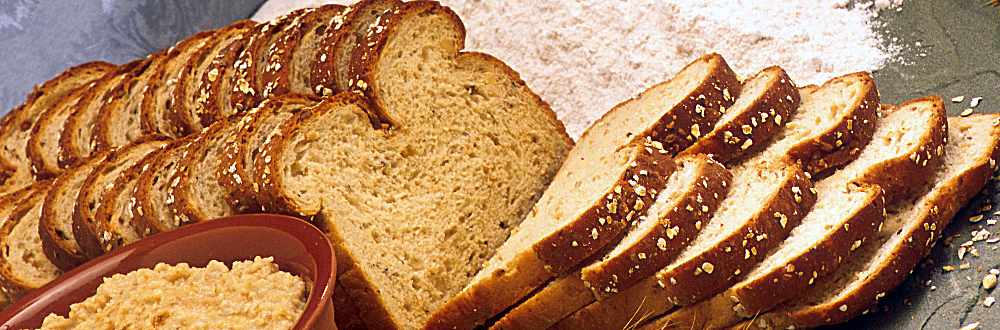
What do you call the end of a loaf of bread? There are lots of terms for that last piece, including heel, bread butt, the outsider, the nose, bunce, tumpee, skalk, krunka, or in Spanish codo, meaning “elbow.” Sue in Singer’s Glen, Virginia, calls it the cubble, but that may well be particular to her own family.
This episode is hosted by Martha Barnette and Grant Barrett, and produced by Stefanie Levine.
U.S Department of Agriculture photo by Peggy Greb. Used and modified under a Creative Commons license.
Books Mentioned in the Episode
| The Lore and Language of Schoolchildren by Peter and Iona Opie (Bookshop|Amazon) |
| World of Wonders: In Praise of Fireflies, Whale Sharks, and Other Astonishments by Aimee Nezhukumatathil (Bookshop|Amazon) |
Music Used in the Episode
| Title | Artist | Album | Label |
|---|---|---|---|
| Tensity | The Cannonball Adderley Quintet | The Cannonball Adderley Quintet and Orchestra | Capitol |
| Fourty Days | Billy Brooks | Windows of the Mind | Crossover Records |
| Cuixe | The Bombillas | The Bombillas | F-Spot |
| Dance of Maria | The Bombillas | The Bombillas | F-Spot |
| Bubble Gum | 9th Creation | Bubble Gum | Ritetrack Record Co |
| Ah Leh Wah La | The Bombillas | The Bombillas | F-Spot |
| Volcano Vapes | Sure Fire Soul Ensemble | Out On The Coast | Colemine Records |

