

What the fox says may be a mystery, but we do know that dogs bark differently around the world. In China, for example, they say not bow-wow but wang wang. Also, the story behind the British tradition of scrumping. It’s not a middle school dance craze, and it has nothing to do with beer — or does it? Plus, recipe vs. receipt, mash vs. press, housing a beer, all bollixed up, and “empty heads make weary bones.”
This episode first aired November 23, 2013. May 4, 2015.
Transcript of “Wet Brick (episode #1383)”
You’re listening to A Way with Words, the show about language and how we use it. I’m Grant Barrett.
And I’m Martha Barnette. A few weeks ago, we talked about the expression “occupado.” Remember that, Grant?
“Occupado,” yeah. For some reason, when you’re in the bathroom and somebody knocks, that’s what you say.
Right. That’s what some people say, but a lot of people say other things.
And we got an email from Carol Mills in Dallas, Texas. I love this. She says, “I once knocked on a closed bathroom stall and the person inside said, come in.”
Surprise!
She writes, “I’m still laughing.”
And Connie Walt from Michigan wrote, “My absolute favorite response to a bathroom door knock? You can come in, but you can’t sit down.”
Oh, my.
The things people say.
The things people say.
That’s what we’re all about.
Email words@waywordradio.org.
Hello.
You have A Way with Words.
Hi.
My name is Pascale Hickman, and I’m calling from Bozeman, Montana.
Pascale?
Yeah.
Oh, cool.
Hi, Pascal. Welcome to the show.
Thank you.
What can we help you with?
Well, I was calling because I had a question about a verb that I learned from a British-American friend of mine that she taught me a few years ago called “to scrump.”
And she told me about this verb because we have beautiful apple trees all over Bozeman, and we like to go steal apples from other people’s trees.
And she told me that the British actually have a verb for this. It’s called “the scrump,” and they go scrumping, which I thought was fascinating.
And then I was thinking, is that where we got scrumptious?
And is that how apples came to be scrumptious?
Huh, interesting.
Scrumptious probably is not related to scrump.
And I say this with a little asterisk next to it because one dictionary, the Oxford English Dictionary, says that scrumptious might possibly come from scrump, which means to—well, we’ll get to that in a second.
And other dictionaries, though, say that scrumptious is probably derived from sumptuous, which means expensive looking, splendid, super nice, something like that.
I tend to lean more toward the sumptuous definition.
It makes a lot of sense.
But what’s really interesting is to get behind that verb “to scrump” because it’s related to a wide variety of words, some of them well-known, some of them not known at all, in English and in other Germanic languages that all mean to shrivel up.
And so shrimp is actually related to this because shrimp kind of like they curl up their body when they’re threatened.
And there’s even, this is a slang term, to shrimp someone’s toes is to nosh on their toes and they’ll kind of curl up with ecstasy.
So there’s a wide variety of these words all kind of related.
They’ve all got this sk and the mp in there somewhere.
So scrump and shrimp and shrimp and scrimp.
It’s actually related to scrimp as well.
So the idea of being thrifty, where I guess stealing apples is kind of being thrifty, right?
Or actually being prunish and tight-fisted about something.
The idea of maybe shriveling up your fists, I don’t know.
I love it because, you know, when we deem apples scrump-worthy, it’s usually after the first frost or two frosts when they’re starting to look sad.
That’s when we decide that the owner of that apple tree no longer deserves their apples.
I agree.
And, you know, that happens here in San Diego County, here in Southern California.
People have giant big rows of trees with citrus on them, and they rot.
I’m like, what is the matter?
Yeah, that’s shameful.
Yeah, and so since we learned this verb, we’ve been having so much fun.
And I guess, I don’t know if you know this or if you can answer this question, but I’m wondering, can we apply scrumping to other fruits?
Or is it only apples?
Go for it.
Or is this only a British thing?
Martha’s nodding yes.
We give you permission.
Definitely go for it.
English is filled with words that have just been slightly broadened to encompass a more general meaning.
Well, I love scrump-worthy.
Scrump-worthy, yeah.
Fantastic.
Even though there’s probably no relationship between scrump and scrumptious, it’s a nice connotation.
It’s a nice association.
Wonderful.
Yeah.
Thank you so much for answering my question.
That was really cool.
Yeah, sure.
I’m going to go scrumping some fruit this year, I think, myself.
Awesome.
All right.
We’ll enjoy.
Take care.
Watch out for the owners.
Bye-bye.
All right.
Thank you so much.
You know, there’s also, in Britain, there’s scrumpy.
Have you ever had a glass of scrumpy?
What is that?
Apple cider or something?
Yes.
Okay.
Apple cider made from those sort of leftover, unselected apples.
Sure.
Those shriveled ones.
Right.
You can still press juice out of them, right?
Right.
And it’s probably a little more fermented.
A little longer.
The sugar has had magical things happen to it, right?
I bet it has a kick to it.
That’s what I’m thinking.
Scrumpworthy.
I like that.
You can use it for so many different things.
I did not know that Bozeman was known for its apple trees.
Or its British people.
That’s awesome.
877-929-9673. Email words@waywordradio.org.
Hello, you have A Way with Words.
Hi, this is Father Dominic calling from Chicago.
Father Dominic from Chicago. Well, welcome to the show.
How can we help you?
Thank you so much.
Well, I have a question about a phrase.
Well, I suppose a phrase, the way a word functions in a phrase.
My question is, when did thing become a thing?
I guess what I’m asking is, when did thing become sort of a category?
So somebody will say, you know, I saw this guy with purple pants on yesterday.
And you’ll say, purple pants, is that even a thing?
Yes. Okay, good.
And I’ve tried to track this down, and I’ve had a lot of difficulty.
I can find a Seinfeld episode that’s the first sort of use of the phrase,
But I’m wondering when the word thing began to reference not just sort of non-particular objects,
But sort of whole categories themselves.
Well, I’ve used that. I’ve used it on the show, actually. And I picked it up from a bunch of comedians that I follow on Twitter. Most of them are in Los Angeles. And for them, it’s one of the little rhetorical devices they use in this to call something into question. So if somebody has some weird behavior, like you were saying, wearing odd clothing, you’re like, is that even a thing? It’s just a nice way to call attention to an aberration or something quirky.
I’m not surprised that it might have been popularized by Seinfeld, but I should tell you, if you looked in bigger dictionaries, you would find that a thing goes back quite a ways.
There’s some variations over time.
But, for example, we could talk about to make a thing out of something.
Like, so I get a scrape on the car and my wife gets upset and I’m like, are you going to make a thing out of this?
Because it’s just a scrape on the car.
Right.
And this goes back very far, actually, a couple hundred years.
There’s some nuance change over the centuries, but in general it’s talking about when you say a thing, you’re talking about a to-do.
Now, I have a question. How do you think the article might affect it?
Because a thing seems to be different than the thing.
Right. That’s a good question because we have the indefinite article and the definite article.
And when we use the indefinite article A, what we’re talking about is probably there’s a class of things that all kind of share the same characteristics.
So when we talk about a thing, we’re talking about, oh, it goes with all these other things.
And usually in modern parlance, when we talk about a thing, we’re talking about style or we’re talking about a new way of behaving.
Comedians like to use a thing because there might be a new way to tell a joke.
Or you might say, oh, we’re not doing airplane food jokes anymore.
Now we’re doing Netflix jokes, right?
Just about, you know, my, I don’t know.
There’s just a whole, oh, is that a thing?
Are we doing that now?
Let’s all do this together.
We’re all going to make riffs on this joke.
And they’ll do it extensively and just riff on it until it’s dead.
And then a new thing will come along.
But, you know, there’s some other things that have happened with thing as well.
The thing entry is a vast entry in most underbridge dictionaries.
You have talking about the thing to do, right?
Well, what do I mean by that?
Well, the thing to do, Martha, is to close your windows before you go through the car wash, right?
Yeah, but my thing is that if I close the windows.
Yeah.
And then we have the other one.
We have the thing.
Well, the thing is.
Yeah, the thing of it is.
People say that when they’re explaining.
The thing is.
And by that we mean the key point, the one thing that you should pay the most attention to.
And all of these uses of thing draw attention to the fact that we’re talking about an object that fits into a class of other objects or an event or an act that we should pay attention to.
That deserve focus.
Got it.
Got it.
And I’m not surprised that the older generation didn’t get it.
But you know what?
I don’t think this is age-graded.
I think this is one of those things, either you know the thing or you don’t know the thing.
You know a thing, you don’t know a thing.
Because there’s a long history of all these variations on the use of things, and it’s not that new.
It really isn’t.
And even the Seinfeld episode is probably 20 years old.
Right, right.
So I should just be grateful.
I know the thing.
Yeah, you know the thing.
Yeah, be grateful.
You know all about that, right?
By the time you’re in your 40s or 50s, you’ll no longer know the thing.
Grant and Martha, thank you so very much.
Our pleasure.
Best of luck to you.
Thanks for calling.
Yep.
Take care.
Bye-bye.
There are odd things about the English language.
We can help you untangle some of them.
Some we will just tangle more.
Email words@waywordradio.org.
Hello, you have A Way with Words.
Hi, this is Ron.
I’m in Grand Rapids, Michigan.
Hi, Ron.
Welcome to the program.
Hello, Ron.
Welcome.
What’s cooking?
Hey, well, in my family, in both sides of my family, but more so in my dad’s,
If we would be at a gathering, a potluck or something, and my dad would turn to my mother and say,
Ma, that’s really good cake.
You should get a receipt for that.
As if she was buying the cake, not going to make it and request a recipe for it.
And I’ve heard that on occasion other than my family.
And one time many years ago, I read a book, and it was in the book.
And I just wonder about that.
So he would say receipt instead of recipe.
That’s correct.
And do you know how he would spell the word?
No, I don’t.
But it definitely was a receipt as a receipt for a purchase.
Yeah, there are people who say that, and not that many anymore. It’s pretty old-fashioned.
But some people do say receipt for recipe.
Okay.
It’s interesting. Both of those words, receipt and recipe, go back to a Latin word,
Recuperi, which means to take or to receive. And the idea is if I write out a formula for you,
Ingredients and how to, and then I write it down and hand it to you, then I’m telling you to take
It receive it. Recipe is actually the imperative from recipere in Latin. So it’s dying out now.
It’s old fashioned, but it must have been confusing when you first heard it.
So in brief then, these are two separate words that came into the language from Latin at different
Times to mean roughly the same thing. Right. Okay. Very good.
Right. And as a matter of fact, you know, when you go to the pharmacy and you get a prescription
And it says Rx there?
Yes.
It looks like Rx.
That’s a form of shorthand that was used in the Middle Ages to indicate Recipe.
Interesting.
For a prescription, yeah.
Well, Ron, we appreciate your calling.
Okay.
Bye-bye.
You folks have a great day.
Okay, you too.
Bye-bye.
Bye-bye.
So this is a long history in American English, but in English in general, right?
Right.
It’s using receipt in place of recipe, and it’s not a misunderstanding.
It’s just a separate word that traveled its own path.
Right, right.
Very cool.
Right, and it’s not just the United States.
It was used that way in England for hundreds of years.
But definitely dying out.
Yes.
This is the older generation, probably gone in 50 years, 100 years.
Yeah, sadly.
New words will replace it.
We’d love to hear your questions about language.
Call us, 877-929-9673, or you can send them an email.
The address is words@waywordradio.org.
It’s the Goat Rodeo for language play. Stay with us.
You’re listening to A Way with Words. I’m Martha Barnette.
And I’m Grant Barrett. And here he is, John Chaneski, our quiz guy. Hello, John.
John.
Here I am. Hi, Martha. Hi, Grant.
What do you have for us?
I have something today for you I think is very interesting for word lovers.
You may have heard of something called phatic expressions.
Phatic, P-H-A-T-I-C.
Phatic expressions are the oil that lubricates our language.
They’re the phrases that we say automatically that we don’t even think about just to move conversations along.
For example, how’s it going? What’s up?
Now, that’s an entire conversation right there.
If either speaker doesn’t respond to the other’s question, nobody cares.
They’re just acknowledgments of a social situation, right?
You’re here. I’m here. Let’s talk.
And because most people don’t even listen to phatic expressions, you can sometimes have fun with them.
Fun with phatics, okay.
Fun with phatics, phatic fun.
For example, if a friend is hanging out at my house and says,
That’s a beautiful cat calendar you have there, I’ll say, January much.
Treat it as a game.
See if you can slip one of these by your friends.
January much.
Oh, boy.
Instead of thank you very much, okay.
Instead of thank you very much, exactly.
I’ll give you a social situation.
You think of a P-H-U-N, fun, phatic response.
And if you need a clue, I’ll overpronounce for you the phatic expression I’m riffing on.
Okay.
Got it.
Here we go.
I meet up with a friend, and she says, hey, here’s that scuba diving DVD you wanted to borrow.
I just mumble…
Tanks?
Tanks.
Yes.
Very good.
Tanks.
Okay.
Got it.
Very good.
I lend a friend my copy of the book, 1984.
And when I see him again, he tells me he lost it.
I just mumble.
Oh, Big Brother.
No.
No?
That’s pretty good, though.
I like it.
Yeah.
Oh, Big Brother.
I lost 1980s.
Orwell.
Orwell.
At a bar, a friend tells me he’s tapped out.
Can I buy him a beer?
I just mumble.
Beer.
Now, there’s a brand name in this one.
Of course.
Of course.
Of course.
Of course.
Good.
A friend opening a new store asks me to make a web page for him.
When I’m done, he says, thank you so much.
I just mumble.
Sight.
Sight, yes.
Sight.
Why the heck he says that one?
Sure.
I go to visit a friend who lives in Oahu at the airport.
He says, aloha.
I just mumble.
Hawaii.
Hawaii.
This is how I talk.
That’s why I’m doing these.
Hardly a quiz at all, really.
My friend tells me all about how he won a trip to the largest of the Greek islands.
I just mumble.
That’s Crete.
That’s Crete.
As my roommate is leaving the apartment, she says, I’m off to the optometrist to get tested,
Then buying some new mascara, then off to the optician to get my new glasses.
I just mumble.
See you later.
Aye, aye, aye.
That’s not bad.
Not see you later?
No.
Instead of, have a nice day.
Have a nice day?
Have a nice day, yes.
Very good.
That actually works with the illusion there.
That’s good.
If I walk up to a bunch of friends who are Zen Buddhist monks, I might mumble.
Namaste.
That’s it.
Yeah, namaste would be actually what you would actually say to them.
Instead of, what’s going on?
What’s going on?
That’s not bad.
I’ll take that.
I was actually going for what’s koan on.
Oh, man.
And that’s all the phatic expressions I have for today.
Make up your own.
Hey, John, thanks for chewing the phatic with us.
Thank you, Martha.
Thank you, Grant.
If you’ve got a question about language, something to talk about,
Or a puzzle of your own, call us, 877-929-9673.
Email us, words@waywordradio.org.
Hello, you have A Way with Words.
Hello. This is Elizabeth McNamer, and I am calling from Billings, Montana.
And I have a word that I’d like you people to let me know what it actually means.
The word is bollocks.
I grew up in Ireland, and we use the word bollocks meaning to make a mess of things.
I’ve really bollocks this up.
Well, the whole thing is a complete bollocks.
Well, quite recently, a friend from Ireland was visiting me, and I used the word, and she said, oh, my God, Elizabeth, don’t say that.
Don’t say that.
Don’t say that.
And I said, well, why?
And she said, oh, it’s frightful.
It’s absolutely frightful.
Just please don’t say it.
And I have no idea why her reaction to it was so violent.
Would you people have any idea what the word does mean and why my friend may have been offended by my using it?
How are you spelling it, Elizabeth?
I’m spelling it B-O-L-L-I-X.
Bollocks. Interesting. Elizabeth, you don’t sound very Irish to me.
No, I went to school in England.
I see.
And when I was 11, I went to boarding school.
And how long have you been in Billings, Montana?
Words I was using, which I found people didn’t understand at all.
And how long have you been in Billings, Montana?
I’ve been in Billings, Montana for a very, very long time.
Well, I won’t tell you just how long, but it’s over 50 years.
Okay, we can get to the bottom of this, Elizabeth.
Your friend’s surprise that your use of the word bollocks doesn’t surprise me.
It goes back to a word meaning testicle or testicles, and ultimately goes back to a word just meaning ball.
That’s where the ball part comes from it.
The B-O-L-L-I-X spelling is a variant of the B-O-L-L-O-C-K-S, which is a lot more common.
And there are a lot of meanings of this, mostly in the UK.
In the US, we only use it when we’re putting on an affectation, when we are pretending to be British or something along those lines.
So for the most part, we don’t use it here in that way.
So your friend, though, points out that it’s still considerate of kind of a mid-level, some people are going to have a problem with it.
It’s one of those words where you just got to be safe about saying it, at least in the UK.
Here in the U.S., most of the negative impact of bollocks is removed because we just don’t use it here.
It’s like the word bloody here, like you bloody well better do that.
Here we just don’t really have any connotations of that except from film and television.
So that’s why your friend was kind of alarmed, and that’s probably why, yeah.
There is an Irish and English difference as well.
The bollocks in the Irish tends to be the verb form, which means to mess up or to ruin.
And in the English, it tends to appear in a lot of different forms, typically meaning also something that’s gone bad, but they tend to be noun phrases or verb phrases that sound a little different.
An exclamation, then.
Yeah, an exclamation or an interjection, right.
Well, maybe I’d be safer not to use it.
Probably, yes.
If I offended people.
You sound like a refined woman, but there is something in the American psyche, however, that loves to hear refined people say crass words.
I agree with you there.
That’s right.
That’s right.
But thank you, Elizabeth.
I would keep this between you and the people in your household.
Yes.
Okay.
Take care now.
I’ll do that.
Okay. Thank you so much.
Bye-bye.
Bye-bye.
Bye.
Call us 877-929-9673 or send your emails to words@waywordradio.org.
And we’re all over Facebook and Twitter.
Hello, you have A Way with Words.
Hi, this is Bubby Valentino calling from New Orleans.
How are you all this morning?
Hi, Bubby. How are you doing?
Hello.
Doing great.
Listen, I’ve got a comma problem.
And I have two forms of writing that I do with my work.
One is I’m a general manager of a hotel, and reports need to be succinct and specific and by the rules.
The other is I’m a record producer, and I like to communicate in a form that sounds like me, in a speaking tone rather than in a written form.
And, you know, the comma, I think I might overuse it.
And I’m just wondering about the flexibility with the rather basic rule, you know, that you can read in any grammar book about, you know, when there’s a change of thought.
Well, anyway, I’m not going to quote the rule because I don’t quote it.
Bobby, we get where you’re going with this.
There’s a set of rules that say use a comma here when you’re doing this.
And then there’s this whole other use of a comma where it’s about pacing and timing, and that’s where you’re interested, right?
Correct, exactly. Pacing and timing, yes.
And what kind of writing are you talking about doing specifically?
Well, it’s communicating with, let’s say, about a music session or about an event that’s happening, where, you know, you don’t want to sound like a hipster or an attempt at it, but you want to be less formal than when you’re writing a report that needs just succinct, accurate information.
And, you know, they differ.
My report is one thing, and my communication with others is sometimes an attempt at humor, and, you know, those pauses are important, it seems to me.
But I don’t know that they appear as grammatically incorrect, because I think I might overuse it.
Well, are you communicating conversationally, like in email with these folks?
No, this would be emails or written form.
If I want to create a sheet that explains a promotion, let’s say, an event that I’m part of, you know, it’ll be something I want to have a personality to it to try to describe the event and that I’m doing it.
It’s that line between it being specific to the rules of the road and those that are, if I were talking to you, you would get that it’s me communicating.
And I find that important.
Yeah.
Yeah, that’s a great question.
And I think we come down on the side of write the way you talk.
Yeah, if it’s an informal document and you feel like it’s needed to be understood better so people can hear your voice in their heads when they’re reading your words, try it and see what happens.
Have you gotten pushback or complaints from people about too many commas sprinkled everywhere?
Well, actually, that probably is what created my call here today because the person who gets the formal reports has on more than one occasion and requested that it be more direct and less talky.
Now, I don’t really write in rambling sentences, but they are, again, me communicating, and I need to take some pride on my ego requires that I do that.
And so, you know, I know how to write the other one, but somehow I’m moved to be myself in that context, and the report’s still complete.
It’s just less staccato facts and more style.
You know, a bit of a dilemma, but not really, because I get my point across either way.
And, you know, if the personality works, great.
If it doesn’t, well, that’s me.
Let’s start there, Bubby.
That’s a really good point.
You are writing in a way that successfully communicates your point.
You’re not writing a letter to the president, right?
You’re not writing a letter to a lawyer who holds your life in his hands or to a judge that could decide your fate.
So the stakes on this are high, but not that high.
And they’re not, you know, these are low stakes kind of.
There’s not a lot of risk here.
I think there’s a difference here in also background and upbringing where people who are maybe accountants and lawyers and people like that, they are schooled in business writing and they write the they write text that’s specific to their profession that other people find hard to read and they find perfectly solves their problem, perfectly does the job of communicating.
Maybe, you know, as a sounds like you’re an entrepreneur and a businessman, maybe you’re the boss and your writing goes.
Maybe it’s perfect for your circumstances.
I think that what you’re saying reminds me of the advice that we often give to people, which is if you want your writing to really shine, be sure that you read that last version aloud.
Because I think sometimes you can get so hung up in, oh, where does the comma go, that it can stifle or hamper your writing.
But if you read that final draft, often you can see or hear, actually, where the commas should go.
Well, Bubby, thanks for calling. I hope we’ve helped. Stay in touch with us. Let us know how it’s going, all right?
I will. Thanks. You guys have an entertaining show, and I appreciate the advice.
Our pleasure. Take care now.
Thanks, Bubby.
Bye.
Bye-bye.
If you’ve got a dilemma like Bubby’s, give us a call, 877-929-9673. Email us, words@waywordradio.org.
Grant, I have a proverb from Afghanistan that I really like.
I think you’ll appreciate this.
A new servant can catch a running deer.
A new servant can catch a running deer? What does that mean?
Because they’re going to try harder?
Yeah, I think it means you hire somebody, and that’s the person in the office who’s going to work so hard, you know, to make themselves useful and assure that you made a good hire.
Very good.
A new servant can catch a running deer. Suggesting the old servants are slow.
Yeah.
Yeah, or that you’re just going to be on your best game, at least for a while when you first get hired.
I can use that.
Email words@waywordradio.org.
Hello, you have A Way with Words.
Hi, Grant.
This is Noah calling from Los Angeles, California.
Welcome to the program, Noah. How can we help?
I am calling today concerning a specific something my father always used to say. He always used to say it when something we did went smoothly or something we did went well, usually better than usual.
He always used to say, well, that was slicker than snot on the doorknob.
Slicker than snot on a doorknob. How delightful.
That’s pretty slick. Very delightful.
Any idea where he got that?
So she was born in Orange County in Fountain Valley. His mother is from Gilman City, Missouri, so a little city of like population of 400 out in Missouri. And his father was from Ohio. He lived in the Fountain Valley all his life, and he reported that it probably came from his father, but he doesn’t quite remember exactly.
So I guess that’s all the background that I have.
Yeah, I don’t know that there’s a regional component to this, Martha, right? It’s pretty widespread?
Pretty widespread.
And I remember hearing it first from my Aunt Mazo in North Carolina.
Aunt Mazo. Aunt Mazo is on the show again. She was ironing a shirt for somebody, and she said, Lord, he loves his shirts ironed, slicker than snot. She didn’t add the doorknob, but I think the doorknob gives it emphasis, right?
Yeah, there are a lot of these comparatives, by the way, slicker than. And sometimes the four-letter word beginning with S isn’t snot. You probably know that one.
We can’t say that one.
Sue it.
Suits, yeah, suits. That’s what I was thinking of.
A slicker than greased lightning or slicker than greased weasel poo on a doorknob.
Oh, that’s good. That’s nice.
I euphemized the word. I used poo instead of the other word.
That’s nice. Slicker than mule spit.
Oh, that’s nice. A ton of these. A ton of these.
I’ve seen slicker than snot on a frog, which is also pretty slick, right?
Yeah, it’s true.
Yeah, but why a doorknob? Do you suspect that it’s hard to grab a doorknob even at the best of times and you’ve got something on your hands?
You know, funny you should ask that because just the other night I had just put lotion on my hands. Yes, I do this all the time. You’d think I would learn. In the doorbell rings.
Oh, no, I do it right before I leave the house. You’d think I would learn.
Oh, right. You think you’re, yeah, I know. I had to stick my hand in my pants pocket and use my pants pocket.
I’ve done that too.
Have you? Okay. We’re the same person. We weren’t going anyplace fancy, right?
I got to tell you, Noah, one of my favorite ones, though, one of these comparatives is slicker than a hickory elm. And that requires that you know a little bit about a hickory elm.
I don’t. They’ve got the super smooth bark.
Oh. Yeah, very, very smooth.
Yeah. Does it generally refer to something that happens easily? Like, that was easy. I remember Staples had a big motto. Does it usually refer to something that’s done well or easily or easier than usual?
Yeah, they should have used slicker than snot.
Slicker than snot. There are about three meanings of slick that this is used for. One is smooth, so smooth that it’s hard to grab it. Another one is easy or simple. And another one is clever. And clever with another sub-meaning, which means clever in a way that deceives you or tricks you.
So you can talk about somebody being a slicker than snot, meaning that they’ve just rooked you out of your life savings because they tried to sell you cheap siding or something like that.
Okay, some smarmy politician.
Well, that is awesome. Thank you guys very, very much.
Yeah, sure. I don’t know if we had an answer, but we had fun.
We did. We certainly did.
Thanks for calling, Noah.
Thank you.
Thanks. Bye-bye.
Bye.
I came across a proverb in Latin that I really like. Grant, it’s from Publilius Cirrus, and it translates as even one hair has a shadow.
The smallest ant matters, something like that, right?
Yeah.
The smallest person has a voice.
Yeah, every one of us in the cosmos.
In the cosmos. Everybody matters.
Okay.
More stories about what we say and why we say it. Stay with us.
You’re listening to A Way with Words, the show about language and how we use it.
I’m Grant Barrett.
And I’m Martha Barnette.
Recently on this program, we talked about the expression, your daddy ain’t no glassmaker. You remember that, Grant?
Yeah, yeah.
The kid’s in the way, like blocking the TV or something.
Right, right. And you say, your daddy ain’t no glassmaker, meaning they’re not. You’re not transparent.
Exactly. I can’t see through you.
Exactly. Yeah.
And who knew there were so many expressions like this?
Well, our listeners did. Veronica called us to say that in Hungary, they say, was your grandfather a glassmaker? And others of you said the expression was, did you have chocolate milk for breakfast? Meaning they can’t be seen through.
Right.
Okay.
Right.
And Sharon Peters on our Facebook page. Sharon let us know on Facebook that her father would say, girl, you’ve been drinking muddy water. And Eddie Torrigore from Boston said he grew up in Puerto Rico, and he would say, hey, do you think you ate plastic pork chops?
Plastic pork chops? I don’t know if that’s translated from Spanish or what.
Meaning that they wouldn’t digest and they were still in your body kind of blocking the view?
That would make sense.
Oh, okay. Yeah, yeah, get out of the way. But the kids do the thing when they don’t quite, they’re not aware of the universe around them.
Oh, yeah. And other people are like, that’s their line of sight.
Yeah, they’re transfixed, right?
Oh, and here’s one more. Carol Dempsey wrote from Norwich, Connecticut to say that her Uncle Jim used to say, I can’t see through you even if you are a pain.
That’s a pun.
It’s a pun. In fact, she says that her Uncle Jim was quite the jokester, that if you said about a chore that was really your sole responsibility, we need to do such and such, he would say, we? You got a mouse in your pocket?
Oh, yeah, the editorial wee. I like that, yeah.
And if you overheard him talking about someone and wondered about the identity of the person and you said who, he would reply, who? Your feet don’t fit no limb.
Your feet don’t fit no limb. I mean, you’re not an owl.
Nice.
Parents, where do they come up with these? There’s like a guidebook I wasn’t given. When I became a father, I had to wing it.
Hi, you have A Way with Words.
Hi, this is Whitney. I’m calling from Tallahassee, Florida.
Whitney. Okay, great. We’re glad to have you. Whitney, what’s up?
Okay, so the term that I’m calling about today is housing. And I just heard the term a few weeks ago from my boyfriend and his friend group, and they use it to mean, like, to finish something really fast. Like, for example, they use it a lot to say, like, I need to house this beer. Like, I’m going to house this sandwich, like, in those terms.
Really? And that means to just consume it completely?
Right. To, like, finish it off because usually you use it in a term, like, in the way that, like, we’re about to leave. So we have to, like, house this beer.
House the beer.
Yeah, just to slam it or to gorge yourself on a pizza, like, to eat the entire thing.
Right, exactly.
So you could house a pizza.
That’s really interesting. I’ve got a couple ideas on this, but nothing solid.
There is a use of house in hip hop or in rap lyrics that means destroy or defeat completely.
And the reason I think it’s connected, because there’s also a use of just the verb destroy to mean I destroyed that pizza, meaning I ate it.
Or I destroyed that 12 pack, meaning I drank it all.
And you overcame it. You overcame the barrier of trying to get all that food into your body.
You owned it.
You owned it. Yeah, pwned it.
And so that’s one theory.
It’s kind of a stretch, though, not 100% sure.
Probably a little more interesting, but even less likely,
Is the fact that in the Scots language, they’ve long had a verb hose, H-O-S-E,
Which means to seize greedily.
And it’s usually said of fish who are seizing bait, like the carps hosed my worm, right?
The fish seized the bait just like that, just took it.
And over time, it’s become generalized to apply to other animals and to humans as well.
So if you hose food, you’re just shoveling it in.
Wow, that’s pretty interesting.
But the connection for the Scots is really unlikely.
There’s not very much history of it.
I think it’s far more likely that it’s a modern slang variation of hose, meaning to destroy or to defeat from hip-hop.
I’m sorry, not to hose, to house. In hip-hop, it’s house.
So if you get housed or housed, are you drunk?
If it’s like your 10th beer or so, you might be drunk.
But if it’s like your first beer and you’re just trying to leave and you just house a beer,
Then you might get drunk. It depends, I guess.
Yeah, but the verb housed here doesn’t mean to get drunk.
It just might be a byproduct of housing food or housing alcohol.
There are some other variations of house, verb, and hip-hop that have kind of fallen by the wayside
That might be worth mentioning here.
And these are from the Historical Dictionary of American Slang.
And one of them is to take or to steal.
So you might house a pizza, meaning you took it to eat all of it.
And the other one is house to excite and impress.
So perhaps house to you’re impressing your audience by your rapacity and capacity, right?
Your ability to eat an entire extra large pizza.
And if you mentioned it, then it’s a really big pizza, right?
Yeah.
I partner in building that.
So those are my theories on that.
You know what?
We’re going to put the word out, though, Whitney, and see if we can find other people who know this slang verb, to house, meaning to eat or to gorge yourself.
I like it.
Or to drink quickly, and we’ll see what happens, okay?
Okay, that sounds good.
Thanks for calling.
Really appreciate it.
Take care.
Yeah, thank you.
Sure.
Bye-bye.
Bye-bye.
Email words@waywordradio.org.
Find us on Facebook and Twitter and SoundCloud and iTunes and I don’t even know where.
I’ve got a discovery.
I’ve been trolling the folklore journals again.
So there are these people who their job, I guess they’ve given it to themselves.
Some of them are paid to do it.
I collect folklore.
This is rhymes and poems and stories and tales and things that kind of represent culture, right?
And they put it in journals and it kind of sits there and it waits for somebody like me to come along and find it.
This document is called Folk Comparisons from Colorado.
It is in the Western Folklore Journal.
It’s from 1976.
It’s all comparisons, like X is like Y.
Okay.
All right?
I love these.
And the section I want to share with you is kisses.
Kisses like a cold fish.
Kisses like a dead frog.
Kisses like a dishrag.
Kisses like a wet brick.
I mean, if somebody’s a bad kisser, you’ve got to have a way to describe it.
You could just say, oh, he’s a bad kisser.
But it’s far more effective to say that he kisses like a wet noodle.
Yeah.
I like a wet brick.
A wet brick.
What does that mean?
I’m imagining the clothes, lips.
Yeah, yeah, yeah.
I don’t know.
Like kids sometimes kiss like that, right?
Right, right.
Kisses like your brother through a screen.
Oh.
I don’t know.
It’s funny.
That happens only once.
Yes.
Yeah.
And it takes a while for the black eye to heal.
Kisses like a slimy toe.
Kisses like a vacuum cleaner.
I know that one.
Oh, yeah.
And I’m not going to mention her name.
We’ll share a few more of these on the website.
Give us a call.
If you’ve got some folklore, some kisses-like expressions, 877-929-9673.
Email words@waywordradio.org.
Hello, you have A Way with Words.
Hi, Martha.
This is Claude Van Der Veen from Milwaukee.
Hi, Claude.
Welcome.
Hey, buddy.
What’s up?
What can we help you with?
Hi, Grant.
Some while ago, I heard that dogs in China don’t say woof-woof.
They say wang-wang.
And I was wondering if you know of any studies of what do animals say in other countries?
Yes. Yes, we do.
This is a good question.
Now, where were you reading about wang wanging is what dogs say in Chinese?
I honestly don’t remember.
This is about 40 years ago when I lived in Michigan.
A friend was in a linguistics class, and she was looking for something.
And I heard it even before then.
So 40 years ago, I don’t have a clue where I heard this.
There is a motherlode of these sorts of things on Wikipedia.
Now, if you listen to the show a lot, you know I have mixed feelings about Wikipedia.
Sometimes you get exactly what you came for, sometimes you don’t.
But this is a pretty good list, and it’s called cross-linguistic onomatopoeias.
That’s O-N-O-M-A-T-O-P-O-E-I-A-S, cross-linguistic onomatopoeias.
And it is a giant, giant page of things like what a baby crying is represented as in other language, what a horn honking is, or a hushing noise, the noise that you make when you want somebody to go, shh.
Tons of these, and they’re wonderful.
Sometimes they’re written in another alphabet, so it might take you some time to puzzle them out.
But what we find here is the strong evidence that there’s this class of sound or this class of word, an otomatopoeia or an imitative word that exists in every language that we know.
And this word usually represents sounds according to the inventory of the language spoken there.
So by inventory, I mean every language has these sounds that it uses,
And it doesn’t use other sounds that may exist in other languages.
And so we make these conform to our orthography and to our pronunciation
And to even just the way our mouths move when we say words,
Which is why they look different but kind of do the job.
And, you know, in English, which is this weird hybrid language,
We’ve got more than one for a dog.
We have woof, we have arf.
We have bow-wow.
We have bow-wow.
And you’ll find this again and again happens in many different languages.
I always thought when I was younger that the different sounds for the dog barking in English had to do with the size of the dog.
I thought it was regional dialects.
New England dogs.
I always think of a Scotty doing arf, arf, arf.
I don’t know.
But anyway, that’s the short circuit right to the motherlode right there.
Cross-linguistic onomatopoeia on Wikipedia.
Do they have things like owls and pigeons and crows?
They have flatulence.
They have the sound of food being eaten, which I love because many of them,
It’s nom-nom or myom-nom, something like that.
Oh, man.
Yeah.
Keyboard striking.
Oh, this is great.
What a siren is.
A siren in Catalan is ni-nu, ni-nu, ni.
Because in Europe, the sirens tend to sound like ni-nu, ni-nu, right?
Sure.
Telephone ringing.
In Indonesian, kring, kring.
In Italian, drendrin.
Thunder.
I wonder if guitars go twang, twang.
That’s a great one.
I don’t see it here on the list, but you know what?
Everybody can check it out.
Cross-linguistic, onomatopoeia, Wikipedia.
It’s going to satisfy your need to know more about this.
My Saturday night planned out right now.
Claude, I hope that helps.
Thank you very much.
Yeah, sure.
Take care now.
Bye, Claude.
Bye-bye.
Email words@waywordradio.org.
And find us on Twitter.
Our handle there is W-A-Y-W-O-R-D.
Here’s a little more from the folk comparisons in Colorado from the Western Folklore Journal of 1976.
This is about people who, well, they walk like a bull in a china closet, walks like he’s behind a plow.
I mean, somebody who lumbers along and just will not get out of your way.
You know these guys, right?
Sure, yeah.
Stay to the right.
Those of us with tall legs are going through.
Email words@waywordradio.org.
Hello, you have A Way with Words.
Hi, this is Mary from Beverly Hills, Michigan.
Hi, Mary.
How are you doing?
I’m fine.
How are you?
Good enough.
Thanks for asking.
What can we help you with today?
My mother used to tell me that my grandmother would say, empty heads make weary bones.
And I never knew where it came from.
I never heard anybody else say it.
If I’ve said it to somebody else, I’ve never heard that before.
So I thought maybe you guys could help.
What was happening when she said that, and who was she saying it to?
Usually us, when we were doing something dumb, like going, and I always thought it was, you go into a room, you forget why you went there, so you have to go back later on.
Or you do a sloppy job and you have to redo it.
That kind of thing.
Okay.
Okay.
Okay.
Mary, where was your grandmother’s grandmother from?
I think they were in Perryville for quite a while, but they originally came from Germany.
Germany. Bingo. Okay, I think we have an answer for you.
There’s a German proverb along these lines that reflects the same idea that you’re talking about.
If you forget something, you walk into another room, then you have to walk all the way back into that first room to get it, right?
Right.
And there’s a German proverb that goes,
Was man nicht in Kopf hat, das muss man in den Beinen haben.
Which means, what you don’t have in your head, you have to have in your legs.
And I think it’s the same idea there.
Yes.
So she made it.
Oh, neat.
Yeah, yeah.
I’m betting it’s a translation from German.
There are also versions of this in Spanish and Italian and probably a lot of other languages in Europe.
But when you said German, that made me think that that’s probably what it is.
So can you say that again, please?
Okay.
And listen for the word Kopf, like Dümkopf, it means head.
Was man nicht in Kopf hat, das muss man in den Beinen haben.
And Beinen is leg, like bone.
Oh, okay.
So you’re constantly walking back and forth from room to room
Because you haven’t been mindful of what you need when you get there.
Right, right, exactly.
And I’ve seen different translations of this notion in English,
Like use your head to save your heels,
Or if you don’t use your head, you’ll have to use your legs, that kind of thing.
Right, a lot of unnecessary running around, okay?
Yeah, yeah. A forgetful head makes a weary pair of heels.
Yeah, there’s more of that with senior moments.
Exactly.
So, does that help?
That helps a lot. Thank you so much.
Sure thing.
Take care, Mary.
Thank you. You too. Bye-bye.
What did your grandmother say? 877-929-9673.
Email us, words@waywordradio.org.
Find us on Facebook and Twitter, SoundCloud, iTunes, Stitcher, and a few more places.
Hello, you have A Way with Words.
Hello, this is Mike Semrau, and I’m calling from Braver City, Michigan.
Welcome to the program, Mike. How can we help?
Well, before we arrived here a few years ago, we lived about 30 years in Atlanta, Georgia.
And you might guess we picked up or heard a lot of southern phrases.
And most you can find on Google are kind of quaint, and they don’t get into vocabulary.
Like fixing to go somewhere.
But some of those in the general business routine did get my attention,
And that’s what I had called for.
I worked 15 years with a company headquartered in the South,
And for all those years I would experience the use of MASH,
As in entering the elevator and hearing someone say,
MASH 14, please.
I thought of mash as a rather harsh word.
You know what I mean?
Yeah, you think of it as being a violent or destructive action, right?
Yeah, a little rough, yeah, as opposed to something as simple as, I might have used the word push.
Or press.
Yeah, so mash is distinctly southern, right, Martha?
Yeah, it is.
It creeps upward, a little north, but when you get to Michigan, they definitely don’t say it in Michigan, or very few people do.
Yeah, and it’s not that it means something different.
It just means something additional in the South.
In fact, I remember when my dad was teaching me to drive, he was from North Carolina,
And he said, mash the brake.
And so I hit it really hard, just not even thinking.
Instead, he just meant press.
Well, maybe he was scared.
That’s cute.
Yeah, I hadn’t thought about mashing the brake, but I’ve heard that one as well.
It does seem to happen mostly with buttons and pedals, though, right?
That’s what’s mashed. There aren’t many other things that are mashed in this other way where
Most of the rest of the English-speaking world would say press or push.
Yeah, I’m not sure about mashing the potatoes. They could have been whipped, but…
That’s true.
It could be, and if it was used that way as mashed, it didn’t catch on with me because
I already had that in my vocabulary.
Mike, thank you so much for calling.
You’re very welcome. It was fun talking to you.
Take care now. Bye-bye.
Good talking with you.
All right.
Bye-bye.
You bet. Bye-bye now.
877-929-9673 is the number to call with your questions,
Or send them an email to words@waywordradio.org.
And find us on Facebook and Twitter.
Things have come to a pretty path.
That’s all for today’s broadcast, but don’t wait till next week.
You can join us on Facebook, Twitter, iTunes, or SoundCloud.
And check out our website, waywordradio.org.
You’ll find a dictionary, a newsletter, mobile apps, and a discussion forum.
You can also listen to hundreds of past episodes free of charge.
Leave us a message anytime at 877-929-9673.
Share your family’s stories about language,
Or ask us to resolve language disputes at work, home, or school.
You can email us. The address is words@waywordradio.org.
Our senior producer is Stefanie Levine.
The show is directed this week by Mark Kirchner and edited by Tim Felten.
We have production help from James Ramsey.
A Way with Words is independently produced and distributed by Wayword, Inc.,
A nonprofit supported by listeners and organizations
Who believe in lifelong learning and better human communication.
We’re coming to you this week from the Recording Arts Center
At Studio West in San Diego, California.
Thanks for listening. I’m Martha Barnette.
And I’m Grant Barrett. Take care.
Sayonara.
You like tomato and I like tomato.
Potato, potato, tomato, tomato.
Let’s call the whole thing off.
But oh, if we call the whole thing off, then we must part.
And oh, if we ever part, then that might break my heart.
So if you like pajamas and I like pajamas, I’ll wear pajamas and give them…
Response from Inside the Bathroom Stall
 What’s an appropriate response when someone knocks on your bathroom stall? How about “You can come in, but you can’t sit down!”
Scrumping
Scrumping is a Britishism for “stealing apples off your neighbors’ trees.”
It’s a Thing
Father Dominic from Chicago wonders when “It’s a thing” became, well, a thing.
Receipt and Recipe
The word receipt is occasionally used a synonym for recipe, as in “a list of ingredients in a dish and instructions on how to make it.” Both words come from the same Latin root, recipere, meaning “to receive.” The use of receipt for recipe is old-fashioned and probably won’t be around that much longer.
Phatic Replacements Word Game
Listen closely for the phatic replacements in our Quiz Guy John Chaneski’s game of idle chitchat.
Ballocks
“Ballocks!”, an exclamation of frustration or skepticism, is cognate with the word balls, and literally means “testicles.” Its use is considered far more racy in Great Britain than in the United States.
When to Use Commas
How do you decide when to use a comma? One strategy is to read your writing aloud and decide what sounds best.
Afghan Proverb for New Hires
“A new servant can catch a running deer” is a proverb from Afghanistan that aptly describes those zealous recent hires.
Snot on a Doorknob
Few things are slicker than snot on a doorknob.
One Hair has a Shadow
“Even one hair has a shadow.” This translation of the Latin proverb Etiam capillus unus habet umbram is a reminder that even the smallest thing can have large consequences.
Daddy Ain’t No Glassmaker
If someone’s standing between you and the TV, you might say “Your daddy ain’t no glassmaker!” Grant and Martha have another version, where you might ask them “Have you been drinking muddy water?”
Slang “House”
To house something, as in to house a beer or to house a pizza, is slang for “consuming something really fast.”
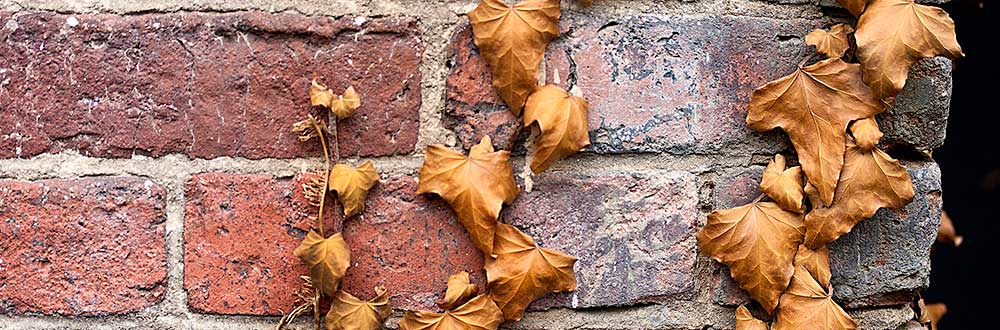
Kiss Like a Wet Brick
The Western Folklore Journal of 1976 gives us such romantic phrases as “kisses like a cold fish,” “kisses like your brother through a screen,” and “kisses like a wet brick.”
The Dog Says “Wang-Wang”
In China, dogs say wang wang instead of woof woof. Wikipedia has a great list of such cross-linguistic onomatopoeias. Of course, we all know what the fox says.
Walking Behind the Plow
Ever find yourself stuck behind someone who walks like he’s behind a plow?
Empty Heads
“Empty heads make weary bones,” so don’t forget what you went looking for or you’ll wind up exhausted for no reason!
Mash the Brake
To mash the brake or mash the elevator button comes from a Southern instance of mash meaning “to press something hard.”
This episode is hosted by Martha Barnette and Grant Barrett, and produced by Stefanie Levine.
Photo by Liz West. Used under a Creative Commons license.
Music Used in the Episode
| Title | Artist | Album | Label |
|---|---|---|---|
| Alipid | Sandro Brugnolini | Overground | Cinedelic Records |
| Spear For Moondog, Part 2 | Jimmy McGriff | Electric Funk | Blue Note |
| Polyphony | Sandro Brugnolini | The Seventies | Costanza Records |
| Roxy | Sandro Brugnolini | Overground | Cinedelic Records |
| Megattera | Sandro Brugnolini | Flipper Psychout | Vampi Soul |
| Deeper and Deeper | Jackie Mittoo | Studio One Musik City | Soul Jazz Records |
| I Can’t Stop Dancing | Groove Holmes | Workin’ On A Groovy Thing | World Pacific Jazz |
| Miami Heat | RKM Music Library | Beat Action | RKM |
| Let’s Call The Whole Thing Off | Ella Fitzgerald | Ella Fitzgerald Ella Fitzgerald Sings The George and Ira Gershwin Song Book | Verve |

