

If you want to be a better writer, try skipping today’s bestsellers, and read one from the 1930’s instead. Or read something besides fiction in order to find your own metaphors and perspective. Plus, just because a city’s name looks familiar doesn’t mean you should assume you know how the locals pronounce it. The upstate New York town spelled R-I-G-A isn’t pronounced like the city in Latvia. Turns out lots of towns and streets have counterintuitive names. Finally, why do we describe being socially competitive as “keeping up with the Joneses”? The Joneses, it turns out, were comic strip characters. Also, sugar off, filibuster, you’re not the boss of me, and lean on your own breakfast.
This episode first aired October 29, 2016. It was rebroadcast the weekends of June 19, 2017, and December 3, 2018.
Transcript of “Boss of Me (episode #1457)”
You’re listening to A Way with Words, the show about language and how we use it. I’m Grant Barrett.
And I’m Martha Barnette. I just got back from Vermont where I had a wonderful time speaking at the Community College of Vermont in Winooski and also at the Burlington Book Festival.
And you’ll also not be surprised to learn, Grant, that I did a lot of hiking while I was there.
And one of the places I went was Mount Philo, which is just south of Burlington.
And I’d been studying the maps and I was talking to somebody about how to get there.
And I said, I see it’s near the town of Charlotte.
And she said, no, it’s not Charlotte.
And I said, what do you mean?
It’s Charlotte because it looks like the woman’s name.
It looks like the city in North Carolina, Charlotte, North Carolina.
And she said, nope, it’s Charlotte.
Charlotte.
Charlotte.
Why is it Charlotte?
Charlotte.
I didn’t believe her.
I had to go ask other people because, I mean, who pronounces it Charlotte?
Hazing newbie.
Yeah.
But the people who pronounce it Charlotte are in Vermont.
And the reason, a little history lesson here, is that the town of Charlotte, Vermont, was chartered in 1762, which was a year after the big wedding of King George III to Princess Charlotte.
Oh.
She was of German descent.
German, Charlotte.
Yeah, spell the same way.
But the Vermonters have dropped the final syllable.
Yes.
Still, though, retaining some of it.
Yeah, some of them dropped the R, too, but Charlotte.
Oh, that’s interesting.
I was just floored.
And then I remembered that I grew up in Kentucky near Athens, Kentucky, like Athens and Versailles.
And Versailles, Missouri.
Okay.
New Madrid, Missouri.
All right, the New Madrid Fault, exactly.
And it got me to thinking that we have listeners all over the U.S., and I’m sure that they have other stories.
Oh, the place names.
Right.
It’s a street’s name in particular.
I’m thinking of Houston Street in New York, which generations has been catching people who think it’s Houston, but it’s not.
It’s Houston.
Right, right.
It’s a shibboleth, right?
And the town where my parents live in Troy, Missouri, has a French name street.
There’s some French heritage.
It’s pronounced Cap-Au-Grey, which is not very little like the French.
It’s G-R-I-S, which means gray, but isn’t pronounced gray.
Oh, they say gray?
Yeah, but they say gray.
Even though it’s G-R-I-S?
Yes.
Isn’t it interesting?
Oh, man.
Cap-Au-Grey, yeah.
That’s nuts.
Great cake.
Well, I’d love to hear from our listeners.
What’s the town with the counterintuitive name where you live, the one that the locals know and people don’t realize is different until they get it explained to them?
It separates the outsiders from the insiders.
Email words@waywordradio.org or start it up on Twitter @wayword.
Hello. You have A Way with Words.
Hi. This is Dave, and I’m calling from Spill Corn, North Carolina.
So my curiosity about this, this is outside of the neighborhood is where I’ve heard this, goes back several years to where I was sitting in a cafe one time, and I was by myself and I was overhearing a conversation at the table next to me.
They were talking about movies, and this woman said, well, I’m a period peace person.
And so, you know, that movie really did it for me, or that really appealed to me.
And at the time I thought, you know, well, that’s a peculiar expression.
I’m a period piece person.
But then I thought about it more and I realized that we already, you can hear people say, like, I’m a cat person.
He’s a dog person, things like that from before.
What I’m curious to know, first of all, is, like, have you all noticed this too?
And then also, like, the meaning.
Like, if you say that you’re a mayonnaise person, is that the same as simply saying that you love mayonnaise?
I do this.
I say I’m a whatever person.
I’m a Twizzler person, not a Red Vines person, for example.
I’m a crunchy peanut butter person, not a creamy peanut butter person.
Well, in English, the person is really doing the role of the suffix file, P-H-I-L-E, that Greek suffix, which means lover or one who loves.
And you have that file suffix with words that are obviously Greek, like bibliophile and a whole bunch of others.
And where we run into the need for the person use in English is, like it’s not easy to say catophile.
That doesn’t make sense.
Or to say buccophile, right?
So what we want to do is probably make our compound out of components that seem to be more English and less obviously foreign like file.
And so we do that with person.
It kind of fills that same role, making these open compounds, that is, two words together, two nouns together with a space between them, like cat person or spaghetti person or country and western person, that sort of thing.
Those are all some kind of compound.
And if you dig around, you’ll find it goes back at least 100 years.
As a matter of fact, I found a use from 1919 of a woman writing in Everyday Magazine, I’m sorry, Everybody’s Magazine, and she talks about the old, ever-new cat versus dog controversy, and she talks about are you a cat person or are you a dog person?
So that at least has been going for almost 100 years.
Yeah, I was going to say it’s interesting that she framed it as either or, because I think you sort of are implying what you’re not as well.
That’s true.
I’m not a dog person, although I’m an animal person, so I’m both of those.
Right.
And so, again, we run into this.
So just to kind of recap that, what’s happening here is we’re doing in English, what we would do with suffixes when words borrowed from other languages.
And it’s just, it works really well in English, I think.
Yeah, it’s all the rage, though.
Oh, is it? Okay.
Yeah.
Well, Dave.
Anyway.
Thank you for the call. This was very good.
I think we made some inroads on this.
Yeah, yeah. Thanks a lot.
It’s been fun talking about this. Bye-bye.
Bye.
Call us, 877-929-9673, or send us an email.
That address is words@waywordradio.org.
Hello, you have A Way with Words.
Hi, this is Kim calling from Hartford, Connecticut.
Hi, Kim. How are you doing?
I’m good. I have a question about flip-flops.
All right. Shoot.
Well, when I was a kid, I would call them clackers, and my friend would make fun of me because she called them thongs.
She insisted they were thongs.
And recently I heard a radio story that mentioned maybe 20 different names for them, probably not that many, but clackers were not in there.
So I asked my mom about it, and she insisted that she didn’t make up the word.
So I’m just wondering where that might have come from.
The only other thing I came up with from other people was zoris.
Oh, yeah.
Is that a Japanese word for them?
Yeah, exactly.
The woven ones, woven with fiber of some kind.
Yeah, we’re talking about the shoes that are floppy, like rubber sole shoes that your feet are exposed.
You have the upright that goes between your big toe and the next toe, right?
Those are always uncomfortable for me.
That’s why they’re called the thong, by the way.
And the same reason the underwear is called the thong.
You have a part of it goes between two parts of the body.
Yeah, totally uncomfortable either way.
Yeah.
Yeah.
And you called them clackers growing up.
Yeah.
Gosh.
Boy, clackers brings back a totally different memory for me.
What are you thinking of?
False teeth?
No.
No, that’s in the future.
The toy that you bring together?
Oh, my gosh.
Kim, did you ever play with clackers the toy when you were growing up?
Yeah, it’s like those glass balls, and I think they’re illegal because they chip or something.
Yes.
You can get plastic ones.
Yes, you can get those hard plastic balls, one on each end of a rope, and you hold the middle of the rope and you go clack, clack, clack, clack, clack, clack.
Yeah, those were all the rage when I was in junior high, and the principal had to take them away from people and bang.
Yeah.
Everybody was doing it.
It was just mind-boggling.
That’s a different sound than flip-flops.
I’m having a disconnect here.
I’m not hearing flip-flops as going clack at all.
No.
It’s a thwop or a thwack or a flup, but it’s not a clack.
Yeah.
No, it’s kind of, to me, maybe because my mother brainwashed me.
But to me, it’s very much like a slapping clack, clack, clack.
Slapping.
Yeah, yeah.
I might call them thwackers, but that would just be my own word.
The only sense that I’ve seen of clackers in terms of shoes is like the metal tips that go under shoes to prevent them getting worn down.
Well, right.
Exactly.
So clackers intentionally put on tap shoes.
And there was a style at some point, I want to say the 50s, to put these on your shoes so you didn’t make the noise.
And stiletto shoes or the women who wear stiletto shoes are sometimes called clackers.
And it’s used in the Devil Wears Prada, I believe, the book and maybe the movie.
Really?
Yeah.
In the Devil Wears Prada?
Clackers.
But that’s the only shoe that I know of that’s a clacker.
Yeah.
Kim, though, a really nice thing about doing this show is that we are heard around the United States, all of North America and throughout the world.
And so if somebody else uses clackers to refer to flip-flops or thong shoes, then we will hear about it.
All right?
Oh, that’ll be very interesting.
And we’ll let you know.
All right.
Thanks for calling.
Really appreciate it.
Thank you.
Bye-bye.
Take care.
Call us with your language question, 877-929-9673.
Hello, you have A Way with Words.
Hello, my name is Holly, and I’m from Reno, Nevada.
Hi, Holly, how you doing?
Hey, Holly.
Well, we’ve had actually quite a few friends who have lost their significant others lately to death,
And they were not married, but they’ve been together 12, 15, one case, 20 years,
And we were wondering about titles because I know that widow or widower is a legal definition, but these people lived as married.
They just weren’t legally married.
And I was just wondering about what to call them, what they would call themselves.
Have you heard what they call themselves?
No, mostly my partner has died.
They don’t really have a name for themselves, a title for themselves either.
Yeah, this is a new dimension of a question that we get fairly frequently is what you call a life partner that you’re not married to when girlfriend or boyfriend seems so childish.
Yeah, and it seems so semi-permanent.
I mean, because these were permanent relationships.
They had been together for a long time.
Yeah, and partner has the problem of it’s not always clear whether or not it’s a business partner, a professional partner versus a romantic or life partner.
The new layer here then at Holly is that that person is passed on.
And so now you’ve got that. There’s no widow or widower term to use here, is there?
No. And of course, I went to the good friend Google to look it up and it says there is nothing for that.
No word for it.
I mean, I can think of like losing one’s companion, but you’re right.
I mean, there is a hole in the language here, and I think not having a word for that adds another layer of anguish to grief.
Well, the best that we can offer, because neither one of us has a term for you, is just to throw this out to our community
And see if people have a term that they’ve come up with for this situation where a life partner or a life companion has died.
How do they refer to that person?
That’s what we want to know, right, Holly?
Right, right.
So we want the name or the reference.
What are we calling those people who passed without naming them by name?
Give us a call, 877-929-9673, or tell us an email, words@waywordradio.org.
Holly, we’re going to collect these if they come in, and we’ll talk about them on a future show, all right?
Okay, thank you very much.
We’ll see how it goes.
Thank you.
Bye.
Here’s another term I learned in Vermont, to sugar off.
Something to do with maple sugar season.
It does indeed.
It has to do with completing the process of boiling down the syrup when you’re making maple sugar.
And what I found out was that people often use it to mean, how did something turn out?
How did that sugar off?
Oh, I see. Just generically, even when you’re not doing maple syrup or maple trees.
Oh, that’s cool.
Yeah, did that sugar off all right for you?
Did that sugar off all right?
I love that.
That’s great.
Tasty.
Nobody tells you this when you start a nonprofit, but a lot of the job is simply funding the job.
You do a good thing, and then you ask people to help you do even more of that good thing.
That’s what I’m doing now.
Go to waywordradio.org/donate and make this show happen.
Thanks.
You’re listening to A Way with Words, the show about language and how we use it.
I’m Martha Barnette.
And I’m Grant Barrett.
And we’re joined once again by our quiz guy, John Chaneski in New York.
Hi, John.
Hi, Grant.
Hi, Martha.
Hello.
Hello.
Facebook is good for faces.
But sometimes I like to look for other things.
Like, for instance, the following post.
And this is a quote.
Manfred von Richthofen posts.
I’m the number one fighter pilot.
You can’t catch the Red Baron, yo.
On what book did he post that?
Ace book.
That would be ace book.
Yes.
Very good.
So now you get the concept.
Okay.
I don’t.
So we’re going to take all the names of different social media or just Facebook?
No, just Facebook.
But different things you would find on different social media that is not quite Facebook.
Okay.
Just change the face.
So their own specialized version of Facebook that fits who they are.
Right.
Okay.
For example, here’s the first one.
Neil Armstrong posts, first, on the moon, that is, while John Glenn posts, first, in orbit.
And Yuri Gagarin posts, oh, spasiba, don’t even try, players.
Spacebook.
On Spacebook, that’s right.
Oh.
Do they all rhyme with Facebook?
They do.
Okay, they do.
That helps.
Someone posted a link to a listicle.
Top 10 more poetic alternatives to God is great, God is good, let us thank him for this food.
Grace book.
Yes, grace book.
Nice.
All you have to do is a simple search for doilies, and the next thing you know, you get directed ads for Antimacassar’s lingerie and bridal vans.
A lace book.
A lace book, yes.
Here are some folks arguing over the relative merits of the roles of Figaro in The Marriage of Figaro versus Mistoffelees in Faust versus Don Alfonso in Cosi Fantuti.
Oh, nice.
But I can’t find a word that rhymes with ace.
Those are specific roles.
Oh, I can see.
Tenor, bass book.
Yes.
How about bass book?
Bass book is right.
Okay, very good.
Very good.
Okay, you guys, crowdsourcing this question.
What should I use for displaying a tulip bouquet?
Wide colored glass or tall, narrow delft?
How about roses?
Vase book.
Yes, vase book.
Or Vaz book.
Yeah, the pronunciation could change, yeah.
Gronk the Destroyer writes,
I don’t like morning stars.
The chains confuse me.
Give me a good old-fashioned two-meter length of oak
Clad with tempered iron from the end to the middle.
As long as the grip is good leather,
I can really crack me some Visigoth heads.
Macebook.
Macebook, that’s right.
This version of social media only allows for sharing photos of different locations.
Cities, countries, rooms in your house, public parks, even the moon.
Anything that’s not a…
What’s that?
Sorry, placebook.
Placebook is right.
Anything that’s not a person or a thing.
Placebook.
Nice.
You could just say it’s an atlas, right?
This version is exclusive to track and field competitors.
After the Olympics, all you could read was, here’s me in the 800 meters.
Here’s me in the 110 meter hurdles.
Racebook.
Racebook is right.
Over and over.
Now, people always share their food pictures.
But all we see on this social media is photos of and recipes for a highly seasoned stew of fish and shellfish.
Booyah Basebook.
Booyah Basebook, yes.
Delicious.
Anyway, those are the different social media that I happen to frequent.
I don’t know about you guys, but you guys did very, very well.
Thank you very much.
Thank you, John.
Thanks, Buck.
This is a show where we goof around with language.
Call us 877-929-9673.
Hello, you have A Way with Words.
Hello, this is Alex Garcia from Los Angeles, California. How are you?
Hi, doing well, Alex. What can we do for you?
Well, I’m just interested in a word that I’ve heard over the years, the word filibuster.
And it’s very interesting because my grandmother used to use the word, I think, casually,
But just, I think, referring to people that weren’t good or, I don’t know, like ruffians or something.
But I’ve always been interested in hearing the actual root of the word and where it comes from.
And it’s used in politics a lot, you know, just basically by people speaking about, you know, taking over the Congress floor and not letting other people speak.
So it’s always been a thing, you know, that I’ve been interested in.
Oh, that’s a good one. That’s a great choice.
One, it has a known etymology, and two, that etymology goes all over the place.
Yeah.
Lots of paths, footpaths for that.
I’m interested in your grandmother’s use of it as a ruffian.
Yeah, and you said your last name is Garcia.
Do you speak Spanish or does she speak Spanish?
I might not sound like it, but yes, native Spanish speaker.
I grew up actually in Mexico City and then in San Diego, California.
So I’ve been back and forth a lot between both countries.
But my grandmother used to be an author, and she used to write for Reader’s Digest in Mexico.
Oh, wow.
She would use these very, how would you say, very verbose words.
Maybe esoteric words, maybe words that the ordinary folk wouldn’t use but the educated people might use.
Completely right.
And I think she took pride in having just a very extensive vocabulary.
And was she using this in Spanish, filibustero, or in English?
Yeah.
Yeah, that’s how she would say it, filibustero.
That’s outstanding.
All of this is relevant.
I know some listeners are going, hey, they’re going way down the garden path.
What else is new?
But this is relevant.
Yeah.
Let’s see if we can recap this word’s history as quickly as possible.
It originally comes from Dutch, a word meaning free booty.
And it’s pronounced freibouder, I believe.
Freibouder.
Freibouder.
But you can actually see kind of it vaguely resembles the English words free booty in its spelling.
And what it is, it’s related to piracy.
And basically people on the high seas are taking things that don’t belong to them.
But what happens is the word then is borrowed into other European languages.
And when it comes into English, it comes into English twice.
It comes in from French, filibustier.
And then it comes again later from Spanish, filibustiero.
And the second borrowing, the filibustero, is the one that we keep.
Fast forward quite a bit to the 1880s.
In the U.S. Congress, this habit of taking the floor in order to have a long oration
And not cede the floor to anyone else becomes called a filibuster
Because it is like you are a pirate seizing control of things on the high seas.
I mean, this is a time when there were a great number of filibusters,
The individuals sailing around the Caribbean, sailing around the Atlantic,
And just taking control of cities and towns.
And even Nicaragua, several times they tried to control it.
And these were adventurers in the kind of the pejorative sense,
These rascals and ruffians, as you said,
These guys who were just come in with massive gunpower and their own private armies
And try to control the land so that they could control the farms for the sugar cane
And the palm and whatever else they were growing there.
This word then became a little more generalized.
So a filibuster could just be a scalawag or, like you said, a punk,
Just somebody who’s up to no good.
And this is the word that your grandmother was using in Spanish.
It’s far less common.
It has always been far less common in English, but it has existed.
These days, most of us only know filibuster when somebody takes the floor of Congress
And won’t give up.
Yeah, political context.
Yeah, political context.
They won’t give control over to somebody else.
How cool is that?
That’s very cool.
And actually, it’s very surprising because it just kind of didn’t make sense to me when it came to the long orations that take place in Congress.
It just didn’t make sense.
And now I guess it does.
Yeah.
It really does.
It’s about the seizing of things that don’t belong to you, basically.
Right, right, which happens all the time, every day.
But, I mean, nobody would think about using filibuster as the way to describe it.
Exactly.
Very interesting.
Thanks, Alex.
We really appreciate your call.
Thank you both.
It’s been very interesting, and I really enjoyed the show.
Thank you very much.
Thank you so much.
Take care.
Take care.
Bye-bye, Alex.
Call us with your language question, 877-929-9673.
I have a question for you, Grant.
Somebody said to me the other day, what do we say in English that’s the equivalent of bon appetit?
You say manja in Italian.
You say buen provecho in Spanish.
I know, right?
I mean, at our house, when I was growing up, we said dig in.
Or in restaurants, enjoy.
Oh, enjoy.
Yeah.
Yeah, too much aversion to that one, right?
I know.
That one just makes my skin crawl.
Enjoy.
It’s formulaic.
They say it because they’re supposed to say it, not because they mean it.
Yeah, but what is the English version of Bon Appetit?
I don’t think we have one.
Most people say Bon Appetit anyway.
Yeah.
And so why is that?
Why don’t we have that?
I don’t know.
Because food is fodder and food is not meant to be fun.
I don’t know.
Well, what do you say if you want somebody to enjoy a meal that you’ve set out before them
And you don’t want to use another language?
Let us know.
Hello, you have A Way with Words.
Hi, this is David from Palmyra, Indiana.
Hey, David.
Welcome to the show, Southern Indiana.
I know it well.
What can we do for you?
I just have a question about the word lit, L-I-T.
I’ve been seeing it ever since the game Pokemon Go came out.
I’m in some Facebook groups for the game, and people talk about certain areas of town or whatever being lit,
Meaning there’s a lot going on there or there’s a lot of people there playing the game or whatever.
They call it lit.
Say it’s lit.
And the only time, honestly, that I’ve ever heard lit as a slang was to describe someone who’s using marijuana.
And so what I was wondering is where that came from and how that became used in this context.
I’ve seen it as well.
Yeah, we do Pokemon Go in my house.
I’m level 22 mystic.
Thanks.
What level are you, David?
I’m level 21. I’m on Mystic also.
It’s hard, though, to get at that other 100,000 points, right?
To get up one more level.
Yeah, I’m almost 22, level 22, so hopefully this week.
Gosh, you guys are neck and neck.
Whatever all that means.
I think you’re right.
It looks like, as far as I can tell from all the slang dictionaries
And what I understand about Lit in general,
That the drug uses and the party uses of Lit
Are directly related to the Lit use in Pokemon Go.
And lit basically here means turned on.
Like if you put a lure down at a PokéStop, which means that you tell the PokéStop, I’m looking at Martha.
Thank you for educating me.
Tell the PokéStop, I’m going to pay a little bit of money for this little bit of lure to assign to this place on the map so that more Pokémon will come here.
And everyone who’s gathered around this place can all catch these Pokémon.
And so it’s turned on.
It’s literally turned on in that you’ve activated the lure.
And it’s figuratively turned on in that you’ve created a place for a party because I know lit from parties.
If a party is lit, I mean, it’s happening.
Like the music is good and the people are good and the food is good and the drinks are good and everything is good.
It’s turned on.
But in all these cases, we’re all going from a place of inactivity or a moment of where not much is going on to something where there’s a lot of activity and a lot is going on.
And ultimately, of course, it all goes back just to turning on a light or lighting a lantern.
Right.
And so it’s pretty universal then. That’s what I was wondering, too, because I noticed I’m in Facebook groups for Pokemon Go for Louisville and Indianapolis because I’m in Indianapolis a lot for work.
And also in Montreal because I lived in Montreal for a while and I really like it.
And even in the Montreal group in English and in French, they’ll still say that it’s lit.
Oh, really? They’re not talking about a bed?
No, like it’ll say, like, c’est vraiment lit.
And, like, it’s really lit tonight.
They pronounce that to me.
Like, everything will be in French, but that word is in English.
That’s cool.
Oh, okay.
Got it.
I’m not surprised.
I’m not surprised.
Yeah, that’s a very understandable connection there.
Anyway, yeah, so it’s all connected.
I think most of our listeners, if they know lit in the slang sense, they probably all know it from the parties, though.
Probably not from Pokemon, as popular as that game has been.
Okay.
Yeah, because that’s what I mean.
Like, I’d heard it before, but it wasn’t very common at all.
And now it’s like I hear it all the time with the game.
And, like, I’ve started to hear it or, like, even use it in other contexts, too, just because I’ve been seeing it so much.
It has been a slang term for being high or being drunk for decades, 50, 60, 70 years at least.
And now it’s found its way into French.
That’s fantastic.
David, thanks for this field report.
We appreciate it.
Thanks, David.
Thank you.
Take care.
Bye-bye.
Bye.
This is a show about words and language and how we use them.
Give us a call, 877-929-9673,
Or send your questions in email to words@waywordradio.org.
A couple more surprising town names from New York State.
Do you know how you pronounce the town that’s spelled R-I-G-A like the city in Latvia?
It’s not Riga?
It’s not Riga.
Riga?
I’m loving your guesses.
Riga?
Pluat.
I don’t know.
What is it?
Pluat.
It’s called Riga.
R-I-G-A in New York.
Oh, okay.
Riga.
Well, not Riga.
Yeah.
I didn’t go for the obvious one.
I was looking for something unusual.
Right?
Let us know about the surprising place name pronunciations where you live.
877-929-9673 or send it to us in email.
That address is words@waywordradio.org.
And if you just can’t wait, find us on Facebook and Twitter.
Hello, you have A Way with Words.
Hey, Grant. Hey, Martha. This is Doug Douglas.
I’m from Brazil.
Doug, welcome to the show. How are you doing?
Where in Brazil are you?
Deep south, next to Uruguay.
I’m a teacher of English here in Brazil,
And so I’m always on the lookout for ways to improve my language skills.
A couple weeks ago, I was studying idioms, and I came across this idiom that sounded kind of funny
Because it reminded me of a famous or infamous reality TV show.
The sadness was my sisters just bought a new car.
Basically, it’s just keeping up with the Johnses.
I immediately thought of the TV show Keeping Up with the Kardashians.
I don’t know if you know.
And so my questions are, who are the Joneses?
And are they also a family?
And if so, why would anyone want to keep up with them?
All right.
So keeping up with the Joneses.
Yeah, that’s a common expression in English.
And we suspect that it goes back to an old comic strip from the early 1900s
That was called Keeping Up With the Joneses.
The guy who did the comic strip was Arthur Momond.
He went by the nickname Pop.
So his nickname was Pop Mond.
And it was about a family.
And they mentioned the Joneses, but you never saw them in the cartoon.
They would make references to them.
And this was a—
Oh, no.
Yeah.
So the Joneses were a family that were well off, and they were always acquiring new things.
And, you know, the wife would give the husband a hard time about not making more money and, you know, not as much as the Joneses.
And in fact, Douglas, you can go on Google Books and find a whole book of those cartoons.
They’re really corny. They’re really silly.
I definitely will. I’m really I really want to see the looking to that to see what the what it is about.
Yeah. Check it out. And I’m curious, is there is there a similar phrase in Portuguese or something that?
Conveys the same idea?
Not really.
No, I was ranking my mind
Trying to come up with something
That was similar to that.
I couldn’t find anything.
Interesting.
Douglas, I wanted to toss something in there
For some perspective.
It’s important to remember
That during the 28 years
That this comic strip ran,
That comics were huge.
They were a really important part
Of the cultural fabric
Of the United States at the time.
There were whole big sections
Of the newspapers
And the comics were large.
Like, you bought newspapers
Mainly for the comics sometimes,
But you might choose out a particular publisher
Just because you liked the strips that they ran.
So they had a lot of influence,
And we have numerous examples of comics influencing language.
And so it’s not unusual at all for Keeping Up With the Joneses
To have spread into American language and still be a thing.
That’s great.
Thank you so much for taking my call.
I really appreciate it.
And I’m going to look into these comic strips.
Hopefully I’ll find some.
Excellent.
Ciao, ciao.
Cha-cha, bye-bye.
Email words@waywordradio.org.
We do take calls and questions from all over the world.
So if you’re listening somewhere on the planet, by all means, give us a call.
If you’re in a situation where somebody’s leaning against you and invading your space, maybe on the subway, or they fall asleep next to you on an airplane, there’s something that you can say.
And that is lean on your own breakfast.
Lean on your own breakfast.
Isn’t that gorgeous?
I’ve never heard that.
Well, I hadn’t either, but I heard it recently, and it turns out I looked it up, and I can find it as far back as 1884.
Lean on someone else’s breakfast.
No, lean on your own breakfast.
Oh, lean on your own breakfast.
You ate your breakfast.
It’s right there below your mouth.
Lean on your own breakfast.
That’s a great one.
I love it.
You’re listening to A Way with Words, the show about language and how we use it.
I’m Grant Barrett.
And I’m Martha Barnette.
It’s always inspiring when a writer you admire offers advice specifically about how to write well.
And I came across some advice the other day from Rebecca Solnit, whose work I really admire.
She wrote The Faraway Nearby and a number of other books.
And she had some advice for writers on the website Literary Hub.
And I wanted to share some of it with you because I think you will appreciate it, Grant.
She says, in terms of becoming a writer, the road is made entirely out of words.
Write a lot.
Maybe at the outset, you’ll be like a toddler.
The terrible twos are partly about being frustrated because you’re smarter than your motor skills or your mouth.
You want to color the picture, ask for the toy, and you’re bumbling, incoherent, and no one gets it.
But it’s not only time that gets the kid onward to more sophistication and skill.
It’s effort and practice.
Isn’t that the truth?
It is the truth.
There’s something about having to get through the terrible twos.
You have to get through them in order to go on to the better level.
As a writer.
As a writer, yeah.
Yeah, yeah.
You can’t skip it.
Exactly.
And don’t we know that sense of frustration when you know sort of what you want to say, but it’s always a disappointment.
The clarity of your thoughts is nowhere like the clarity of your execution.
Right.
The dullness of it.
Right.
She has several other suggestions for writers.
And another one of them that I thought was really interesting was she said, read good writing and don’t live in the present.
She said, read a lot of older things.
And she puts it this way, literature is not high school and it’s not actually necessary to know what everyone around you is wearing in terms of style.
And being influenced by people who are being published in this very moment is going to make you look just like them.
Which is probably not a good long-term goal for being yourself or making a meaningful contribution.
At any point in history, there is a great tide of writers of similar tone.
They wash in, they wash out, the strange starfish stay behind, and the conches.
Check out the bestseller list for April 1935 or August 1978 if you don’t believe me.
Originality is partly a matter of having your own influences.
Read evolutionary biology textbooks or the Old Testament.
Find your metaphors where no one’s looking.
Don’t belong.
And I think all of this is pretty classic advice for writers, but I just like the way she put it.
And I think it’s kind of a cool challenge to go back to those bestseller lists from 50, 80 years ago.
It’s true. I’ve done it.
I’ve done it to see what great works I should be reading, only to find out that all of the great works were already available to me.
They were already things that I had access to, and there was no great mystery about what I was missing.
None of those things needed to be recovered from the past.
They were, like she said, now invisible tides made part of the larger ocean.
They need not be recovered.
They were of their moment and didn’t have any lasting impact.
It is interesting to look at those lists and see.
I looked at the two that she mentioned, and there were a couple of classic works, but everything else just sort of washed back out to sea.
Yeah, she’s got some really great advice.
Where can we find that?
You said Literary Hub?
Yes.
Rebecca Solnit.
Rebecca Solnit, and we will put a link to all of that on our website.
You’re listening to a show about language, including writing.
If you’ve got something to say, give us a call, 877-929-9673, or email us, words@waywordradio.org.
Hello, you have A Way with Words.
Hi, my name is Willow Broadus, and I live in Rochester, Vermont.
Welcome.
The other day, I was having a discussion with a family member about an unusual phrase that kids seem to learn when they get to kindergarten.
The phrase is, you’re not the boss of me.
She swore that they don’t say it in New York.
And so I was saying, well, is this just a Vermont thing?
Because I’ve been hearing kids, when they get to kindergarten for years, just saying it.
And it’s always with that exact same phraseology.
You know, you’re not the boss of me, as opposed to saying, you’re not my boss, or something like that.
With some force, right?
You’re not the boss of me.
Exactly, with some force.
So are you a kindergarten teacher?
I’m not.
But I used to teach preschool and camp, and so I’ve been hearing them say this for more than a decade.
I’m a mom of a six-year-old, so when he started saying it, I was like, what’s going on?
Where does this come from?
Is it from Bug with Bunny or what?
And Willow, are they saying it to each other or are they saying it to an authority figure?
Generally to each other.
Yeah, definitely not to their teachers.
I see.
You’re not the boss.
It is a weird construction.
Yeah.
Well, let’s just dispense with one of your theories right away, though.
It doesn’t belong to Vermont in particular.
It’s widespread throughout North America.
A colleague of ours, Ben Zimmer, who is a language columnist, has done some digging on this term and has discovered that it goes back at least to 1883 where he found it in a comic, an old comic.
And it’s out of the mouth of children.
And he’s done some digging over the years.
And we find again and again that it kind of keeps happening.
And I believe what’s happened, it has turned into folklore.
And it’s folklore that belongs to children.
And it’s one of my favorite topics.
So it is transmitted from child to child and does not require the interference of adults in order for that you’re not the boss of me to make its way to the new generation of children every single time they encounter other children who are being bossy.
And that bossiness, that idea of somebody else not controlling them, as you know, as the parent of a six-year-old, is so important to these children as they’re expressing identity, individuality.
They’re trying to amass as much power as they can.
They’re little dictators, frankly, and they want to take over everything.
And that is a way that they challenge the authority of other people whose authority they don’t recognize.
And that particular form of locution, you’re not the boss of me, it’s not really, I don’t think it’s because it’s a childish syntax.
I think that is simply idiomatic and is the way that it’s been transmitted in that form.
And you’re not my boss doesn’t have that same oomph and force that you’re not the boss of me has.
It almost has a Yiddish sound to it.
You think it does?
You’re not the boss of me.
You’re not the boss of me.
Well, we do allow of to serve as a preposition denoting possession or control, right?
We can either say Sarah is Mike’s boss or Sarah is the boss of Mike.
Either one works.
But usually the possessive is a little more sophisticated and kind of sleek way of doing it.
I can’t believe it goes back so far.
That’s amazing.
Well, again, the folklore.
I’ve mentioned this couple on the show before.
If you want to read a lot more about the folklore of children, Iona and Peter Opie, O-P-I-E, have a book called The Folklore of Children.
I believe that’s the title.
And they’ve written a number of different books about the games children play.
And they talk about this particular oddity of this culture that’s transmitted only between children doesn’t require adults.
That’s amazing.
So there you go, Willow.
That’s it.
That’s the story.
Thank you so much.
Have a good one.
Bye-bye.
You too.
Bye-bye.
Bye.
Hello, you have A Way with Words.
Hi.
Hi, who’s this?
This is Ari Hanavar from San Diego, California.
Welcome, Ari. What can we do for you?
Well, I recently had an argument with my husband, who happens to be from New Jersey, and English is my second language.
So he basically said that my usage of the word enduring in a written sentence was ESL, English as a second language.
And I insisted that it wasn’t.
What I was doing is that I was describing being a parent of a young child as enduring.
And what my purpose was to show that having a young child is a never-ending work.
Well, it doesn’t have to be young.
If you’re a parent of a child, you have to go through this never-ending process of raising a kid.
So that was the argument.
So you were saying that your status as a parent is enduring?
Like once they’re 18, then you still are looking after them?
What I was saying is that there are different adjectives to describe parenting.
And sometimes it’s terrifying.
It’s always enduring.
It’s thrilling at times, and it’s rewarding sometimes, too.
So that was the way that I was describing the process of being a parent.
Did you find it insulting when he called it ESL English?
Not anymore, because we’ve had so many different arguments about usage of words.
I mean, I make fun of him. He makes fun of me.
It’s all good.
Okay. I wouldn’t call it ESL English, but I would say that the meaning is not clear the way that you’re using enduring.
I think it’s grammatically allowed, but idiomatically awkward.
Okay. Did you mean never ending or ongoing or?
Correct. The ongoing and never ending parts.
Never finished? I even joked about it and I said, being a parent is so enduring that they had to bend it into a verb, parenting.
Being a parent is so enduring.
I would almost want to say the status of being a parent.
Enduring it, to me, is such a lofty word.
We think of buildings as being enduring, our mountains as being enduring, love as being enduring, and enduring love is almost a phrase in its own.
Yeah, enduring is not the right choice here, though.
No.
What else would you slot in there?
Can you think of some other synonyms that might work for you?
Yeah, the never-ending is the other way that I would describe it.
Yeah, never-ending sounds a little bit more idiomatic to me.
In very casual English, I might say the job of being a parent is never finished.
That sounds like what you’re saying.
Correct.
Ari, I really like your attitude about being totally up for being wrong about speaking a foreign language because that is definitely the way we learn.
I think enduring, it’s got such a poetic cast to me that I think that it’s a little bit more than what you need in this situation.
I like your suggestion of never ending.
I think that’s much better, or never finished, as Grant suggested.
Thanks a lot.
Thanks for calling. Good luck.
Thank you. Bye-bye.
Bye-bye.
Email words@waywordradio.org.
Or hit us up on Twitter @wayword.
I had a conversation with a friend of mine who lives in Mexico who just spent a lot of money to go back to the United States for a family celebration.
And she was kind of questioning whether she should have spent all that money for that particular event.
And what I told her was, Nadie te quita lo bailado, which means nobody can take from you what you’ve already danced.
Oh, nice.
Isn’t that nice?
Nobody can take the dance away from you.
It’s done, right?
You did the thing you needed to do.
Yeah.
Hello, you have A Way with Words.
Hi, this is Shelly Tatum from Dallas, Texas.
Hey, Shelly.
Welcome to the show.
How can we help you?
Well, my question is regarding a traffic term that I’ve used my whole life, but I recently had an experience that’s kind of made me want to find out more about it.
Oh, do tell.
So just to give you some background, I was on a road trip recently with a friend who grew up in Florida and my boyfriend who grew up in Minnesota.
And then I’m, of course, from Texas.
My friend from Florida was driving, and I was navigating, and I realized we were about to miss a left turn.
So I told my friend to get in the chicken lane.
And she paused and looked at me very confused and got in the right lane.
And I got really frustrated and said, what are you doing?
I said, the chicken lane.
And she responded that she had no idea what that meant.
So I was really frustrated because we missed our turn and everybody was acting like I was speaking some foreign language.
So it dawned on me, it must be a regional thing.
And I explained to them that the middle lane with the two yellow stripes where the car is going in either direction can make left-hand turns with the chicken lane.
And my friend from Florida said that they didn’t call it that.
She had no name for it.
And then my boyfriend said, oh, you mean the suicide lane?
So I guess my question is just where on earth did this phrase come from and where did I learn it?
And, yeah, just any background on it that y’all might have.
Shelly, there’s a couple of things.
I just want to, for everyone, I just want to make sure that we’re talking about the same kind of road.
So we’re really talking about a two-lane road, one lane going in each direction.
But in the middle of those two lanes is a turning lane that you can temporarily get into to make a left turn.
Yeah, and I mean, I guess I’ve always thought of it as you’re kind of playing chicken with oncoming traffic.
That’s right.
Somebody who is also trying to make a left-hand turn coming the opposite direction.
That’s right. That’s exactly right.
It dates to playing chicken when two vehicles drive directly toward each other and one has to get out of the way or else there’s going to be a crash.
And that dates to the 1950s.
So we would know that chicken lane then probably also dates to after the 1950s.
The suicide lane one is very similar.
I, years ago, collected a bunch of citations, people using suicide lane for my dictionary, Double-tongue dictionary, which is now on the radio show’s website.
And I had a number of commenters reply that they also use the term chicken lane for that, just like you do.
And I have not been able to determine any geographic distribution that shows it’s more common in one place than another.
I do know that some people, much to the chagrin of others, call it a passing lane, not a turn lane.
And people get very upset about this because it’s not meant for passing, but people do use it for passing.
Oh, wow. Yeah, that makes me a little angry, too. I would not want somebody to try and pass me in that lane.
Yeah, it’s not meant for that. It’s got these two solid lines, typically, right?
Mm—
So, Shelly, you’re not the only one, you and your dad.
Okay, but we still don’t know exactly where in the country.
No, I don’t think, like I said, I don’t think it’s got a where. I think it’s just widespread.
Spread without any particular center or locus. If you want more information on suicide lane and chicken lane, just go to the radio show website at waywordradio.org and search for either one of those terms and you’ll come up with the conversation and the citations for them.
Oh, great. Okay.
Thank you so much for your call, Shelley.
Oh, thank y’all. It was fun.
Take care now. Bye-bye.
Bye-bye.
Bye.
Well, if you’ve moved to some other part of the country and people are looking at you like you have two heads because you’re using a term they don’t recognize, we’d love to hear about it.
So call us, 877-929-9673, or send us an email.
That address is words@waywordradio.org.
I learned a couple of new terms this week, Grant, and I see you did too, because it was in the Facebook feed of a mutual friend.
Oh, yeah, I remember that.
She was talking about her book cyst.
Book cyst, C-Y-S-T.
Yes, also known as a Bible lump or a Bible bump.
And I have not, I added them to my word list to look up, but I haven’t looked them up, but I guess you did.
I did.
It’s a term for a ganglion, which is, you know, a kind of swelling near your wrist.
They’re called book cysts or Bible bumps because the old-fashioned advice was to just smash them with a book, usually a Bible.
So these cysts, do they, like you squish them and stuff comes out?
I don’t.
They get smaller.
Oh, they get smaller.
But it’s bad medical advice.
I’d never heard book cyst or Bible lump before.
I didn’t either.
Which is why you and I both went, ding, collect that word, add that to the list.
I know.
But our friend Amy, who had the book cyst, does not recommend smashing it with a book because she was in pain afterwards.
So we are not giving medical advice on this show.
Consult a doctor.
Do not hit your hand with a Bible.
Well, unless you deserve it.
Email words@waywordradio.org.
Twitter W-A-Y-W-O-R-D.
Want more A Way with Words?
Listen to years of past episodes at waywordradio.org or find the show in any podcast app or on iTunes.
Our toll-free line is always open, so leave us a message at 877-929-9673 and we’ll take a listen.
We’d love to get your messages at words@waywordradio.org or hit us up on Twitter @wayword and look for us on Facebook.
This program would not be possible without you.
Grant and I are out to change the way we listen and think about language, and you’re making it happen.
Thanks also to senior producer Stefanie Levine, director and editor Tim Felten, director Colin Tedeschi, and production assistant Emma Kelman in San Diego.
In New York, we thank quiz guide John Chaneski and that master of keeping it real, Paul Ruist at Argo Studios.
A Way with Words is an independent production of Wayword, Inc.
From the Recording Arts Center at Studio West in San Diego, I’m Martha Barnette.
And I’m Grant Barrett.
So long.
Bye-bye.
Unexpected Place Name Pronunciations
 When it comes to the names of towns and cities, the locals don’t necessarily pronounce them the way you expect. Charlotte, Vermont, for example, is pronounced with emphasis on the second syllable, not the first — and therein lies a history lesson. The town was chartered in 1762, the year after England’s King George III married the German-speaking Princess Charlotte, and it’s named in her honor.
A Certain Kind of Person
What’s the deal with the use of person, as in “I’m a dog person” or “she’s a cat person”? The word person used this way functions as a substitute for the Greek-derived suffix -phile, meaning “lover of,” and goes back at least a century.
Clackers Footwear
A woman from Hartford, Connecticut, remembers her mom used the term clackers to denote those floppy, rubber-soled shoes otherwise known as flip-flops, go-aheads, or zoris. Anyone else use clackers in that way?
Name for a Surviving Partner
A listener in Reno, Nevada, wants to know: If one member of a long-term, unmarried couple dies, what’s a good term for the surviving partner, considering that the usual terms widow and widower aren’t exactly correct?
Sugar Off
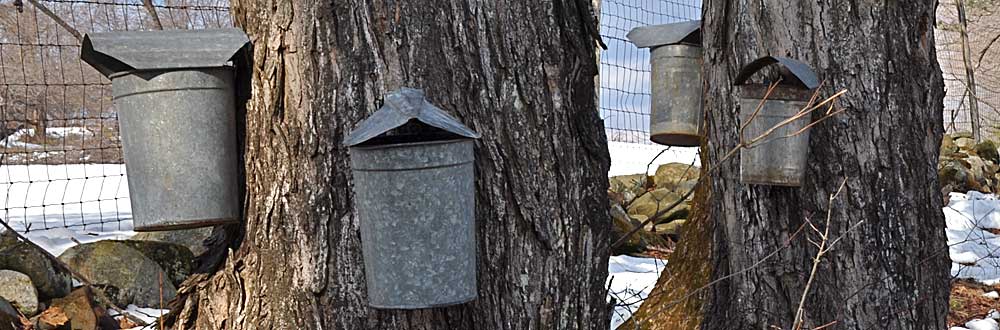
To sugar off means to complete the process of boiling down the syrup when making maple sugar. Some Vermonters use that same verb more generally to refer to how something turns out, as in the phrase, “How did that sugar off?”
Social Media Book Quiz
Quiz Guy John Chaneski’s puzzle involves social media “books” that rhyme with the name Facebook. For example, Manfred von Richthofen, a.k.a. the Red Baron, posts on on what fancifully named social media outlet?
Filibustero and Filibuster
A Los Angeles, California, listener says his grandmother, a native Spanish-speaker, used the word filibustero to mean “ruffians.” Any relation to the English word filibuster? As a matter of fact, yes.
Eat Well and Enjoy?
To encourage diners to dig into a delicious meal, an Italian might say mangia!, a French person bon appetit! and Spaniard would say buen provecho. But English doesn’t seem to have its own phrase that does the job in quite the same way.
Lit Slang
A Palmyra, Indiana, listener observes that in online discussions of Pokémon Go, Americans and French-speaking Canadians alike use the word lit to describe an area of town where lots of people playing the game.
Riga
If you think the city of Riga, New York, is pronounced like the city in Latvia, think again.
Keeping Up with the Joneses
A listener in Brazil wants to know about the source of the phrase keeping up with the Joneses, which refers to trying to compete with others in terms of possessions and social status. This expression was popularized by a comic strip with the same name drawn by newspaper cartoonist Arthur “Pop” Momand in the early 20th century.
Lean on Your Own Breakfast
If you’re sitting on a subway or airplane seat and someone’s invading your space, you can always offer the colorful rebuke “Lean on your own breakfast,” meaning “straighten up and move over.”
Solnit’s Writing Advice
Essayist Rebecca Solnit has excellent advice for aspiring writers.
Not the Boss of Me
The phrase “You’re not the boss of me” may have been popularized by the They Might Be Giants song that serves as the theme for TV’s “Malcolm in the Middle.” But this turn of phrase goes back to at least 1883.
Enduring Word Choice
A woman whose first language is Persian wonders about the word enduring. Can she describe the work of being a parent as enduring? While the phrase is grammatically correct, the expression enduring parenting is not good idiomatic English.
Poetic Spanish Saying
The poetic Spanish phrase “nadie te quita lo bailado” expresses the idea that once you’ve made a memory, you’ll always have it, no matter what. Literally, it translates as “no one can take away what you’ve danced.”
Chicken Lane, Suicide Lane
In a roadway, the center lane for passing or turning left is sometimes called the chicken lane, a reference to the old game of drivers from opposite directions daring each other in a game of chicken. For the same reason, some people refer to it as the suicide lane.
Bible Bump
A bible lump, or a bible bump, is a ganglion cyst that sometimes forms on the wrist. It’s also called a book cyst, the reason being that people sometimes try to smash them with a book, but don’t try this at home!
This episode is hosted by Martha Barnette and Grant Barrett, and produced by Stefanie Levine.
Photo by Putneypics. Used under a Creative Commons license.
Music Used in the Episode
| Title | Artist | Album | Label |
|---|---|---|---|
| I’m A Man | Spencer Davis Group | I’m A Man | United Artists Records |
| Mesothelioma | Magic In Threes | Magic In Threes | GED Soul |
| Shotgun | Junior Walker | Shotgun | Tamla Motown |
| How Sweet It Is | Junior Walker | Anthology | Motown |
| Burning Of The Midnight Lamp | Jimi Hendrix | Electric Ladyland | Polydor |
| Pushin’ Off | Magic In Threes | Magic In Threes | GED Soul |
| She’s Not There | The Zombies | Begin Here | Decca |
| Time Of The Season | The Zombies | Odessey and Oracle | CBS |
| Volcano Vapes | Sure Fire Soul Ensemble | Out On The Coast | Colemine Records |

