

What time is it if it’s the crack of chicken? When exactly is the shank of the evening? How do you pronounce the word spelled H-O-V-E-R? Did Warren G. Harding really coin the word normalcy? Also, a name game, sports nicknames, flounder vs. founder, Laundromats vs. washaterias, Black Dutch, nosebaggers, medical slang, and a look back at the joys of the early internet. This episode first aired April 21, 2012.
Transcript of “Shank of the Evening”
You’re listening to A Way with Words. I’m Grant Barrett.
And I’m Martha Barnette.
A few episodes ago, we were talking about what you call the practice of going up to a stop sign and then rolling through without stopping.
Here it’s called the California stop or California roll.
Right, right. And we put the call out, asked our listeners for other examples of that around the country.
And you know what? We got a ton of responses from Wisconsin.
Jim said it’s called a farmer stop.
Okay.
Which I love.
Dawn said it’s called a Chicago stop.
Karen said that her young drivers call it no cop, no stop.
Never heard that one.
And I love this one, too.
Kenton said, in Wisconsin, we call a rolling stop a violation.
Very good.
What line of work do you think Kenton’s in?
I think he’s a cop.
Well, I’m going to share some more of those later in the show.
But in the meantime, we’d love to hear your stories about language.
Call us with your questions, 877-929-9673, or send them an email to words@waywordradio.org.
Hello, you have A Way with Words.
Hi, this is Elizabeth from Dallas, Texas.
Hello, Elizabeth. Welcome.
Hi, welcome to the show.
Well, thank you.
What’s going on?
Well, a couple of weeks ago, I had sent an email to my colleagues telling them that someone had left me a voicemail at the crack of chicken.
And I caught all these replies saying, crack of chicken, what are you talking about?
And I just thought they were crazy.
So I was telling my husband about it.
And he’s like, I’ve never heard that, Elizabeth.
So I thought I would call you because I’ve been using it for a long time, but I don’t know where it comes from.
Elizabeth, what time is crack of chicken?
Crack of chicken for me is absurdly early.
Okay.
Sort of like dark 30 or oh, dark 30.
Oh, dark 30.
That kind of thing.
Like, a lot of times I do use crack of dawn, but I started thinking about, well, when do I use crack a chicken?
And I usually use that when it seems like someone’s doing something at a ridiculously early time of day.
And so in your mind, you see an image of a rooster probably when you say that, right?
I do, but I still say chicken instead of rooster because crack a chicken to me sounds better, I think, than crack a rooster.
Well, it does, doesn’t it?
I like it.
It reminds me of rocket surgery.
It’s a mixed idiom.
Yeah.
Right?
I like that, too.
Well, yeah, because you’ve got the crack of dawn, which we all know means the first light of day.
Right.
And you have variants of, these are kind of old-fashioned, but when the cock crows or when the rooster crows.
Yeah, or up with the chickens or go to bed with the chickens.
Yeah, exactly.
Right.
So it sounds like you’ve just mixed your idioms a little bit, and you’ve got one that’s got a little bit of humor to it.
So they should have been laughing instead of scratching their heads.
Well, I think they were laughing, but mostly at me.
But you know what? It’s got some history.
I don’t know how far back it goes, but you can Google this phrase, this sweet little phrase,
And it’s out there, perfectly normal, sane people are using it all across the country.
Well, good.
I’m glad to hear that.
And there’s a variant, too.
Crack of rooster is one that I found, and that goes back at least about 20 years or so.
Okay.
Yeah.
That’s interesting.
I’ve heard scratch of dawn.
Ooh, nice.
Which makes me think.
Ooh, I like scratch of dawn.
And that makes you think of chickens, too, doesn’t it?
Yeah, it does.
When they get up and start looking for feed.
Yeah.
Scratch it on.
Crack a chicken.
I like the sound of crack a chicken.
It sounds like.
Well, I think that’s probably why I use it, because I like alliteration.
It’s kind of poetic.
It makes you think.
Mm—
That’s good.
Elizabeth, thanks for sharing.
This is great.
You’re welcome.
Thank you.
Bye-bye.
Appreciate your help.
-huh.
Sure.
Bye-bye.
Bye-bye.
Well, the early bird gets the word here on A Way with Words, so call us 877-929-9673,
Or send us your questions in email to words@waywordradio.org.
Hello, you have A Way with Words.
Hi, this is Tyler from Fort Worth.
Hi, Tyler. How are you doing?
Hi, Tyler.
I’m doing all right. How are you guys doing?
All right. What’s going on in Fort Worth?
Well, I was wondering, when I was in high school,
I had a professor in a class that I took that told us that the word normalcy was created by a president.
I think it was Harding is what he said.
When he misread that in a speech, misread the word normalcy,
Or normality in a speech.
I was wondering if that was true, and if so,
What other words might have been created by presidents?
We can help you with that.
Sure, yeah, absolutely can help you with that.
It’s almost right. It’s not quite right.
Normalcy actually existed before Harding used it in a speech,
But he was definitely a popularizer of it.
When he used this in a speech, it caused much comment.
The commentariat had something to say.
Of course, every president’s words are analyzed down to the last morpheme.
And he definitely brought it into some kind of vogue.
He got a lot of blowback for it, too.
He did, yeah.
And, Tyler, there was another word that he also got in a lot of trouble.
You just said something similar, right?
He was a bloviator.
Oh, that one, yeah.
He was a bloviator, and he used the word bloviating to mean, some people say it’s a mix of blow, as in blowhard, plus deviate,
A person who is very long-winded and doesn’t know when to shut up, and I don’t know anything about that.
Yeah.
Tyler, have you ever come across the word hospitalization?
Yes, I have.
Well, that’s another word that Harding got all kinds of blowback for using.
Oh, really?
Yes.
Really? I didn’t know that.
So blowback, we mean letters to the editors and editorials decrying his use of the English language and that sort of thing.
Yes, I think Mencken, in fact. Yeah.
We should say, we should turn this into just a little bit of a lesson because it’s bound to come up.
Normalcy and normality mean the same thing.
And generally, normality is the word that is preferred.
And actually, normalcy has been in decline for decades and probably will eventually die out, except as some kind of relic.
Well, that’s too bad.
Yeah, it’s useful, but we don’t really need it.
Normality occupies the same space.
There’s no real semantic difference between them.
Sure.
I always felt smarter when I used normalcy, so.
Well, use it in good health then.
Don’t be hospitalized.
Tyler, thank you so much.
I hope we helped.
Sure, you did.
Thank you very much.
All right, rock on, dude.
All right, have a good one.
Take care, bye.
A couple more examples of what they call rolling stops in Texas.
Diana says there they call it an Oki yield sign.
-oh, classic rivalry coming out.
Oklahoma versus Texas.
Right, right.
And she says her husband is also a fan of Oki crash signs.
Oh, no.
That can’t be right.
And then Lynette in Dallas, Fort Worth, says she calls it a taxpayer stop.
I guess that means that if you’re a taxpayer, you can just roll right through there, she writes.
I guess. I hope not. You should stop. You really should.
Call us with your language stories, 877-929-9673, or send them an email to words@waywordradio.org.
And Diana found us on Facebook.
Hello, you have A Way with Words.
Hi, this is Ben from Colorado.
Hi, Ben. Welcome.
Hey there. What’s up?
Well, I had a question about some terms I hear at work.
I’m a paramedic, and we have our own industry slang, of course,
And a lot of it is just words that we use normally that are something else in the real world.
But there’s a couple terms in particular that I’ve been unable to track down the origins for,
And I thought maybe you would be the folks to ask.
All right. Let’s see if we can help.
The first one is gorked.
I don’t know if that’s spelled with a K or a CK or what,
Because, of course, it’s all transmitted orally.
When we turn over to the patient at the hospital, we might say, for example,
We’re bringing in a heroin overdose, and when we got there, this guy was just gorked.
He was unresponsive or out of his mind?
Unresponsive, unconscious, not at all doing well.
It usually means that they did this to themselves.
It’s usually associated with an overdose or some sort of chemical agent.
That one I do know.
There are a number of different glossaries and lexicons of medical slang and jargon around the Internet.
And from what I’ve been able to determine, that originally it meant someone who was just heavily anesthetized.
And then slowly it kind of modified to mean somebody who wasn’t conscious for whatever reason, whether a doctor did it or, you know, if it was iatrogenic or whether or not it was from self-medication.
Interesting. And that’s been around for a while or?
Yeah, decades.
I think since the 70s at least.
I’ve worked in hospitals back then and also the 80s.
And, yeah, I heard it that way.
You knew it. You knew gorked and gorked.
Oh, definitely.
So somebody was gorked.
It meant that they were unconscious for whatever reason.
Yeah, or just kind of a hopeless case.
I mean, no, not necessarily from drugs at all.
Is there a connotation there, Ben, that this is language that you wouldn’t use around patients?
Generally, because it just doesn’t sound particularly professional.
It’s got a much more slangy term to it.
Right.
It’s something you would use with your colleagues.
Exactly.
That’s cool.
What else have you got to share?
The other one is crump.
And I don’t know if it’s still a C or a K, but this is something that you would say if you have a patient whose vital signs suddenly take a precipitous turn to the worse.
So somebody is doing well, and then you’re talking to a doctor, and you say, I don’t know, I was giving them a breathing treatment.
They seemed to be responding, and then they just crumped on me.
That’s really interesting.
So they crump as in to crump.
It does sound like crumpled.
Yeah, it does.
Yeah, they’ve collapsed more or less or folded in on themselves somehow.
That one I don’t know.
I’m sure they could dig on it and find some more information.
What can you tell us about it?
Again, is this another one of those words that you would avoid saying around the patient or her family?
Generally.
And, again, just because it sounds much more like a slang term, and so it doesn’t sound like the sort of professional standard we’d want to maintain from the patient or the family.
Right.
And it’s interesting that there might be a chance there that a patient or the patient’s family would overhear.
And yet, in order to communicate well with your peers and colleagues, you have to use that same language.
It might have these, I won’t say unwholesome connotations, but like impolite connotations, right?
Certainly.
Yeah, and you can’t be a snob about it and just avoid them.
But do you ever feel like you need to avoid this kind of language?
Only around the patients.
Okay.
And usually when, in medicine in general, I mean, everybody’s seen house or, you know, similar programs.
There tends to be this sort of cynicism that people build up or kind of a dark sense of humor.
And so I think a lot of the terms that we use sort of reflect that.
And it doesn’t necessarily mean that we don’t take our patients seriously.
It just means that, you know, our slang tends to sound kind of odd.
Right.
Except to each other.
I mean, it’s a way of building solidarity with your team, right?
Absolutely.
And a little bit of a release valve for you, right?
A little bit of dark humor goes a long way in taking off some of the pressures of holding these other people’s lives in your hands.
True enough.
This is great stuff, Ben.
If I find out anything more about Crump or…
Yeah, Grant’s adding it to his list right now.
Or Gorked.
Gorked is G-O-R-K-E-D, right?
Yeah, or Gorked Out.
Gorked Out.
If I find anything more about Crump and Gorked, then I’ll put it on the Internet, send it out in the newsletter, or just let you know.
All right.
All right.
Well, thank you very much.
Take care.
Good luck.
Thanks a lot, Ben.
Bye-bye.
Bye-bye.
We love to hear the language of the workplace, so call us with yours, 877-929-9673, or send it an email to words@waywordradio.org.
Coming up, the weekly quiz and more of your questions about language.
Support for A Way with Words comes from the University of San Diego, whose mission since 1949 has been to prepare students for the world as well as to change it.
More about the college and five schools of this independent Catholic university at sandiego.edu.
You’re listening to A Way with Words.
I’m Martha Barnette.
And I’m Grant Barrett.
And we’re joined once again by our quiz guide, John Chaneski.
Hello, John.
Hello, Grant.
Hello, Martha.
Hi, John.
Welcome back.
Where are you coming from?
From the puzzle mines.
Oh.
Going down deep into the earth and mining good quality quizzes.
So did anything fall off the shovel while you were down there digging that you can share with us?
Yes, I found this little…
Let me just blow this…
Let me just dust this off here.
You guys know aptronyms, right?
Yeah, sure.
They’re names that are particularly suited to people.
For example, can you think of a former number one women’s tennis player from Australia with an apt last name?
Margaret Court.
Margaret Court is right.
Great name.
We’re going to have a little quiz on aptronyms, but these are more general.
They’re not famous people.
They’re just general names.
I call them aptronames.
There are a whole slew of riddles with an apt name as the answer.
Sometimes the word is phonetically similar to the apt word.
Okay?
Okay.
For example, what would you call a guy who’s floating in a swimming pool?
Bob.
Bob, right.
That’s one of the classic ones.
Grant liked the pun.
It’s terrible.
Everybody take notes.
It’s a protection reflex.
If I laugh, it scares off the enemies.
A little bit of igre, a little bit of igre in there.
Here are some more.
I’ll give you hints if you need them.
Along the lines of the swimming pool, what would you call a guy who’s lazing the day away in a hot tub?
Stew.
Stew.
Oh, good. See? Good.
Further with the water theme, what would you call a guy who goes to the beach, but he only goes in up to his knees?
Wade.
Wade. My good friend Wade, yeah.
Let’s leave the beach for a while and go into the city.
What would you call a guy who’s hanging on a wall?
Art.
Art. Yes, there’s art.
Hanging from the ceiling, hanging from the wall. It’s art.
What would you call a guy standing next to a hole in the ground with a shovel?
Doug.
Doug is correct.
I think we found Martha’s wheelhouse.
These punny names.
What would you call a guy standing in the hole, the first guy, Doug?
Phil.
It’s Phil.
That’s right.
I’m not really laughing.
This is the richest of death.
No, no, terrible.
You’re groaning inside where it counts.
What would you call a guy lying in front of your door?
Matt.
Matt is correct.
Very good.
What would you call a guy rolling around in a pile of leaves?
Well, he’s a rake, isn’t he?
Russell.
Russell is right.
What would you call a guy in a recording booth?
Mike.
Mike is right.
Mike, good, yeah.
What would you call a careless lion tamer?
Claws.
Claude.
Claude is right.
That could be a person with a house cat for that matter.
That’s true.
Now let’s not leave the women out.
What would you call a woman who is between two buildings?
Allie.
Allie is right.
And finally, what would you call a woman who holds your coat for you?
Peg.
Peg is correct.
Way to go.
Nice going, Grant and Martha.
Thank you, sir.
That was wonderful as always.
That was tough.
Thank you.
And now the emails and phone calls commence from all the pegs and bobs and alleys of the world.
Call us with your language questions, 877-929-9673, or send your stories about language to words@waywordradio.org.
Hello, you have A Way with Words.
Hi, Martha, this is Daniel Justice from just outside of Penetanguishene, Ontario.
Oh, nice. Is that a Native American place name?
It is. It comes from an Anishinaabe word that means place of the rolling white sand.
Nice. Is there sand there?
In some of the beach areas, yeah.
There are actually some really beautiful beaches just off of Georgian Bay.
Okay. Wow. Sounds wonderful.
Well, thanks for educating us.
What can we do for you?
Well, I was curious about a term I grew up with.
So my family, I’m originally from Colorado, and my family on my dad’s side is Oklahoma Cherokee.
And through my dad’s mom’s line, we’re enrolled citizens of the Cherokee Nation.
But my dad’s father, my granddad, actually was the one who looked the more phenotypically native.
But he was really vociferously, he would deny any native ancestor.
And he would always call himself black Dutch, which was always a term.
And I’d always kind of understood this term as a way for some people, especially in particularly racist areas of the country, to kind of disavow any mixed ancestry.
But when I was talking with my partner, who’s Canadian, and I just mentioned the term, he was actually kind of taken aback because he understood the term as a slur that was used for the descendants of Spanish troops who were stationed in the Netherlands as part of the, well, I guess in the 17th and 18th centuries.
And so the black Dutch would have been a bit of a slur for children of mixed marriages from that period of time.
So they would have the dark-haired and the dark-featured Spanish fathers, perhaps, and the blonde and blue-eyed Dutch mothers.
Yeah.
So two very different terms, well, two very different uses of the term.
And I was just kind of curious kind of how it’s worked in different areas.
And, yeah, then I figured you would tell me.
Yeah, black Dutch is a crazy term because it’s a bit of a mess.
If you start to Google it or even look in books that should be reputable, you’ll find that it’s so mixed up, as you rightfully pointed out, with race and our ideas of people, who we are, who we belong to, and what we’re a part of.
So you’ll find black Dutch used again and again throughout history to refer to people perhaps of Dutch ancestry or German ancestry or perhaps neither of those.
It’s just a way of suggesting that they are of a race that is a little more acceptable than some other race.
Sometimes you’ll find it being used to say that they’re simply dark complected.
They have dark hair.
They have dark eyes.
Perhaps they have olive skin.
And what’s really interesting about what you had to say, Daniel, is that in looking in genealogy for my own family, there is a line where it’s suggested that we have Cherokee ancestors because I come from a part of Missouri where the Cherokee passed on their way to Oklahoma.
And what I discovered is probably I could be wrong.
In our family, somebody decided that Cherokee was nicer to say than African-American.
And I probably have African-American ancestry.
And they just thought it was easier and probably more acceptable to say that they had Native American ancestry.
Isn’t that interesting?
Yeah.
So for them, Cherokee was the code for African American.
Wow.
Yeah.
And you look in the genealogical, and you’ll find Black Irish kind of works the same way.
I was going to ask about that term because I heard that as well.
So it’s all a mess.
It’s more than we can tackle on this show.
But what you’ve introduced here is this idea that we are looking for ways to express our identity in a way that other people around us will find acceptable.
And so you said it was your grandfather who insisted that he was black Dutch, even though he looked more like a Native American, like you would expect a Native American to look?
Right, yeah.
Phenotypically, his features were very kind of the stereotype.
Whereas my grandmother, much fairer skin, she actually, the pictures we have of her, she has the 20s bob.
But he, yeah, but he was really insistent.
And he was a bit of a bigot, too, which plays out in all kinds of ways in politics.
But, yeah, he was really insistent that he was not an Indian.
He was black Dutch.
Really interesting stuff.
And so your partner in Canada, his problem with black Dutch is that he knows it as a term to be avoided altogether.
You wouldn’t say it about yourself.
Right, right.
It’s more of a slur.
Daniel, this is great.
It sounds like you’ve done your fieldwork on this.
But for everyone else who’s listening, we’re going to link to some resources online where the different kinds of black Dutch are explained.
And if you’ve got something to add, give us a call, 877-929-9673, or send an email to words@waywordradio.org.
Thank you so much, Daniel. This is wonderful.
This is great. I really appreciate it. Love your show. We listen to it on podcast all the time.
Thank you. Bye-bye.
Thank you, Daniel. Bye-bye.
As I mentioned, when we come together from different parts of the country or different parts of the world, we have these language encounters.
Why don’t you share them with us, 877-929-9673, or email us, words@waywordradio.org.
Hello, you have A Way with Words.
Oh, hi.
Hi, who’s this?
Aniko.
Hi, Aniko. Where are you calling from?
From Long Island, New York.
Long Island, New York. Welcome to the program.
So I have a couple of peeves, and one of my particular ones is when people mix up the words founder and flounder.
Now, I know on Long Island, a flounder is a fish, but I know it also sometimes used to mean when somebody’s having, you know, not really succeeding or having bad results with something.
Flounder is something I think of as like a ship running around or sinking or something like that.
And, I mean, they both sound like disaster in a way, but I have a feeling they have distinct and different meanings, and I feel like people use them interchangeably, and yet I don’t think they’re interchangeable.
You’re very perceptive. I think you’re exactly right.
I think there’s a difference there, and it’s not a big deal if you get it wrong, but why not get it right because getting it right is so easy, right?
That’s right.
So flounder to you is flailing around, struggling for success, kind of not ever quite getting there, right?
Yeah.
Okay, kind of like a fish, literally, a flounder literally flopping around on the beach.
That’s how I picture it.
Okay.
Yeah, that’s it.
And then the founder comes from the Latin for depth, like foundation or profound.
Okay, very good.
The bottom of something.
Yeah, yeah, yeah.
And so if a ship is foundering, it’s going under.
It’s sinking to the bottom.
Yeah.
Oh.
But a company can founder as well.
Yeah, yeah.
I think a way to think of it is if your company is floundering, you may still pull through.
You may make those sales at the end of the month or something.
If it’s foundering, it’s going under.
You’re in big trouble.
You’re already – the downward arc is firm.
And Niko, what got you wondering about this?
Well, actually, I’m a copywriter.
And so sometimes I’m the person everybody looks to to get it all right.
And I always have all the answers.
But I’m also one of those people that has to bite my tongue and not correct people’s grammar because sometimes I hear things that really bug me.
Yeah, people make a lot of mistakes.
That’s painful, isn’t it?
But if you’re paid to do it, just dig in and enjoy, right?
That’s right.
And if they pay me to do it wrong, I just do it wrong and smile.
Oh, really?
They correct your corrections?
Well, you know, sometimes people have opinions and you just have to go with it.
Yeah.
Yeah, it’s true.
Yeah.
If it’s being right versus a paycheck, then the paycheck wins.
Exactly.
But, you know, we should point out, by the way, while we’re talking about it, that although flounder, you might think it comes from the word for the fish, it doesn’t.
Right.
Two different etymological origins there, right?
It’s just a coincidence.
Yes.
And I don’t think we’re completely sure how it came about.
It might have been a combination of founder and blunder or just all those words with that initial FL that sort of suggest flailing and flopping.
Flapping and flipping.
Yeah.
Yeah, I could always picture it being a combination of blunder and fail or flail.
Yeah.
I could hear that.
But I think now you have a pretty succinct way to explain to all those people who come to you with the wrong use of it, right?
Well, in this one, I could be sure.
Yes.
I got it from you guys, and that makes it right, doesn’t it?
Sure.
Always.
Yeah, and you know, we have a high appreciation for those people who are kind of like these little lone islands in the midst of a sea of people who don’t really know the right thing.
Like you’re working alone, all these people around you, all of them looking at you for the correct answer.
We’re happy to help you out.
We’re your lifeline.
If this was a game show, we’re your lifeline, right?
Yes.
Well, that’s a very good way to put it.
Thank you.
And I won’t founder that.
You’ve got a posse here is all I’m saying, Aniko.
We’re your posse.
You want flounder or founder?
Take care.
Thanks for calling.
Thank you very much.
Okay.
Bye, Aniko.
Bye-bye.
And you’ve got a language posse, too.
And find us on Facebook and Twitter.
Grant, you remember that conversation we had recently about skeuomorphs?
Yes, this is one of my favorite words.
A skeuomorph is a design element that represents an old material used in a new way.
For example, you might build something out of concrete but give it wood grain because that structure used to be made out of wood.
Yes. Well, Kate Burns from Dallas sent us another example.
It’s a really great specimen of a skeuomorph, and that is the save button in your little software programs, your little word processing programs.
It’s a floppy disk.
No.
You know, it’s a picture of a floppy disk.
Right.
Whoever uses floppy disks.
No, they don’t even sell most computers with floppy disk drives anymore.
I know.
I used to have a big pile of them.
But if you change the icon, then maybe you’d be like, where’s the save button?
Because now you’re used to the floppy disk.
Yeah.
How else would you represent the save?
I don’t really know.
Maybe the word save.
Yeah, or the little Monopoly guy with a bag of money, you know, save.
No, I don’t know.
How else would you?
That would be an interesting question to throw out there.
It’s a great question.
And if you have an idea, 877-929-9673 or send it an email to words@waywordradio.org.
Hello, you have A Way with Words.
Hi, this is Paul Maffin. I’m a pastor up in Georgia, Vermont.
Hi, Paul. Welcome to the show.
How are you doing?
Well, like so many people, I’ve been intrigued by the linguistic pyrotechnics surrounding Jeremy Lin’s rise to stardom for the New York Knicks.
Oh, yeah.
New word puns are spawned every day, such as lintastic, linderella, lindasion, lincinity.
And I hear that Jeremy Lin has even filed a patent to protect his trademark word, lincanity.
Lincanity, yeah.
And then, of course, you’ve got Tim Tebow with his trademark bowing down on one leg, referred to as Tebowing.
Well, it got me wondering how far back this phenomenon goes.
My curiosity led me to think about Herman Ruth, better known as the Babe or the Bambino.
So here’s what I was wondering.
Is there a longer history to this playful use of famous sports players’ names?
And are all of the terms fairly ephemeral, or have some of them actually stuck in the English language?
So we’re kind of talking about using sports figures as a way to come up with new words.
And sometimes these words reflect what we think of those sports figures, all the Jeremy Lin stuff.
And sometimes it’s about what we think of the, I guess, the hoo-ha around them, the noise, the commotion, right?
Oh, sure.
Because Jeremy Lin, as far as I know, doesn’t have one grand nickname that’s stuck, very unlike Babe Ruth.
That’s true.
And it’s interesting that it’s the Lynn part. I mean, nobody’s talking about the Jeremizer or anything like that.
Well, there’s an interesting component to that.
There was a great story in the New York Times in 2011 where they were talking about nicknames in sports.
And one of the things this article said that really stuck with me, and I’ve heard this from my friends and colleagues who study names,
Is that we have more and varied names now than we used to.
Used to John and Mike and Joe and the Emily’s and Elizabeth’s and Beth’s.
Those were far more common.
But you can actually look at the Social Security data for new births and new registered births
And see that the percentage of unique names has gone up.
Therefore, you don’t need to distinguish between the 11 Johns in your class anymore.
There’s no need, at least for that one particular reason that we make nicknames,
To come up with a variety of different names for these people.
There’s a couple great books that collect great sports nicknames,
And some of these nicknames are kind of astonishing in their backstories.
Just interesting stuff.
Yeah, I’m trying to think of one.
Well, there’s the basketball player who’s known as Big Baby.
Big Baby.
I don’t even know his real name.
Well, there was the refrigerator.
You know, now that you mention it.
Do you remember Refrigerator Perry?
Yeah, sure.
Do you remember him, Paul?
Sure, yeah.
Yeah, he sort of leapt over the wall between sports and the rest of the world.
Yeah, I mean, whoever heard of Herman Ruth?
Yeah, I would have no idea.
Rather than Babe Ruth.
Yeah, I would have thought that was Baby Ruth’s dad or something.
All right, well, thanks for calling, Paul. Really appreciate it.
Hey, great to talk with you, guys.
Take care. Bye-bye.
Take care.
Bye-bye.
We’re talking about words and language here. Call us, 877-929-9673.
One more skew-a-more for you, Grant.
This one came from Peter in Dallas.
He said that he’s 60 years old and he works a lot with people in their 20s and 30s.
And in a meeting recently, he said, I don’t want to sound like a broken record.
And he said they didn’t quite get the simile because for them, a broken record is something you do in sports.
Right. They’ve never seen vinyl that’s been cracked, right?
Yeah, or heard a broken record.
You used to pick up the album, and if you had the slot the wrong way, the vinyl would slide out and maybe crack on the floor, right?
And then you’d still try to play it because you wanted to hear Indiegata De Vida.
Crack or no crack.
You’re sounding like an old timer now, Grant.
I love it.
I’m not that old.
You’ve read about records.
Yeah, I’ve read about it.
I might own a few.
Email words@waywordradio.org.
Coming up, more worditude and lexitude and attitude on A Way with Words.
Support for A Way with Words comes from National University, where flexible online classes let you earn your degree or credential on your schedule.
More at nu.edu.
You’re listening to A Way with Words. I’m Martha Barnette.
And I’m Grant Barrett.
Martha, by 1992, I was on the Internet. Where were you?
I was on the Internet, too.
It was great, right?
Oh, it was fun.
Do you realize we’ve now been on the Internet for 20 years or more than that?
Oh, my gosh.
I mean, and before that was the bulletin board systems.
Yeah, yeah, yeah.
And I was reminded recently by something I read, and I’ll share this with you in a minute,
That the Internet culture has become so pervasive, it’s like expecting electricity in your house.
Yeah.
150 years ago, you didn’t automatically get electricity in your house.
Oh, yeah.
20 years ago, you didn’t automatically have internet anywhere.
Right.
Well, people thought you were weird, you know.
Yeah.
They would communicate with people all over the country.
Yeah.
You’d never seen them.
You didn’t have images of them.
You’d have to call the front desk and ask if it was okay to plug your modem into the hotel phone, right?
Yeah.
Well, there was a great article written by Ben Zimmer in the Journal American Speech.
He has collected and defined and done some history on internet memes.
Internet memes are these ideas, usually a little jokey, that pass from person to person.
And they kind of express emotions and sentiments that are otherwise hard to relate online.
We’ve talked about this before.
They’re like emoticons that give us paralinguistic restitution.
Right?
You are restoring to the written online language what is easy to do aloud
With our ears and our eyes and our hands and our faces.
You can kind of incorporate what you get from gestures into these images that get passed around.
For example, if someone says something unbelievable,
You might post what’s called an image macro of a snowy white owl with this text that says,
Oh, really? And it’s spelled in an internet way, O-R-L-Y?
So you’re expressing your skepticism and the expression that would be on your face if they could see you.
That’s right.
But at the same time, because it’s a little jokey and it’s expressed in this lower register of written language, you are letting the person know that you’re not accusing them of great malfeasance. It’s just a little bit like, I doubt you. It’s not serious. Let’s still be friends, but will you explain yourself? Right?
And there’s a lot of Internet culture and a lot of Internet language that is like this. It’s our struggle as basically offline species to make ourselves understood online. And so I’m going to share this article with our listeners where all of these great terms have been explained. Not everything that we ever used online, but the big boys, the ones that are more common and have some kind of life in them. It’s just wonderful stuff. It’s a great article. Like face palm, I love.
Yeah. And head desk. Head desk, right? When somebody does something unbelievable, you have to slam your head on the desk and go, oh, my God, I can’t believe you did that. Head desk.
877-929-9673. words@waywordradio.org.
Hello, you have A Way with Words.
Hi, Grant and Martha. This is Jonathan calling from just down the street in Pacific Beach, California.
Hey, Jonathan. How are you doing?
Hi, Jonathan. I’m doing great. How about you guys?
All right. You got your toes in the sand?
Well, not at the moment, but I live pretty close, so it’s pretty easy.
Okay. Nice. Sure. Sounds great. How can we help you?
Well, listen. So for years, my three brothers, my mom and I have teased my dad because of the way he pronounces the word H-O-V-E-R. So we say hover. He says hover. But the plot thickened recently when I heard somebody else pronounce it hover, kind of like a cow’s hooves.
Interesting. Hoover. So I was calling to see what’s going on and give my dad a fair shake at this debate. Tell us about your dad. Where is he from? What’s he doing?
Well, listen, he was born in New York, but mostly grew up in the San Francisco area. But his father grew up most of his life in England, in London.
Ding, ding, ding, ding, ding, ding. Yes. Because your father’s pronunciation is more like the British pronunciation.
Yes. Okay. The British tend mostly to say hover.
Hover. Okay. Hovering, hovering, hovering. Something like that, right?
Right. And in this country, it’s hover. So what about this third pronunciation?
It’s just wrong, really. And, you know, you don’t hear me say that often on this show, but it’s Hoover is not really right at all. And actually, I think most of the experts of pronunciation would say, that’s not right. It’s somebody who has learned the word from books and not from hearing it from other people.
Yeah, Hoover is what you do when you’re at the lunch counter and you’re eating really, really fast, right? You’re just sucking up the food like a Hoover vacuum cleaner.
Yeah, like a vacuum, sure. That’s probably what’s happened here is that the brand name Hoover for the vacuum cleaner has informed people’s pronunciation of this word.
Ooh, but then the food would just be in the air there rather than going in. Floating, floating, floating food.
Yeah, yeah. Hoover is floating food. That’s kind of gross.
Well, then I guess I need to go. We need to apologize to my dad for teasing him all these years when he’s just pronouncing it how his dad said it.
Yeah, don’t apologize. I’ve got a few of those as well. My father was raised for the most part in southeast Missouri, which means he has a fairly substantial version of the southern dialect. And I have just a few of the things that he said, and they come out. You’ll hear them on the show. I get emails about them. And it’s a natural thing that we should speak like our parents. It really is.
Now you’ve got to buy him a beer or a gift or something. I don’t know.
Stout, yeah. I’m sure he’ll happily accept.
Hey, does he say hovercraft?
He does, yes. He says hovercraft.
Oh. Well, I have a peace offering for you. You can go to omniglot.com and find out how to say, my hovercraft is full of eels in about 36 languages. If you ever need that sometime.
We’ll put a link to that on our website, okay?
All right, I’ll check it out. Thanks, Jonathan.
Thank you so much. Take care.
Rock on.
Bye.
Bye.
You know, I should have said that some dictionaries do offer that hover pronunciation.
Some American dictionaries.
Some American dictionaries do, but a lot of them are starting to leave it out now.
Yeah, it’s less common than it used to be.
Yeah. And the American pronunciation is overwhelmingly used in North America.
Right, like cover and lover.
Mm—
Yeah.
877-929-9673. Email words@waywordradio.org. Give us a call. Write us a letter.
Hello, you have A Way with Words.
Yes, hello. My name is Linda Fernandez. I’m calling from Avon, Indiana, and I had a question about an expression that my grandmother used to use. It was called the shank of the evening, and my recollection is that if you happen to be at a party and it was starting to get late and somebody might say, oh, it’s getting late, and she would say, no, it’s just the shank of the evening.
Now, in terms of her background, she was French-Canadian background, born in Houghton, Michigan in Upper Peninsula, and then moved to Toledo, Ohio, when she was about three years old, and she was born in 1896.
Okay, wow. And do you use this yourself?
Occasionally.
So the story that you told makes me think that it means still the early part of the evening. The evening’s not yet over. So the shank is just the first part of the evening.
Right. That’s what I think.
Okay, very good.
Yeah. So don’t leave yet, right? It’s just the shank of the evening.
Very interesting.
Yeah.
This is colorful.
Is she a horsey type of person?
Was she what?
Was she a horsey type of person, like involved in the horses or racing or riding or equestrian events?
Okay.
Nope.
Okay.
Shank of the evening, Martha.
Shank of the evening. Did you use that in Louisville growing up?
I think I did, or I heard it in old movies. I think of sitting on the veranda.
Oh.
Well, I know it was in a couple of plays. Like, I think Henry Miller used it in a play.
Okay.
Yeah, the word shank originally had to do with the lower part of the leg. It had to do with things that were long and straight. And we get the same shank in a prison, right?
Oh, I see.
Something long and thin that you stabbed somebody with.
Yeah.
And then I think it took on the idea of sort of the end of something, the tail end of something. I associate this expression with the South for some reason. And I think of the evening in the South being from noon to twilight. So the shank of the evening would be the tail end of the evening, that is the tail end of the afternoon.
This is really interesting, Linda, because this is a difference that most Americans aren’t aware of. According to the Dictionary of American Regional English, and they have a beautiful map for it, in the American South, the evening tends to be from early afternoon until dusk, whereas in most of the rest of the country, and North America for that matter, evening is from about dusk until bedtime.
And it’s two very different ideas of what evening means.
But so why did your grandmother say this? Was she influenced by Southerners at all?
No, I don’t think so. Not at all, because she was a Northerner. She was from UP, Michigan.
I’ve seen shank of the evening used both to mean at the beginning of the evening and the end of the evening. Of the nighttime, I should say.
But your story was perfect, Linda, because the evidence that I’m looking at shows that it’s almost always counterfactual. That is to say, person A says it’s time to go, it’s getting late, and person B says, no, it’s still the shank of the evening.
So regardless of what they think evening is, they still mean it’s not yet time to go. And there’s still more to do, and we can stick around and have some fun.
So that’s cool. I love this. I love this very much.
Shank of the evening.
Well, thank you, because I remember using it once in college many years ago, and people, they had never heard of it.
Oh, really?
They just need to read more.
Where was that?
Oh, it was in Ohio, in central Ohio, and it was like the 60s, early 70s.
Interesting.
Yeah, it’s a very poetic expression.
The English dialect dictionary has usages of this from the 1830s from Sheffields in England.
So this has got a great long history that goes back to the old world.
Great.
Cool.
Thanks, Linda.
Okay, thank you.
Thanks for calling.
Glad to hear from you.
Thanks for listening.
Bye-bye.
Take care.
Bye, Linda.
I love that expression.
I just think verandas and lemonade.
Yeah, that’s what I, well, in the middle of.
Catherine Hepburn.
Yeah, it’s at the time of the day when you switch from iced tea to bourbon.
There’s a time of the day when you switch to that?
I don’t know.
I’m just suggesting other people.
Grant, do you know what a nosebagger is?
A horse?
No, but you’re getting close.
It’s a tourist.
It’s an example of slang from the mid-19th century.
And a nosebagger was somebody who goes for the day to a resort town and takes his or her own provisions so they don’t add to the local economy.
I see.
They’re not buying lunch for themselves and their family.
Right.
They’re just coming for the experience but not spending a dime.
Right, right.
I went to the movies recently with a nosebagger who had little gummy bears in a plastic bag.
I love that.
Nosebagger.
Nosebagger.
You know, like a horse with a nose bag.
Yeah, sure.
Call us with your slang, 877-929-9673.
Email words@waywordradio.org.
Hi, you have A Way with Words.
Hi, this is Erica.
Hello, Erica.
Welcome to the show.
Hi, thanks for having me.
I’m calling from Indianapolis.
Well, I had a question about the word washateria.
I’m not originally from Indianapolis.
I’m from Texas.
And I always thought of what I now know as laundromats, as washeterias.
And we have a lot of Hispanics from Mexico, so you’d either hear washeteria or lavanderia, which is just a place to wash in Spanish.
And so when I moved out here to Indianapolis, I noticed there weren’t very many.
And so I asked my husband, where are all the washeterias?
And he said, what are you talking about?
And I had to explain to him what that was.
And he said, oh, you mean a laundromat.
And I heard of the word laundromat, but I kind of thought it was like another word maybe for like a laundered service for you to get your clothes dry cleaned.
So I looked it up and I don’t know, saw a bunch of different things.
It seems like it’s a word that they commonly use in the South or it’s like a trademark of laundrette, but I’m not sure.
So, are you from San Antonio, perhaps?
No, I’m from Houston.
Okay, Houston. Okay, very good.
Not the same place.
I ask because in the historical record, there shows a number of uses of washateria in San Antonio.
This is interesting.
Washateria probably was originally an English word.
So, we got cafeteria from the Spanish speakers, and then after a while, we took the terea suffix, and we started applying it to a whole host of things.
H.L. Mencken has like more than two dozen examples of Tyria words in his 1930s American language book.
It’s just a ton of stuff.
Now, the vogue of making words with Tyria on the end is kind of passed.
But a few of those words existed for a long time.
There was a chain of hundreds of laundromats or washaterias in Texas, 1930s to the 1950s, all throughout Texas.
And they were called washateria.
It was a chain.
A chain.
One chain.
That was the name on the place.
Interesting.
And so you can find old ads for Washeterias in the old newspapers, and you can find mentions in books and novels from the period, like I went down to the Washeteria, and there was a little bit of a generification there.
And it’s really natural then, because it has that familiar Tyria suffix, for the Spanish speakers just to say, oh, that looks like one of our words, and we can pronounce that because the sounds aren’t too weird for Spanish.
Let’s just borrow that.
And it became a part of the Spanglish spoken in Texas and some other states.
But do they say huacheteria or huacheteria?
Probably, yes. They probably do say huacheteria.
Yeah, and then they say huacheteria too.
But is that why, if it’s a trademark, or if that was a name of an actual business, is that why some of them are spelled W-S-H-A and some of them are spelled W-F-H-E?
That’s part of it, but also just because it’s kind of variable.
It’s like pizzeria. You’ll see pizzeria P-I-Z-Z-A and P-I-Z-Z-E.
It just depends what they’ve chosen.
Well, it’s interesting, too, because the word laundromat was originally a trademark name, and then it became genericized as well.
Yeah, once you’ve lost control of your trademark and your brand through generification, it’s almost impossible to get it back.
But I’m really interested in this experience that you had with your husband where he didn’t even know that Washeteria was a thing.
Yeah, what did he think it was?
He didn’t know what I was talking about, and he just thought maybe I was talking about car washes, because car washes are a lot different in Indianapolis than they are in Texas.
You know, maybe because it’s hotter, they don’t have the same type of car washes.
So he thought it was a car wash place.
I said, no, it’s a place where you wash your clothes.
Interesting.
Because, you know, if you didn’t know, it could have been a car wash, right?
Why not?
Yeah.
There may actually be wash interior car washes, for all we know.
Yeah.
Erica, how did we do?
Great.
It was just interesting.
It’s just funny how just different words and, you know, but I guess here it’s just laundromat.
I still call it a wash terrier.
People still look at me funny, but that’s what I know of it as.
I was raised in Missouri and lived for a long time in New York City.
For me, laundromat is the term for it.
That’s pretty much what it is always, no matter where I go.
Thanks so much.
I love your show.
All right.
Thank you for calling.
Call us again if you come across any of those things that your husband doesn’t know.
All right?
Okay.
Thanks.
Take care.
Bye-bye.
Bye-bye.
About five years ago, I wrote about Spanglish in English, you know, and there’s this great paper, I’ll have to hunt it up, where they’re talking about bringing Spanglish speakers.
These are people who speak a mix of Spanish and English all together in a room to see how different their Spanglish is.
And it’s surprising.
You get somebody from the Bronx.
You get somebody from Florida, somebody from Texas, somebody from California.
And one other person, they brought them.
So we’ve got Cuban influence and Dominican Republican influence and Mexican influence and what have you.
And you bring them in the room.
And they had this crazy, like, couple hours of intense trying to figure out what the other people were saying.
Oh, fun.
Because they were told, speak Spanglish as you would at home.
And wash it teary, it was one of the words that people who weren’t from Texas didn’t really know.
Oh, really?
Yeah, so it plugs in perfectly to what Erica is telling us.
I love these encounters.
Two languages meeting, something new happening, like a words being born like children are born when two people come together, right?
Here’s some more terms for rolling stops.
Emily in Chicago said they’re called jackrabbits.
Okay.
Isn’t that great?
Yeah, I guess because you’re just running, right?
Yeah, running right through the stop sign.
Yeah.
And Jean Van Teil in Indianapolis says that her 93-year-old neighbor from Fresno calls it a California slide.
It’s kind of easing past the side.
Yeah, yeah, right.
Call us with your stories about language, 877-929-9673, or you can send them an email to words@waywordradio.org.
That’s all for today’s radio show, but let’s continue the conversation online.
Join us and other listeners each week on Facebook and Twitter, or sign up for our weekly newsletter for the latest in language news.
You can also leave us a message anytime at 877-929-9673.
We listen to all of your calls, so share your stories and questions about language.
Or email us. The address is words@waywordradio.org.
If you don’t catch the broadcast, you can listen to the podcast on iTunes or get the A Way with Words app for iPhone, BlackBerry, or Android.
Our senior producer is Stefanie Levine.
Tim Felten directs and edits the show.
And we have production help from James Ramsey and Josette Hurdell.
A Way with Words is independently produced and distributed by WayWord, Inc., a nonprofit supported by listeners and organizations who believe in lifelong learning, better communication, and the value of a thing well said or well written.
The show is recorded at Studio West in San Diego, California.
Thanks for listening. I’m Grant Barrett.
And I’m Martha Barnette. So long.
Ciao.
I like tomato, potato, potato, tomato, tomato.
Let’s call it a whole thing.
Support for A Way with Words comes from National University, where flexible online classes let you earn your degree or credential on your schedule.
More at nu.edu.
Hey there, podcast listeners.
Just want to let you know that although we give you the show free, and we give it free to stations, it does cost something to send these episodes out to hundreds of thousands of listeners across the planet.
Help support our educational mission by going to the website and clicking the donate link.
Ten bucks? A little more?
How about as much as you think it’s worth?
Thanks in any case for helping us keep shop.
Names for Rolling Stops
 When a car rolls slowly through a stop sign, it’s often called a California stop or a California roll. But the Midwest has its own monikers for this sneaky move, including the farmer stop, the Chicago stop, and no cop, no stop.
Crack of Chicken
How early do you have to wake up to see what one listener calls the crack of chicken? It seems to be a twist on the term crack of dawn. Other terms for this early-morning time are o’dark thirty and the scratch of dawn.
Harding’s Normalcy?
Did President Warren G. Harding coin the term normalcy in his famous Return to Normalcy speech? Turns out the word normalcy was already in use before Harding made it famous. Its synonym, normality, is generally the preferred term. Harding is also credited with — or blamed for — bringing the term hospitalization into the common vernacular.
In his book Presidential Voices: Speaking Styles from George Washington to George W. Bush, Allan Metcalf points out that U.S. presidents have contributed or popularized quite a few neologisms to the English language.
More Names for Rolling Stops
In Texas, the California stop is also known as an Okie yield sign, an Okie crash sign, and a taxpayer stop.
Gorked and Crimped
What does it mean to be gorked or crimped? These slang terms for “high on drugs” are used by hospital and emergency medical services workers to help cope with the stress of such traumatic work and to build solidarity among co-workers.
Aptronym Word Game
Our Quiz Guy John Chaneski has a game of aptronyms for people whose names fit certain locations or conditions. For example, a guy hanging onto a wall might be named Art. Or what do you call a woman between two buildings? Ally!
Black Dutch
The racial descriptor Black Dutch is sometimes used by people who want to disguise someone’s true ethnic origins. Black Irish and Black German are also used.
Flounder vs. Founder
What’s the difference between flounder and founder? To flounder is “to struggle or thrash about,” while to founder is “to sink or to fail.” Surprisingly, the verb flounder shares no etymological root with the fish, though the image of a flounder flapping helplessly about on the shore may have influenced our sense of the word.
Skeuomorphs
Skeuomorphs are aesthetic elements of design that no longer correlate with their original function. Computer software is full of skeuomorphs. For example, the save button that we’re all used to is a picture of a floppy disk. But then, who uses floppy disks any more?
Sports Nicknames
With linsanity and tebowing sweeping the country, we’re thinking about other great sports nicknames. Unfortunately, it seems that with unique names taking up a greater percentage of children born, there’s no longer as much practical demand for nicknames. Still, the Babe, Magic, and The Refrigerator live on in legend.
Like A Broken Record
The increasingly musty expression like a broken record has caused some confusion among digital natives who’ve heard of broken records only in terms of sports!
Internet Meme Lexicon
Ben Zimmer published a brilliant collection of internet memes from the past twenty years in a the journal American Speech. Memes like facepalming and the O, rly? owl have allowed us to communicate otherwise unwritable sentiments via the internet.
Pronouncing Hover
How do you pronounce the word hover? In England, it rhymes more with “clobber” than “lover.” If you want to learn how to say “My hovercraft is full of eels” in lots of different languages, head on over to Omniglot.
Shank of the Evening Expression
It’s the shank of the evening! But when is that, exactly? This phrase is typically suggests that the night is far from over, shank being an old word for something straight, or the tail end of something. But as the Dictionary of American Regional English notes, in the South, evening is considered “the time between late afternoon and dusk.”
Nosebaggers
If you’re on vacation, watch out for nosebaggers. This mid-19th century slang term refers to tourists who go to resort areas for the day but bring their own provisions and don’t contribute to the local economy. A modern nosebagger might be the type of person who brings their own snacks to the movies.
Laundromats and Washaterias
Do you wash your clothes at a Laundromat or a washateria? A chain of Laundromats in Texas that dated from 1930 to 1950 had the name Washateria, and it took hold as a general term, especially in Texas.
Even More Names for Rolling Stops
A couple more variations of the California stop: the jackrabbit and the California slide.
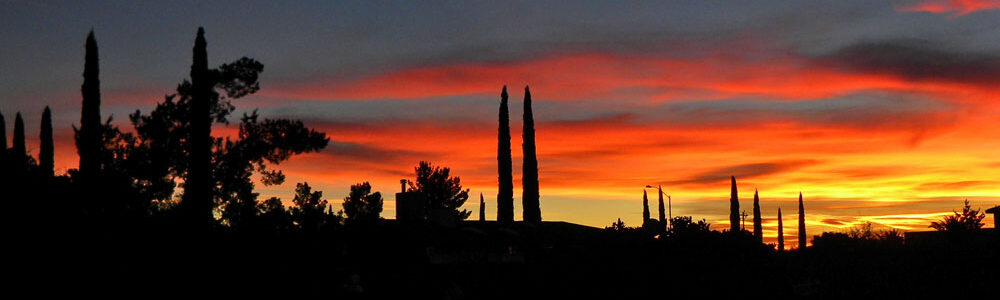
Photo by Barbara Spengler. Used under a Creative Commons license.
Books Mentioned in the Episode
| Presidential Voices: Speaking Styles from George Washington to George W. Bush Allan Metcalf |
| Dictionary of American Regional English |
Music Used in the Episode
| Title | Artist | Album | Label |
|---|---|---|---|
| Awareness (Suite) | Buddy Terry | Awareness | Mainstream Records |
| Hot Dog | Mongo Santamaria | Soul Bag | CBS |
| Super Strut | Deodato | The Roots of Acid Jazz | Sony |
| Funk Yourself | Eumir Deodato | First Cuckoo | MCA Records |
| Dig The Thing | Bill Doggett | Lionel Hampton Presents: Bill Dogett | Who’s Who In Jazz |
| Love Song | Sonny Red | Sonny Red | Mainstream Records |
| Sideman | Lonnie Smith | The Roots of Acid Jazz | Sony |
| The Immigrant | Gas Mask | Their First Album | Tonsil Records |
| Soulful Proclamation | Messengers Incorporated | Soulful Proclamation | SMI Records |
| Let’s Call The Whole Thing Off | Ella Fitzgerald | Ella Fitzgerald Sings The George and Ira Gershwin Song Book | Verve |


Hello, I wanted to let you know that the SoundCloud embed for this page goes to “Like a Bad Penny” instead of “Shank of the Evening”. I hope that someone fixes this; thanks for all the great episodes.