


Some countries have strict laws about naming babies. New Zealand authorities, for example, denied a request to name some twins Fish and Chips. • Halley’s Comet seen centuries before English astronomer Edmund Halley ever spotted it. That’s an example of Stigler’s Law, which says no scientific discovery is named after its original discoverer. Funny thing is, Stigler didn’t come up with that idea. • Anagrams formed by rearranging the letters of another word. But what do you call anagrams that are synonyms, like enraged and angered? There’s a word for that, too. • Flip side, over yonder, kyarn, old-fashioned script, avoiding adverbs, and another country heard from.
This episode first aired November 4, 2017. It was rebroadcast the weekend of September 30, 2019.
Transcript of “Catch You on the Flip Side (episode #1483)”
You’re listening to A Way with Words, the show about language and how we use it. I’m Grant Barrett.
And I’m Martha Barnette. I learned a new word the other day from the Haggard Hawks Twitter feed written by Paul Anthony Jones, and the word is synanogram. Do you know this term?
Synanogram. Nope.
Mm-It means a synonymous anagram. So, for example, the word angered can be anagrammed into the word enraged.
Oh, nice.
They mean the same thing, right?
Oh, that’s good.
Right?
And you as a dictionary editor, Grant, you may see some shades of differences that don’t make them exact.
I’m willing because the idea is so clever.
I’m willing to give it a little bit of leeway.
Okay.
So you would be okay with statement and testament?
Sure.
And laudation, meaning praise and adulation.
And one that I really like is that you can write out the words 12 plus 1, and you can also write out the words 11 plus 2, and you can anagram them.
They’re both anagrams.
And they both equal 13.
Nice.
How crazy is that?
That’s a very good one.
So the word again is synanagram.
Synanagram.
So these are anagrams that have the same meaning as each other.
Yes.
So it’s the same one word, anagram.
Mix the letters.
And the original word and the new word mean the same thing, roughly.
Yeah.
That’s cool.
Maybe you can come up with some of your own synanograms.
Let us know.
We’ll talk about them on the air.
Send them to words@waywordradio.org.
Call us at 877-929-9673 or share them on Twitter @wayword.
Hello.
You have A Way with Words.
Hi.
Is this Martha?
This is Martha.
Who’s this?
Hi, Martha.
It’s Vicki.
I am calling from New York City.
So what’s on your mind, Vicki?
Well, I was curious about the phrase, catch you on the flip side.
I do know what that means.
However, I didn’t really hear it that much growing up.
And recently I was watching some YouTube videos, and someone uses that as like their exit.
You know, that brought that, reintroduced me to that phrase.
And I wanted to look into the origins of it, and I did.
But I was curious if either of you have more information to share.
So it means, what does it mean when someone is leaving the room and they say, catch on the flip side?
It just means like, see you later.
Yeah. Hasta la vista, right?
Mm—
Yeah.
And so you looked into it. You went to Mr. Google and asked Mr. Google some questions.
And what did Mr. Google tell you?
A few possibilities. Well, a couple of possibilities.
One is that it could be from DJs.
You know, when they did record spinning on the radio, it was their way of saying, you know, see you later.
And another possibility is truckers on, you know, Citizens Band Radio, they would say that when they were going out of range, sort of to see you on the return trip.
And then with the DJ record spinning, it’s because you would flip the record to the other side.
Yeah, those stories are mostly how I would put it, but I would phrase it a little differently.
I don’t have any written evidence that DJs ever said catch you on the flip side, but I do know that 45s in particular, the B-side was called the flip side.
So the hit was on the A-side of the record, and then the B-side was like the secondary song.
And so that was the flip side.
However, Catch You on the Flip Side doesn’t appear in print, as far as I know, and I have really looked, until 1976 when this whole trucker trucking fad happened.
CB Radio caught the imagination of the American public, and Catch You on the Flip Side is exactly as you put it.
It means I will see you on my return trip because many long-haul trucks are like, you go out, you deliver your goods, and you come back with new goods.
You come back with an empty, and you just repeat this on the same route.
So if you’re on the CB radio, you’re running into the same people on the radio over and over, depending where you are.
Right, and it wasn’t just truckers.
I mean, my handle was in my little Datsun B210.
My handle was Honeybee because they had Honeybee on the side.
So I was like, break it one night, and you got the one Honeybee.
And then catch on the – we would say catch on the flip-flop.
Catch on the flip-flop.
I’ve heard that one too.
I’ve heard of that one.
Yeah, I didn’t do CB radio until I was in college, so I was a college boy.
That was me.
Okay, what’s your 20?
Yeah.
Where are you?
So, yeah, but the thing is that once the trucker fad faded, so did most of the trucker slang.
People will still kind of know it.
Like 10-4 in particular was kind of known through cop shows, but really kind of imprinted itself on American lingo from the CB craze.
It was strange to see Catch You on the Flipside resurge in the late 90s.
I don’t know why it did, but it shows up in the late 90s again.
It kind of comes back in the early 2000s, pops up here and there.
Urban Dictionary has entries for it.
And just like you, Vicki, I have run into people who are in their late teens and early 20s who write it, and probably say it aloud, too, as if it’s their own, as if it’s not something that’s got like a 40 or 50-year history to it.
Right, right.
Yeah, because it definitely feels older to me.
So I was sort of surprised when I heard this YouTuber using it because she’s definitely of a younger generation.
She’s like in her probably early 20s.
So, yeah.
Nothing to flip.
One of the Urban Dictionary books, there’s like two or three Urban Dictionary books that are published from the website.
One of them includes Quechua on the flip side with no historical references.
And I always have wondered if there are some people who are trying to stay hip to the slang picked it up from that book.
I don’t know.
It’s a long shot.
But it is strange.
Like the increased use of whatnot is another one of those things, which is so old-fashioned.
Or legit.
When the kids in high school and grade school say that’s legit, meaning cool or good, and that’s something with a 30-year history behind it.
And they don’t even know.
Cool, right?
Yeah.
I didn’t know that about those other two words, that there are more history behind them.
But there’s nothing stopping a word from coming back.
But the pathways by which they do it for each word can be very different.
Thanks, Vicki.
We really appreciate your call.
Yeah, definitely.
Thank you guys so much.
Take care.
Really appreciate your help.
Sure, Vicki.
Bye-bye.
Take care.
Bye.
Bye-bye.
But I’m interested in what you said about whatnot because I’m starting to associate that with sort of hipster types.
Is that where you hear it?
Because it’s so old.
Well, you and I have read the same emails and listened to the same voicemails from people who’ve contacted the show who are like, wait a second.
What is it with whatnot?
And I’ve noticed it myself.
It is so old.
It’s just kind of a catch-all meaning and everything or and stuff, right?
And whatnot.
Yeah, we went to the grocery store and we got the eggs and the bacon and whatnot, right?
Yeah.
But it’s so interesting to see it come back, this old-fashioned word.
Right.
It’s sort of this self-conscious kind of.
Do you think it’s self-conscious?
It feels performance-y to me.
Oh, okay.
I wonder if it’s past that now where it’s just now caught on past the few people who were performing it as they brought a word back.
It’s weird.
Well, I’m looking at the dictionary. It looks like it goes back to at least the mid-16th century.
That’s awesome.
But there’s nothing stopping a word from coming back, right?
There’s nothing new under the sun, right?
And if you want to find out how far back under the sun your thing goes, give us a call, 877-929-9673, or tell us an email, words@waywordradio.org.
Hello, you have A Way with Words.
Hi, how’s it going? This is Josh. I’m calling from San Diego, California.
Welcome, Josh.
Hi, Josh. What’s up?
I grew up in Southern California, and I moved to the Midwest a few years ago.
I spent a few years over there in Michigan, to be exact.
And one phrase that I’ve never understood and I’ve always been curious about is over yonder.
Anytime I ask for an item or where someone is or how to go somewhere, they tell me, oh, it’s over yonder.
I ask, where’s the soda?
Or they call it pop for some reason.
Hey, where’s the soda?
Oh, it’s over yonder.
Now, I got the general idea of maybe it’s somewhere far away or over there, but never really understood the who, what, when, where, and why.
About it. Over yonder. Wait, so was the soda within sight when they said over yonder? Or would it be out of sight, maybe in another room? Usually out of sight when I had no idea where something or somewhere was.
That’s one of the things about yonder. You almost never say it if it’s a thing that you can see. And it usually means a fair bit of distance. Like it’s going to take you some time or effort to get to it.
So it’s not just there. You would never say over there and over yonder are synonyms. It’s mostly still used, it’s used across the country, let’s just say that. It’s not that common. It’s a little more common in the American South.
And it has a flavor of being rustic or old-fashioned to most people. Even to people who say yonder, they still think of it as being kind of a country word or something that they inherited from their parents or grandparents and not something that, you know, they don’t think of it as contemporary.
I heard it more when I was out in the country than in the city.
It was mostly the country focused at it.
Yeah, that makes sense to me.
Yeah, I think of it without R’s, over yonder.
It’s over yonder, Mothan.
Go get it.
That’s your Kentucky heritage, though, right?
North Carolina, maybe, too.
Lack of R’s in there.
Yeah.
But it’s still widely used.
It hasn’t fallen completely out of favor ever.
It’s not used nearly as much in the other parts of the English-speaking world, but I wouldn’t call it exclusively in Americanism.
Yeah, it’s super, super old.
It goes back to the 15th century, I think, 14th century.
Yeah, and has some similar words and varieties of German and Germanic languages.
Okay, so it’s usually used when something’s out of sight, far away.
Yeah.
Far, far away.
Yeah, yonder is typically like it’s going to take you time and effort to get to it.
Yeah.
I always had the general idea but never had it confirmed.
And no matter who I ask, I could ask 100 different people in Michigan, and they’ll all give me a different answer or just have no idea what it meant.
Thank you.
I have a question for you.
I do, too.
You said you grew up in Michigan and Southern California, but your accent is telling me a different story.
I’ve heard that throughout my life.
My first language is actually Spanish.
I grew up in Southern California speaking a lot of Spanglish.
Great.
But I’ve had people tell me that I sound Irish, Australian, or just can’t pinpoint it.
It is a unique and novel ideologue.
It’s beautiful.
It’s interesting.
You’ve got a thing happening there that I really like.
Well, thank you. I really appreciate it.
You get complimented on it?
I get asked a lot, too. I work in customer service, so every customer, there’s always someone asking me, where are you from? What part of the world are you from? What’s your culture?
They very rarely pinpoint it that I’m Hispanic.
That’s cool. Joshua, thank you for your call. I really appreciate it.
Oh, thank you. Thank you very much. You still have a nice day.
Bye-bye.
Thanks. Bye-bye.
The cool thing about Joshua’s call is that you think, oh, I’m going to travel to another country and experience other cultures.
But the truth is you can just go to Michigan or anywhere, right?
You can move across this country or even to the neighboring state, next county sometimes, and encounter people who don’t talk like you.
And who have always talked that way and have no idea what you’re talking about when you’re fascinated, right?
And why do you sound like the strange one?
How many emails?
I bet if we searched our email box for the phrase, looked at me like I had two heads.
I mean, there would be so many emails from people who moved across the country to a new place and used a term.
Or not even that far sometimes.
Write a word or a phrase.
Yeah.
Well, we know that’s you.
I know it’s happened to you.
Give us a call and tell us about it.
Or email us the whole thing.
I have another synanogram for you.
That’s a synonymous anagram.
You take the letters of one word and mix them up.
This requires a little bit of background.
If you think about Joseph Lister, the 19th century English surgeon who pioneered.
As in Listerine.
Yes, yes.
He pioneered antiseptic medicine, right?
And so Listerize is a word that means to make something sterile, like sterilize.
Whoa, what?
That’s cool.
I wonder how many of these we can make or our listeners can make.
Right?
Tell us on Twitter, W-A-Y-W-O-R-D, or call us, 877-929-9673.
This show is about language examined through family, history, and culture.
Stay with us.
You’re listening to A Way with Words, the show about language and how we use it.
I’m Martha Barnette.
And I’m Grant Barrett.
And we’re joined by our quiz guide, John Chaneski.
Hi, John.
Hi, Grant.
Hi, Martha.
Hello, John.
Hi.
You know my wife, Jennifer Michael Hecht, the author?
Yes.
Jenny and I were talking the other day, and she mentioned the phrase, lawyer up.
And so we just discussed how amusing we find that term, though, of course, I’m sure it’s not amusing to anyone who has to lawyer up.
I said, the kitchen faucet is leaking again.
I’d better.
And she said, yeah, go ahead.
Plumber up?
Plumber up, yes.
Now, this would be too easy if I just mentioned instances where you need an occupation.
Doctor up, waiter up, masseuse up.
Yeah, that’s right.
Right.
So instead, I’m going to give you a clue in which I need to up, and the resulting phrase will also be a different up.
Okay, here’s the example.
I’m in my car.
I’m trying to change gears, but I’m getting a little verklempt about it.
That would clue.
Shift up.
Gear up.
No.
Oh, that’s good.
What do you say when someone’s getting a little emotional?
They’re tearing up.
Tearing up.
I can’t talk about it.
Choking up.
Choking up.
Yes.
You’re trying to change gears, so you need to choke up.
That took a while.
This could be a very long quiz.
Do you actually have to manually do choke on an automobile in this year?
I don’t know.
It’s an old-fashioned clue, I’m sure.
What are you driving?
Clutching up.
A fliver.
I’m driving a fliver.
Look it up, everyone.
Yeah, so let’s clue up.
They put me in charge of the pancake breakfast for my son’s Little League team.
I’d better…
Batter up.
Batter up.
Batter up, yes.
A nice one to start off with.
Coincidentally, all that cooking has made me hungry.
And, you know, I’m trying to, you know, gain a little weight.
So I’m going to go get a hamburger or maybe something more substantial like a big steak.
I’d better…
Beef up.
Yes.
Oh, beef up.
I’m trying to beef up.
Yeah.
I’d better beef up.
Or maybe some seafood.
I could really go for some shellfish right about now.
But listen, whatever you do, don’t tell anyone about this, okay?
But me, I’d better…
Clam up.
Clam up.
Yes.
Nice.
Pardon me, but can you spare a dollar?
I’ve been feeling rather down lately, but if I could get my hands in a dollar, I’d just feel a lot better.
I’d better…
Well, hit up, maybe.
No, but that’s not quite right.
Buck up.
Buck up, yeah.
Buck up.
Buck up, little buckaroo.
Everything’s going to be okay.
Now, I bet I can somehow build interest in my new product if I stand on a street corner and play an instrument.
Now, does anyone know where I can get a tablo or a djembe or a timpani?
To drum up your business?
I’d better drum up, yes, exactly.
Oh, no, that rash I had is back again, and I’m trapped on a raft in the middle of the ocean.
I’d better…
Flare up.
Oh, yes.
Flare up.
I’m trapped on a raft.
What a coincidence.
I could really flare up.
How about this one?
I haven’t seen my friend in a long time, so we’re going to get together next weekend.
He said he’d take me fishing, so I’d better…
Hook up.
Yeah, we’re going to hook up.
Oh, and guess what?
Turns out, when we finally get to the lake to go fishing, we’ll have to wait behind a whole bunch of people before we can get a boat.
Oh, and I forgot my reel, so I’d better…
Line up?
Yes, line up.
Martha’s on fire.
Yeah, yeah.
Okay.
Now, finally, I’ve got to call my English girlfriend and have her come over.
I’m going to propose. Oh, I’ve got an important purchase to make first.
I’d better…
Ring her up?
Ring her up.
Or knock her up.
You’re not going to knock her up.
Well, no, wait.
First, I’d better ring her up first, I think, or ring up.
I’m going to ring up first, yes.
Okay.
Well, that was great.
You guys were up to the task, so nicely done.
Aw, thank you so much.
Appreciate it.
This show is about slang, new words, language, funny stuff you read, books you like, and things that people say that are weird.
877-929-9673. Email words@waywordradio.org or talk to us on Twitter @wayword.
Hello, you have A Way with Words.
Hi, this is Susan Whaling. I’m from Valdosta, Georgia.
Hi, Susan. Welcome to the show.
Hi, Susan.
Well, I have a student from the Czech Republic, Lusinka, and she is now returned to the Czech Republic and she’s had her third baby. And she wrote me a message asking me to find an American dictionary, an English dictionary that would verify her son’s name. She wants her baby to be called Lysander, and the Czech government doesn’t allow her to use the name unless she can prove its existence. So she thinks the name already exists in the U.S., and I’ve asked colleagues in the English department and also in my own department, in the Spanish department, and everyone refers to examples in plays and literary references, but no one has been able to tell me whether it’s a real name in a dictionary and what the name of the dictionary is if they can find it.
I don’t even know how you look for the validity of a name, actually.
Good question.
And what’s the name?
Lysander.
Can you spell that?
L-I-S-A-N-D-E-R.
And I think at this point, she’d even take Lysandro.
So it’s for a boy.
Yeah.
And what were you teaching her when she was your student?
Okay, Spanish.
Spanish.
Okay.
Yeah.
And have you run across the name in Spanish, Lysandro?
Yes, I’ve heard it, but again, I don’t have any, I don’t know, I’ve never seen it verified, except in literary works, I’ve never seen it verified in an etymology dictionary.
People have referred me to the Greek spelling with the Y, but she doesn’t want the Y.
Oh, she doesn’t want the Y, so she wants it with an I.
Well, it definitely exists in Spanish.
In fact, there’s Lisandro Sandoval who wrote a whole Guatemalan dictionary.
But she wants to name the child with the English version of the Greek name, Lysander.
Yes, and I think it has something to do with the Game of Thrones.
I’m not sure.
And the back story for this is that the Czech government tightly controls names of babies, right?
Yes.
And you cannot name it your child unless you have a letter from a linguist verifying that that’s an actual name or a reference from a dictionary.
Wow. And so it has to be from a dictionary like Shakespeare doesn’t count, like Midsummer Night’s Dream and Lysander in that play?
No.
No?
No.
Well, there is a book of names of characters in Shakespeare where they are all explained.
Meaning that I just look for this book called The Book of Names of Shakespeare.
Let me find the title for you, and maybe that will get you and your student.
What is your student’s name?
Lucinka.
Lucinka, and Lucinka started.
So what’s really interesting as we’re looking here,
The story behind this is that the Czech government, like a lot of governments, controls the names of children, and partly this is to maintain social cohesion and kind of cultural traditions, right?
The French used to be more tightly controlled about this too, but they relaxed quite a while ago.
And there’s a story that when Dances with Wolves came out and Kevin Costner became well-known worldwide for that movie, that suddenly there were all these baby Kevins born in France.
And it was very kind of upsetting to the traditionalists who didn’t like this very obviously non-French name and showing up in the baby registers and then in the kindergartens and the grade schools.
So she wouldn’t be okay, Susan, with L-Y-S-A-N-D-R.
No.
Oh, that’s too bad because it’s right here in the Merriam-Webster Dictionary.
Would the Spanish version be okay or no for her?
Well, we’ve been trying this for like a month and a half now, and she said if she couldn’t find anything else, she would try to go with whatever Spanish version our linguist here would send.
Okay.
Verification of that.
All right.
So the book is the Shakespeare Name Dictionary is what it’s called.
It does have the name Alessander in it.
It does not have Lysandro in it, so it’s A-L-I-S-A-N-D-E-R.
Of which then she could use Lysandro as like a nickname for that?
Well, the Czech government doesn’t allow you to record nicknames, but you could actually, obviously, you could call the kid anything they wanted around the house.
So it’s in Love’s Labor’s Lost.
Okay.
And so the book is the Shakespeare Name Dictionary.
It’s by J. Madison Davis and A. Daniel Frank Forter, F-O-R-T-E-R.
Okay.
And so it’s a really interesting book that talks about the names, where they appear, a little bit of history, if there is some.
Talks about different versions of the name as they appeared in different versions of Shakespeare over the centuries.
It’s 1995 from Rutledge.
Oh, gosh, that’s so helpful.
Okay, I will certainly pass that on.
And, well, you just mentioned that other countries, so how many countries do limit names?
Quite a few of them.
Yeah, quite a few.
Yeah, I think Germany, at least they used to have a rule where you couldn’t use a name that didn’t specify the gender of the person.
Interesting.
Oh, that is so interesting. Okay.
It varies by country by country, and some of them have the rule or the law, and they don’t enforce it, and some of them have the custom but not really the law.
And even in the Czech Republic, I understand that a lot of it is really as much custom and tradition as it is law.
Like if you can persuade somebody, like you said, with a letter from an authority, then you can get the name that you want.
But you really have to work for it.
And as a matter of fact, there’s a well-known book.
I don’t know if you Googled this at all.
There’s a well-known book of baby names that is updated every few years by a linguist.
And I don’t know how to pronounce this name.
But the book’s title is What Is Your Child Going to Be Called?
And it is a list of baby names.
And this is the book that most Czech people pick their names from in order to get around this difficulty.
Wow.
Yeah.
Oh.
It’s really interesting.
Another place where they get their baby names is something we don’t really do very much of in the United States.
They have name days.
So there are names assigned to each day of the calendar.
And if you’re born on that day, perhaps you will get one of those names.
Yeah, it definitely happens in Latvia.
Yeah.
Is that like the Catholic tradition of naming children saints days?
Yeah, like the saints days.
Yeah, you celebrate your name day rather than your birthday.
Or both, if you’re lucky.
But yeah, if you’re born on a particular day and there’s a saint who is closely associated with it, you might just get that name, the feminine or the masculine version of it.
Well, we’re pulling for her in any case.
Yeah, let us know what she comes up with.
It’s weird to come up against a bureaucracy for a name, at least to an American.
Yeah, that’s just crazy.
I could name my child Scooby-Doo if I wanted, and then nobody’s going to stop.
Right.
Thank goodness you did.
And so that’s been everyone’s responses.
Like they’ve just been, none of us knew that there were places that existed that limited you in your naming of your child.
Yeah.
Fascinating, right?
I can’t imagine that happening in Spanish.
Susan, thank you so much for your call.
I really appreciate it.
Well, thank you.
Thank you for your help.
All right.
Have a good day.
Thanks.
Bye-bye.
Bye-bye.
Well, we know that naming is interesting wherever you happen to be, whether you’re a junior or a senior or you come from another culture.
Where one name or three names or nine names are common.
Tell us the story, 877-929-9673.
Hi, you have A Way with Words.
Hi, Martha. Hi, Grant.
This is Melissa calling from Montreal, Quebec.
Hi, Melissa.
Welcome to the show.
Thanks.
So I was at an exhibit that was about gendered cultures in beer and fermentation industries, like starting from way back in the 1600s, like all the way to now.
And my friends and I, who are also word nerds, were standing around this book that was under a display case that was super old.
It was from 1690-something.
We noticed that the S’s in a lot of the words in this book had been replaced with a lowercase f without a cross.
And we were trying to figure out what the pattern for that was because not all of the words were replaced with a lowercase f.
So, for example, some of the words that used the F were cheese, strength, somewhat, and reason.
And then some of the words that used S were stomach, husband, thus, and salt.
So, yeah, my question for you guys is what is the pattern?
Is there a pattern, and what is up with this weird F?
Well, first, chief. I would like to eat some chief. That would be amazing.
Nacho chief.
The other thing I want to say is not only is it amazing that you’re looking at something so old like that book from the 1600s, but that you can still read it even with the weird typography, right?
The other thing is, the final thing is, I guess not final, but that’s not an F.
It’s still an S.
Even though it looks like an F, it’s still, it’s called a long S.
And there was this thing that happened when typography first happened.
When we first started coming up with mechanical printed documents, many of the typefaces were borrowed from the Roman era.
And they had this character that represented an S that appeared in the middle of documents.
That was a kind of S.
So you had one version of it at the beginning of a word, another one in the middle.
And we kind of half borrowed it, as did many of the other languages in Europe.
And for a long time, for centuries, following different kinds of rule sets, and I’m going to put a little note to come back to that later, you would use that long S in certain circumstances.
Now, in the 1700s, it was one thing.
And in the 1400s, it was another.
But there was some consistency.
And if you were working in French or Italian or Welsh or German, your rules might be different.
But in English in general, the regular S would be used for capital letters.
Like you won’t find a long capital S.
So you would use the nice snake-shaped one.
You tend to use it at the beginning of words.
And if you look at the U.S. Bill of Rights, at the very top of the document, the original document, Congress of the United States, you can see another one of the rules at play.
You can’t have two long Fs right after each other.
So any word that has a double S, the first one is going to be the long S, and the second one is going to be the standard curvy snake S, or the round S as it’s known.
So writing the name Melissa.
Yeah, Melissa would be M-I-L-I long S, round S, A.
Yeah.
And the long S is the one that looks like an F?
Yeah, it looks like an F.
It either doesn’t have a crossbar, it only has a tiny bit of a crossbar that goes out, I believe, to the left only.
And it tends to be, in some typefaces or some handwriting, a little longer than the F as well.
The bottom of it extends further below the baseline of the writing.
But it’s not 100% consistent.
If you want a full examination of this, there is a really interesting blog entry by the antiquarian Andrew West.
He’s got a blog called Babblestone, B-A-B-L-S-T-O-N-E, Babblestone.
And in 2006, he realized that he needed to explain the long S to people because people didn’t get it.
He was sharing all these wonderful old documents.
People were like, what is the deal, just like you, Melissa, with this long S?
And so he came up with this bullet point list of all these different characteristics of the long S in general.
And he kind of also talks about how it changed over time and when we actually stopped using it, which is roughly in the United States’ early 1800s.
We stopped using the long S for the most part.
Occasionally, people would resurrect it for very formal documents, but mostly it disappeared by then.
Okay. Yeah, that makes a lot of sense.
I actually have a picture of the book, if I could email it to you.
Yeah, sure. Send it along. We’d love to see it.
And is it all right if we share that picture on our website or our social media?
Yeah, absolutely.
Awesome. Thank you very much.
Melissa, thank you for calling.
No, thank you so much. I really love your show. Seriously, it’s one of my favorites.
Take care now.
All right. Bye-bye.
Bye-bye.
Well, we know that you and your friends were standing around discussing some point of language, and you thought, wonder where we can ask a question about that.
Well, this is the place.
Call us 877-929-9673 or send an email to words@waywordradio.org.
We were talking earlier about name laws in different countries that restrict what people can call their babies.
And I was surprised to learn that there’s a name law in New Zealand that prevents people from naming their children anything that, quote, might cause offense to a reasonable person or is unreasonably long or without adequate justification.
So some of the names that New Zealand has rejected include stallion, yeah, Detroit, fish and chips, and sex fruit.
Those were rejected.
Those are terrible.
But they did approve for a set of twins, the names Benson and Hedges, as well as Midnight Chardonnay, No. 16 Bus Shelter, and Violence.
So go figure.
What? No.
I assume nicknames are quickly derived, right?
Yeah. Anyway, 877-929-9673.
Why we say what we say. Stay tuned.
Thank you.
You’re listening to A Way with Words, the show about language and how we use it.
I’m Grant Barrett.
And I’m Martha Barnette.
Grant, you know what Venn diagrams are.
Yeah, the two circles, each with meaning, and where they intersect, there’s the thing that they have in common.
Right. And my whole life I’ve known those as Venn diagrams. But, you know, John Venn, who popularized them in the 1880s, wasn’t the person who invented them. That was Leonard Euler.
Euler? Like O-I-L-E-R? Euler?
Well, it’s spelled E-U-L-E-R, but he was Swiss.
And he had introduced them almost a century before.
And, you know, there are a lot of concepts like this, a lot of terms that we have that are associated with one person, but were actually discovered by another person, say Halley’s Comet, which was familiar to, you know, people back in before the birth of Christ.
Right.
And even the Bechdel test, you know, which is that test that’s used now to determine sexism in movies, right?
Or a minimum amount of attention paid to women that doesn’t focus on men, right?
Right.
It’s like the barest minimum.
Right.
And that’s credited to Alison Bechdel, the cartoonist who did the comic strip Dykes to Watch Out For and wrote Fun Home.
But she’s always tried to make the point that she didn’t come up with that.
Her friend Liz Wallace did, but she got credited with it.
It’s called the Bechdel test.
And I found out that there’s a term for this actual phenomenon of things being attributed to somebody who didn’t actually come up with them.
It’s called Stigler’s Law.
And did Stigler come up with it?
No, he didn’t.
That’s the thing.
Of course not.
Or at least he says he didn’t.
He’s a University of Chicago statistics professor who wrote about Stigler’s Law of Eponymy in a 1980 publication that states that no scientific discovery is named after its original discoverer.
But he himself credits it to a guy, a sociologist named Robert Merton.
That’s cool. Stigler’s Law, that an idea won’t be credited to the person who actually came up with that.
Right. And it’s true, right?
It is true.
Throughout history.
And words kind of behave the same way.
The person who coined words is usually far less known than the person who popularized them.
Exactly.
If either are known at all.
Yeah.
It’s funny the way language works, right?
Stigler’s Law.
Yeah.
There’s a long list of these.
I mean, you can even look on Wikipedia.
I mean, the Fibonacci numbers.
Fibonacci didn’t do that.
No, no.
That was written about in Sanskrit by Indian mathematicians like years and years and years ago.
But Fibonacci brought it to what? European attention?
Right.
So often somebody who popularizes an item isn’t the one who actually came up with it.
Ain’t that just the way.
Somebody always taking your credit.
Right.
Stealing your thunder.
Email words@waywordradio.org and talk to us on Twitter @wayword.
Hello.
You have A Way with Words.
Hi.
This is Ari.
I’m calling from San Diego.
Hi, Ari.
Welcome.
Yeah.
So my question is about adverbs.
So I started writing a little bit of fiction, mostly just out of a fun new hobby.
And I’m kind of scouring the Internet a little bit.
And I keep coming across these do’s and don’ts to fiction writing.
And most of them are pretty helpful.
But I keep finding one particular rule that kind of sticks out in a way that I wanted to seek your opinion on it.
It’s having to do with Stephen King’s advice that the road to hell is paved with adverbs.
And apparently adverbs are like this mortal sin in the fiction world.
And I wanted to know what you guys think about that.
Yeah, I’ve read that Stephen King advice about adverbs.
And he’s not the only one who says that adverbs should be avoided, right?
Oh, yeah.
A couple people are like really strong believers of it.
And I went back and I found a few that I had used and replaced them with maybe a different verb or maybe a metaphor, just rearranged the sentence a little bit.
And I did like it better.
But there’s a few that I look at and I go, well, what’s the harm in that?
I just wanted to know what your take was on someone completely removing an entire literary device out of their writing arsenal.
Mark Twain said, I am dead to adverbs.
They cannot excite me.
Ari, I’ve seen that advice as well.
Boy, I have a lot of complicated feelings about this.
I will tell you, I have read books where it has seemed that the author took the advice to avoid adverbs and adjectives to heart.
And I got to tell you, it’s like reading a pile of cold oatmeal.
It is the worst.
Oh, you think?
Fiction, absent adjectives and adverbs is a dreary, dry thing with no character, no voice, and no style.
No adjectives either.
Well, yeah, that’s the thing is sometimes people throw in adjectives as well as a thing to be avoided.
And here’s the problem that I have with most of this anti-adverb and adjective advice is that it overstates the problem with adverbs and adjectives.
When it should be saying, use them carefully, use them sparingly, become a pro at using them.
Instead, they’re telling you, don’t use them, avoid them completely, they’re bad for you.
And I think that kind of do or die, black or white injunction against adverbs and adjectives, which people also say, is making a lot of bad writers.
I think it is creating people who, instead of becoming experts in that part of the writing craft, experts in using adjectives and adverbs, they’re just like dispensing with it all together and saying, I don’t need it.
And I think that’s a mistake.
It’s like excluding whole parts of the language.
How can that be right?
I know.
To me, it feels like in some cases it can make verbs feel sort of naked.
Yeah.
What do you mean by that?
Well, I mean, okay, so a lot of the characters in the work I’m working on have wings.
There’s angels and demons, both of which fly.
So I feel like there’s only so many aviary verbs I can use.
I can only use the word swoop or glide so many times before they just get kind of annoying.
So I try to substitute, maybe I’ll use an adjective or an adverb here and there.
I really like verbs like swoop and glide.
I think they’re pretty powerful.
But how would you use an adverb to make that more powerful?
Maybe use swiftly or describe the movement as being rapid or just putting something else in there just so I don’t use it like maybe the fourth or fifth time in the same paragraph.
Yeah.
One of the problems that I have with his advice, and I love his writing.
I think he’s got a magical ear for language.
I think his book on writing is excellent.
I think this is one of the weak parts of it.
His example sentences would not pass muster with a dictionary editor.
Like me, because he’s invented them.
And this is the problem I find again and again when people rail against adverbs, that they have found the worst possible or invented the worst possible adverb uses instead of actually extracting them from the writing around them.
And they have not gone to the same trouble to find really good uses of adverbs to demonstrate what to model your own writing after.
And I think this is a failing of this particular part of his book and a lot of people who rail against adverbs.
You have to give me the positive examples as well as the negative ones and don’t invent them.
Yeah, well said.
All right.
Yeah.
Yeah.
So it sounds like we’re all on the same page here.
Great.
Yeah.
Okay.
By the way, if you want a little more about this, there’s a columnist for the London Times.
His name is Oliver Kam, K-A-M-M.
And he really spends a lot of time.
He’s got a couple of great treats he’s put out, too, about comparing the writing advice of writing experts to their actual own practice in their writing.
And again and again, you find, including people like Stephen King and Strunk and White, they will say not to do something and do it either in that exact sentence or in the next sentence.
And not ironically, just because they’re not noticing in their own writing that they’re committing the same supposed offense that they’re against.
Wow.
Yeah.
Hypocrites.
I will definitely look into that.
Anyway, again, I love Stephen King.
That book on writing is outstanding.
This particular part I don’t agree with.
Well, Ari, keep up the good work.
We look forward to hearing more about your writing someday.
Oh, thank you.
And I’ll keep listening to your show.
I listen to it just about every day.
Substitute music when I clean up the house.
Goes great with the vacuum.
Yes.
Thanks, Ari.
You got it.
Take care.
Bye-bye.
Call us with your language question, 877-929-9673, or send us an email to words@waywordradio.org.
We were talking earlier about synanograms or synonymous anagrams.
There are also antigrams, which are when you take the letters of a word and you mix them up and you have something completely different.
So the opposite.
Right.
Or close to the opposite.
I’m sure you’ve made the typo untied for united.
Oh, sure.
Yeah, that’s a good one.
And another one is if you take the word 45, you can mix up the letters to make them over 50.
Yeah, that’s cool.
I love these.
These are great.
I know, right?
If you have a synanogram or what is it?
Antigram.
Antigram.
Send them an email to words@waywordradio.org.
Hello.
Welcome to A Way with Words.
Thank you.
Hi.
This is Jennifer.
I’m calling from Chowan County Library in North Carolina.
Well, welcome to the show.
What can we do for you?
Well, my father had an interesting expression when I was growing up and an unusual word that I never knew the meaning of.
And I was wondering if you could help me out.
We will try.
He grew up in eastern Kentucky in Appalachian Mountains up in the holler.
And he had some unusual words.
One of the most, which really stuck out to me, was the word kjarn.
She would say something isn’t worth a yarn or it stinks like yarn.
And that was just in his everyday, you know, vocabulary.
And I never knew what the word was other than there was a lot of Irish and Scottish people in the area, you know, ancestry in the area.
And I assumed maybe it had come from something like that, but I never knew what it meant.
So I was hoping that you might know.
And Jennifer, do you have any sense of how he would have spelled it had he written it?
I just have thought, I’ve been thinking about it, maybe like K, like phonetically, K-Y-A-R-N.
Yeah, that’s a term that you do hear in the Appalachians and in the Ozarks.
And it’s a term that doesn’t have quite as fancy an origin as what you’re suspecting.
You really zeroed in on it when you talked about something that stinks like kjarn.
Okay.
Because kjarn is actually an adaptation of the word carrion.
Carrion, okay.
C-A-R-R-I-O-N.
Right, C-A-R-R-I-O-N.
So dead animals, rotting dead animals.
Yeah, something that the crows would come and pick on.
Yeah.
Oh, my.
So if something stinks like carrion, it’s the worst.
Yeah.
Then it really is a stinky thing.
The word has been expanded to mean just like your house looks like yarn or something.
It doesn’t have to be something that’s really gross.
It could be your house is really disorderly or something.
Somebody might describe it as that.
Oh, that’s interesting.
Okay.
But, yeah, I’ve seen different spellings of it exactly the way that you were talking about, K-Y-A-R-N, C-Y-A-R-N.
But it’s sort of pronounced with this kind of cairn.
Cairn.
So, Jennifer, thank you so much for calling.
Well, thank you for having me.
I appreciate it so much to learn this.
Call us again sometime with the rest of your father’s words, all right?
Have a great day.
Bye-bye.
You too.
Bye-bye.
Email words@waywordradio.org.
Talk to us on Twitter @wayword.
And look for us on Facebook. Just search for A Way with Words and join the Facebook group.
Welcome to A Way with Words.
Good morning.
Good morning. Who is this?
This is Lynn McCullough from Ferndale, California.
Hi, Lynn. Welcome to the show.
Hi, Lynn.
Hi. It’s great to be on. I love your show.
Thank you. We’re glad to have you.
Thanks.
What’s up?
Well, I’m a grandmother and have been for the past 10 years.
And somehow or another, that brings back, I guess, things of my own grandmother.
And it came to my mind that she would say when one of us walked in the room and started out on a conversation that was already taking place, she’d say, oh, another country heard from.
And I never heard anyone else say it.
I didn’t think about it for a long time.
And then I started sharing things like that with my grandkids.
Nice.
And I just wondered who else says that.
-huh.
And so what was the sense of that phrase when she used it?
Well, you didn’t feel badly.
You just felt like, kind of recognized, I thought.
Oh, I see.
Oh, it wasn’t dismissive?
It wasn’t like, who asked you? Why are you talking?
No, because she wasn’t like that.
No, it was fun.
It was like, oh, another country heard from.
Yeah, no, it wasn’t.
She was not grumpy.
Oh, that’s really sweet.
You know, the context I’ve heard that in more often is when a baby cries.
You know, like you have a group of people there and all of a sudden the baby pipes up and says something.
And somebody, I mean, the baby doesn’t say something.
The baby makes a noise.
Makes a sound.
Yeah.
And somebody will say, oh, another country heard from.
Yeah, no, it made us feel like we were a country that she wanted to hear from.
Oh, nice.
Oh, that’s adorable.
Yeah, that is.
That’s great.
I asked about the negative interpretation because traditionally it has been kind of a smart remark.
Traditionally it was the kind of thing where you might say, oh, everybody’s got an opinion, you too.
Or there are meaner ways to say that, but kind of a way of ridiculing somebody who pipes up when their voice isn’t wanted or their ideas don’t need to be heard.
Yeah, I can imagine that.
And you just used the term piping up or piping in.
She would have used that as well.
I see.
There we go.
Interesting.
Yeah.
And what’s cool about this phrase is that there’s an earlier version of it, which is another county heard from.
Another country heard from is a corruption of that.
And that goes back to the old days when we didn’t have instant election results.
You know, we didn’t see the results of, say, a presidential election in real time or the same night of polling.
Right. Or months even.
Weeks and weeks and weeks.
Oh, yeah.
Wow.
And back in the day, in the 19th century, people would say another county heard from, or newspapers would announce, another county heard from.
You know, the election results are still coming in slowly, slowly, slowly because you don’t have the same kind of media that you do today.
Oh, interesting.
Yeah.
And there’s a story that word historians have talked about for a long time.
Yeah.
The 1876 election of Rutherford B. Hayes.
Rutherford B. Hayes.
I think I’m a distant relative of his.
You are?
I think I am.
Wow.
And Samuel Tilden.
It was a close-fought election.
And even down to the wire, nobody knew who was really going to win it.
And the results kept coming in from all these different counties from across the country and kind of pushing it one way or the other.
And so you would get these subject lines of these little paragraphs or even whole stories in the newspaper that would say, another county heard from.
However, that term, another county heard from, was used previously to that election.
So although the story kind of connects it to that one contentious election, you can find it as far back as 1868.
And it shows up in advertisements and letters to the editor and a lot of things that don’t really have anything to do with politics.
And it’s pretty clear, at least to my word historian’s eyes, that the way that this is presented, another account you heard from often in quotes, often as if it’s special or it needs some attention drawn to it.
It’s clear that they’re referring to something else outside of the newspaper, but I don’t know what the source is.
So maybe there was a play or some kind of a performance speech that was given at the time or there was a joke making the rounds.
But in any case, another county heard from was the thing you would say, say a lot of people were down at the pub or the bar discussing the events of the day.
And somebody, just like you described, jumps into the conversation.
You might put him down and say, another county heard from, and just ignore their advice or ignore their thoughts.
Oh, interesting.
So it had that more of a negative when someone spoke up.
Yeah, yeah.
Yeah, so Lynn, a lot of history behind your grandmother’s saying.
Cool.
Cool.
Thank you for such an interesting question.
We really appreciate it.
All right.
Well, thanks for your show, and I’ll keep listening.
Take care now.
Thank you, Lynn.
All right.
You too.
Bye-bye.
Call us 877-929-9673 or send us an email.
That address is words@waywordradio.org.
Want more A Way with Words?
Listen to years of past episodes at waywordradio.org.
Or find the show on any podcast app or on iTunes.
Our toll-free line is always open,
So leave us a message at 877-929-9673 and we’ll take a listen.
We’d love to get your messages at words@waywordradio.org.
Or hit us up on Twitter @wayword and look for us on Facebook.
This program would not be possible without you.
Grant and I are out to change the way we listen and think about language,
And you’re making it happen.
Thanks also to senior producer Stefanie Levine,
Director and editor Tim Felten,
Director Colin Tedeschi,
And production assistant Emma Kelman in San Diego.
In New York, we thank quiz guide John Chaneski
And that master of keeping it real, Paul Ruist at Argo Studios.
A Way with Words is an independent production of Wayword, Inc.
From the Recording Arts Center at Studio West in San Diego, I’m Martha Barnette.
And I’m Grant Barrett.
So long.
Bye-bye.
Synanagrams: Synonymous Anagrams
 Anagrams are words formed by rearranging the letters of another word, such as star and arts. As Paul Anthony Jones points out on his site Haggard Hawks, some words can be anagrammed to a synonymous word, such as enraged and angered, or statement and testament. Such pairs are known as synanagrams.
On the Flip Side
A New York City listener wonders about the origin and literal meaning of the phrase catch you on the flip side. It’s a reference to the B side of vinyl records. It was popularized as part of truckers’ CB lingo in the 1970s.
Over Yonder
A San Diego, California, man wonders about the meaning and distribution of the directional phrase over yonder.
Sterilize -> Listerize
The letters in the word sterilize can be rearranged to form the synangram Listerize.
Lawyer Up Word Puzzle
Quiz Guy John Chaneski’s puzzle features variations on the phrase lawyer up, in which the answers are a verb followed by the word up. For example, if someone’s in his car and trying to change gears, but getting a little verklempt about it, what’s he about to do?
Baby Name Laws
The former student of a Spanish teacher in Valdosta, Georgia, will soon give birth in her homeland, the Czech Republic, one of several countries that have strict naming laws. The mother-to-be would like to name her son Lisandro, but needs official evidence that Lisandro a legitimate baby name. There is, by the way, a dictionary of Guatemalan Spanish edited by a Lisandro Sandoval. A good source for names mentioned by the Bard is The Shakespeare Name Dictionary. Most Czech parents chose baby names from a book with a title that translates as “What is Your Child Going to Be Called?”
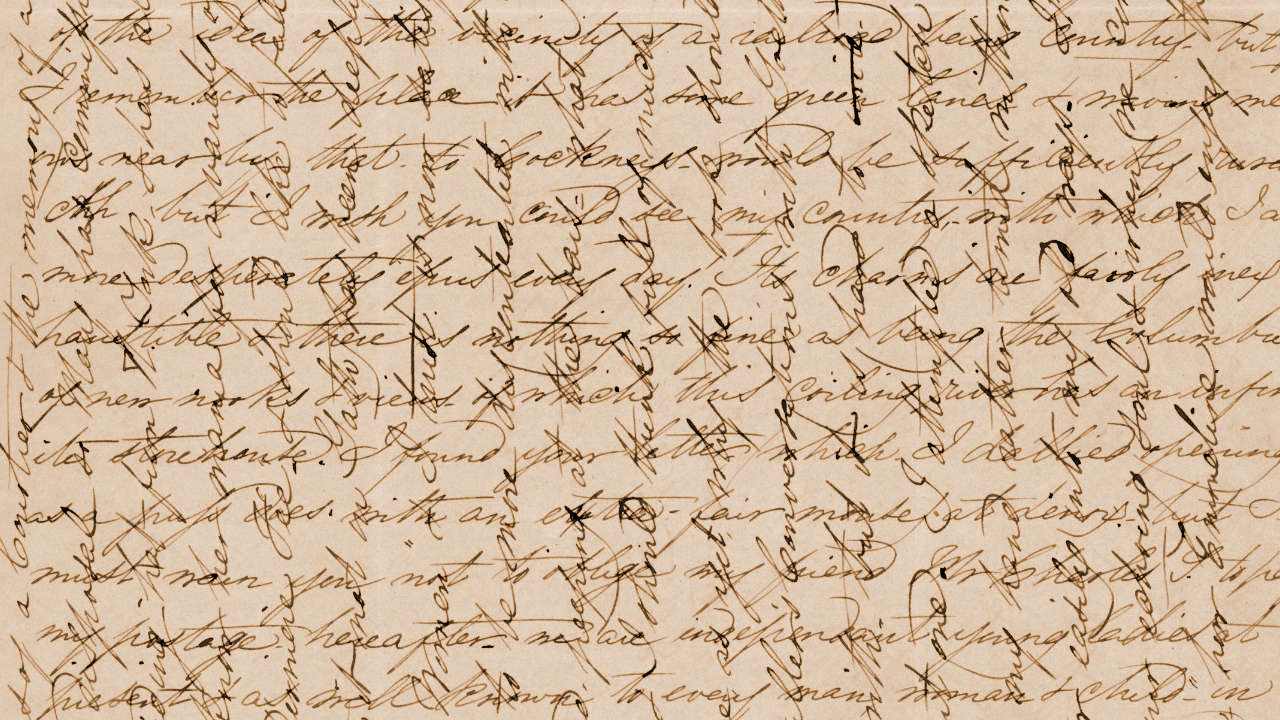
Why Did They Write the Letter “s” Like “f”?
A Montreal, Canada, woman wonders why sometimes in old manuscripts the letter s looks like the letter f. A great resource on this topic is Andrew West’s blog Babelstone.
New Zealand Baby Name Laws
New Zealand also has strict naming laws, but somehow the Violence, Number 16 Bus shelter, Midnight Chardonnay, and twins named Benson and Hedges all passed muster. However, the proposed names Stallion, Yeah Detroit, Sex Fruit, and Fish and Chips didn’t make the grade.
Stigler’s Law
Stigler’s Law is states that no scientific discovery is named after its original discoverer. Halley’s Comet, Fibonacci numbers, the Pythagorean theorem, and the Bechdel test all bear the names of people who didn’t discover or formulate them. The funny thing is, Stephen Stigler, the University of Chicago statistics professor credited with this law of eponymy, wryly claims that sociology professor Robert K. Merton was the first to come up with it.
Should You Really Cut Adverbs From Your Writing?
Author Stephen King’s book On Writing is an excellent guide to the craft. In it, he warns that “the road to hell is paved with adverbs.” Much other writing advice also says to cut adverbs, and even adjectives. But is that truly good advice? Grant and Martha don’t think so. Also, check outthe work of Oliver Kamm, grammar columnist for the Times of London, who has found hypocrisy all over the place when it comes to writing advice.
Antigrams
An antigram is a variety of anagram, in which the letters of one word are rearranged to create its opposite. Examples of antigrams include united and untied, and the word forty-five, which anagrams to over fifty.
Kyarn or Cyarn
A listener calling from the public library in Chowan County, North Carolina, says her father used the word kyarn to describe something unpleasant or repulsive, as in describing something that isn’t worth a kyarn or stinks like kyarn. Also spelled cyarn, this dialectal term derives from the word carrion, which means dead or rotting flesh.
Another Country Heard From
A grandmother in Ferndale, California, wonders about a phrase her own grandmother used. If one of the grandchildren walked into a room and joined a conversation already taking place, she’d exclaim, “Oh! Another country heard from!” Although her grandmother used the expression affectionately, traditionally, it’s had a more dismissive sense. It derives from an older expression, another county heard from, a reference to the days when election results could take days or even weeks to come in.
This episode is hosted by Martha Barnette and Grant Barrett, and produced by Stefanie Levine.
Books Mentioned in the Episode
| The Shakespeare Name Dictionary |
| Accidence Will Happen: A Recovering Pedant’s Guide to English Language and Style |
Music Used in the Episode
| Title | Artist | Album | Label |
|---|---|---|---|
| Yekermo Sew | Mulatu Astatke | New York Addis London | Strut |
| Mulatu | Mulatu Astatke | New York Addis London | Strut |
| Wings | Peter Thomas | Sound Music Album 5 | Golden Ring Records |
| Emnete | Mulatu Astatke | New York Addis London | Strut |
| Yegelle Tezeta | Mulatu Astatke | New York Addis London | Strut |
| Electric Cats | Peter Thomas | Sound Music Album 5 | Golden Ring Records |
| Yekatit | Mulatu Astatke | New York Addis London | Strut |
| Volcano Vapes | Sure Fire Soul Ensemble | Out On The Coast | Colemine Records |

I hadn’t thought about it in years, but my parents used to say, “Another county heard from!” if someone burped at the dinner table. Thanks for explaining the origin of the phrase.